

Garlic & Anticoagulant Bleeding Risk Estimator
Clinical Interpretation
Enter your details above to see how garlic supplements might interact with your current blood thinner regimen.
You might be taking garlic supplements for your heart health, believing they are a harmless natural boost. But if you also take blood thinners, that combination could be quietly raising your risk of serious bleeding. This isn't just theoretical; it's a documented medical concern that affects millions of people who use both without realizing the danger.
The core issue is simple: garlic contains compounds that stop your blood from clotting easily. When you add this to medications designed to do the same thing-like warfarin or apixaban-you create a double effect. Your body loses its ability to seal cuts and bruises effectively. The result? Nosebleeds that won't stop, deep bruising, or in severe cases, internal hemorrhage.
Why Garlic Interacts with Blood Thinners
To understand the risk, you need to know what’s actually in the pill. The primary bioactive compound responsible for this effect is ajoene, a sulfur-containing derivative found in raw garlic oil. Ajoene works by irreversibly inhibiting platelet aggregation. In plain English, it stops the tiny cells in your blood (platelets) from sticking together to form clots. It does this by blocking specific receptors on the platelet membranes.
This mechanism was first reported in clinical literature as early as 1983 by Alberts and colleagues in the journal Thrombosis Research. Since then, multiple studies have confirmed that standard doses of garlic supplements can inhibit platelet aggregation by 20% to 40% in healthy adults. The effects don't fade quickly either. Maximum antiplatelet activity occurs 2 to 4 hours after consumption and can last up to 72 hours. Because the inhibition is irreversible, your body has to generate new platelets to regain normal clotting function, a process that takes about 7 to 10 days.
This persistence is what makes garlic different from other common supplements. While some herbs have mild effects that wear off in a few hours, garlic keeps working in your system long after you've taken the dose. If you are on an anticoagulant, which is already keeping your blood 'thin,' adding this persistent antiplatelet effect pushes your system toward over-anticoagulation.
Which Medications Are at Risk?
Not all blood thinners react the same way, but the risk exists across several major classes of drugs. Here is how garlic interacts with the most common anticoagulants:
- Warfarin: This is the most well-documented interaction. Case series published in Chest (1998) showed that combining garlic with warfarin can increase International Normalized Ratio (INR) values by 1.0 to 2.5 points. If your target INR is between 2.0 and 3.0, a jump of 2.5 points puts you at 4.5 or higher, which is considered dangerous territory for spontaneous bleeding.
- Direct Oral Anticoagulants (DOACs): Drugs like apixaban (Eliquis), rivaroxaban (Xarelto), and dabigatran (Pradaxa) are widely used today. While less data exists compared to warfarin, anecdotal reports and emerging evidence suggest similar risks. A user on the r/anticoagulants community reported severe nosebleeds lasting over 30 minutes after combining 900 mg of garlic supplements with apixaban, requiring an ER visit.
- Antiplatelet Agents: Even if you aren't on a traditional blood thinner, drugs like aspirin or clopidogrel work by preventing platelets from clumping. Adding garlic amplifies this effect, significantly increasing the risk of gastrointestinal bleeding and prolonged bleeding from minor injuries.
The American Heart Association’s 2021 Scientific Statement specifically cautions that garlic supplements should be used with extreme caution in patients taking anticoagulants or antiplatelet agents due to documented cases of serious bleeding complications.
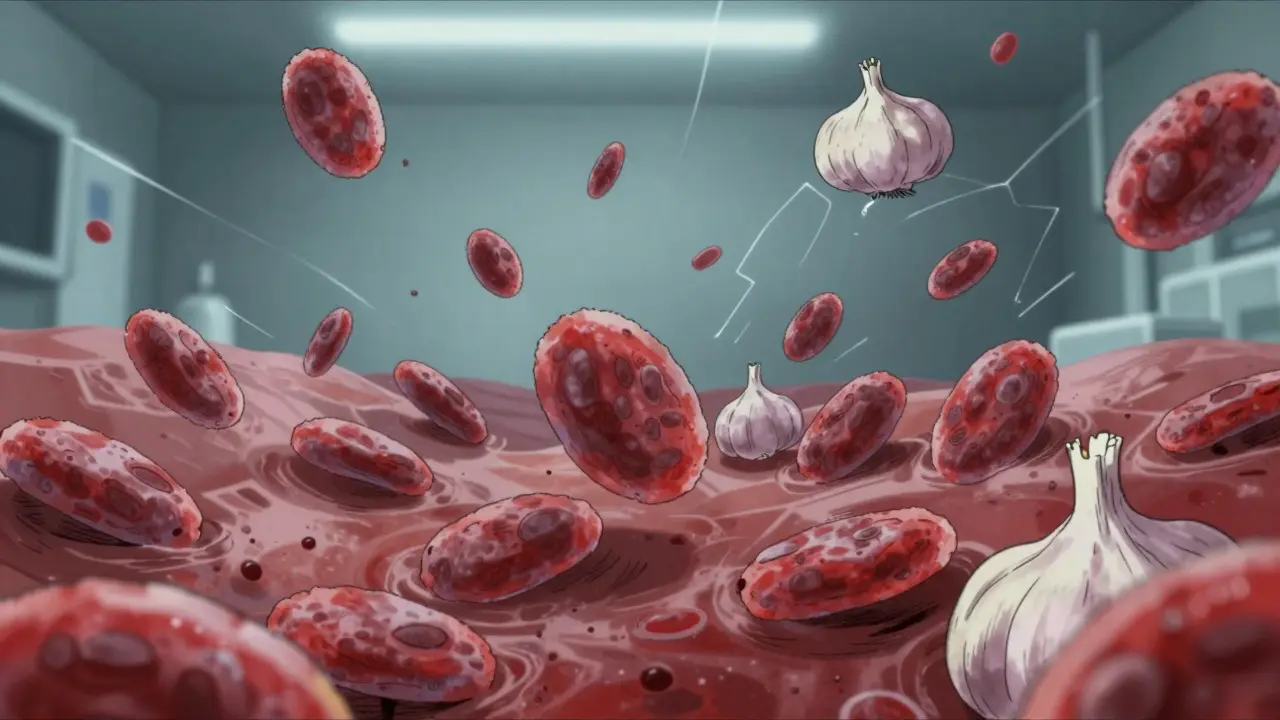
Real-World Complications: What Can Go Wrong?
The risks aren't just numbers on a lab report. They manifest in real, often scary, scenarios. Here are a few documented cases that highlight why this interaction matters:
- Surgical Bleeding: In a case series published in the Annals of the Royal College of Surgeons of England (2012), two patients undergoing laparoscopic colorectal surgery developed 'generalised capillary ooze.' They had no history of blood disorders or anticoagulant use. Post-operatively, it emerged they were self-medicating with garlic supplements. The bleeding was so poor that surgeons had to convert to open surgery and create defunctioning ileostomies.
- Spinal Hematoma: A 2019 case report in the Journal of Neurosurgery: Spine documented an elderly man who developed a spontaneous spinal epidural hematoma after consuming high-dose garlic supplements (approximately 2,400 mg daily). He required emergency laminectomy to relieve pressure on his spinal cord.
- Dental Procedures: For many people, a root canal or extraction seems routine. However, if you are on blood thinners and taking garlic, even minor dental work can lead to excessive bleeding that is difficult to control locally. This is one reason dentists often ask about supplement use before procedures.
A 2022 GoodRx Health survey revealed that 83% of garlic supplement users were unaware of potential interactions with blood thinners. Furthermore, 67% had not discussed their supplement use with their healthcare provider. This lack of awareness is the biggest driver of these adverse events.
Comparing Garlic to Other Herbal Supplements
You might wonder if garlic is worse than other popular herbs. A comparative analysis by Seregina et al. in Blood Coagulation & Fibrinolysis (2019) ranked bleeding risk from herbal supplements. Here is how garlic stacks up against common alternatives:
| Supplement | Primary Mechanism | Platelet Inhibition Rate | Risk Level | Recovery Time |
|---|---|---|---|---|
| Ginkgo Biloba | Inhibits platelet-activating factor | 30-50% | Highest | ~5 days |
| Garlic | Ireversible COX/Fibrinogen blockade | 20-40% | Moderate-High | 7-10 days |
| Fish Oil (Omega-3) | Reduces thromboxane production | 10-20% | Moderate | ~3 days |
| Ginseng | Mild antiplatelet effect | <10% | Low-Moderate | Unknown |
While ginkgo biloba shows stronger immediate inhibition, garlic’s risk is often considered more clinically significant because of its widespread use and the irreversible nature of its effect. You can't simply "flush" garlic out of your system; you have to wait for your bone marrow to produce new platelets. This makes it particularly dangerous in surgical settings where precise hemostatic control is needed.

How to Stay Safe: Practical Guidelines
If you are currently taking anticoagulants, here is what experts recommend to minimize risk:
1. Talk to Your Doctor Before Starting
Don't assume "natural" means safe. Mention every supplement you take, including garlic, when you see your cardiologist or hematologist. Ask specifically: "Is it safe to combine my current dose of [medication] with garlic supplements?"
2. Discontinue Before Surgery
If you have any scheduled procedure, dental work, or biopsy, stop taking garlic supplements well in advance. The American Society of Anesthesiologists recommends discontinuation 14 days prior to surgery. The European Society of Anaesthesiology suggests 7 days. Given the 7-10 day recovery period for platelet function, erring on the side of caution is wise.
3. Monitor Your INR (If on Warfarin)
If your doctor allows you to continue garlic, you must monitor your INR weekly instead of monthly. Look for signs of over-anticoagulation, such as:
- Prolonged bleeding from cuts
- Nosebleeds that last more than 10 minutes
- Unusual bruising (large, dark patches)
- Pink or dark red urine
- Black, tarry stools
4. Check Supplement Labels
Not all garlic supplements are created equal. Potency varies wildly. Standard concentrated garlic supplements typically deliver 600-1,200 mg daily doses of dried garlic powder. However, the amount of active ajoene can vary by up to 15-fold between brands according to ConsumerLab.com testing. Aged garlic extracts contain negligible amounts of ajoene and may pose a lower risk, but independent verification is still pending for many products. Always look for standardized labeling.
Frequently Asked Questions
Can I eat fresh garlic if I am on blood thinners?
Generally, eating fresh garlic in culinary amounts (1-2 cloves per day) is considered low risk for most people on anticoagulants. The concentration of ajoene is much lower than in concentrated supplements. However, if you are on high-dose warfarin or have a history of bleeding, even large amounts of fresh garlic could potentially affect your INR. Discuss your diet with your healthcare provider if you consume garlic heavily.
How long does garlic stay in your system?
The antiplatelet effects of garlic supplements can last up to 72 hours after ingestion. However, because the mechanism involves irreversible inhibition of existing platelets, full recovery of normal clotting function takes approximately 7 to 10 days as your body produces new platelets. This is why a 7-14 day window is recommended before surgery.
Are aged garlic extract supplements safer than raw garlic pills?
Aged garlic extracts contain significantly lower levels of ajoene, the compound responsible for strong antiplatelet effects. Some manufacturers claim their aged garlic products have reduced antiplatelet activity. However, independent, large-scale clinical trials comparing the bleeding risk of aged vs. raw garlic in anticoagulated patients are limited. Until more data is available, treat all garlic supplements with caution if you are on blood thinners.
What should I do if I notice unusual bleeding while taking garlic and anticoagulants?
Stop taking the garlic supplement immediately. Contact your healthcare provider or go to the emergency room if bleeding is heavy, doesn't stop after 10-15 minutes of pressure, or if you feel dizzy, weak, or short of breath. Bring your medication list and the garlic supplement bottle with you so doctors can assess the dosage and timing.
Does garlic interact with Eliquis (apixaban)?
Yes. While there is less extensive data than for warfarin, garlic's antiplatelet effects add to the anticoagulant effects of apixaban. This increases the overall bleeding risk. Patients on DOACs like apixaban should consult their doctor before starting garlic supplements, especially if they are older or have other risk factors for bleeding.