

It is the middle of July in Manchester. The sun might be out, but let’s be honest: if you are wearing sunscreen or staying indoors due to rain, your body isn’t making much Vitamin D, a fat-soluble vitamin that acts like a hormone in the body, regulating calcium absorption and supporting immune function. You are not alone. According to the NHS, the National Health Service of the United Kingdom, which provides publicly funded healthcare, most people in the UK need a supplement from October to March. But what about now? What about the rest of us who work in offices, have darker skin tones, or simply live north of latitude 54 where sunlight is insufficient year-round?
Finding the right supplement shouldn't feel like navigating a minefield of marketing jargon. You want something safe, effective, and easy to get. Buying online is convenient, but with so many options, how do you know what to pick and where to buy it without wasting money on low-quality products? Let's break down exactly how to choose, what forms work best, and where to shop safely in the UK today.
Why You Might Need More Than Sunlight
Before we talk about shopping carts, let’s clarify why this matters. Your skin produces Vitamin D when exposed to UVB rays from the sun. However, modern life interferes with this process. We wear clothes for modesty or warmth. We apply SPF 30+ sunscreen, which blocks the very rays needed for synthesis. We spend hours under fluorescent office lights.
The UK Government Scientific Advisory Committee on Nutrition (SACN), an independent body that advises ministers on nutrition science recommends that everyone aged four and over takes a daily supplement containing 10 micrograms (400 IU) of Vitamin D during autumn and winter. They also advise considering it year-round if you don't get much outdoor exposure. This isn't just about preventing rickets in children; it’s about maintaining bone density in adults, reducing fracture risk in the elderly, and supporting immune resilience.
If you fall into any of these categories, you are likely deficient:
- You have dark skin (melanin reduces Vitamin D production).
- You cover your skin for cultural or religious reasons.
- You are homebound or rarely go outside.
- You are over 65, as skin becomes less efficient at producing Vitamin D with age.
Vitamin D2 vs. Vitamin D3: Which One Should You Buy?
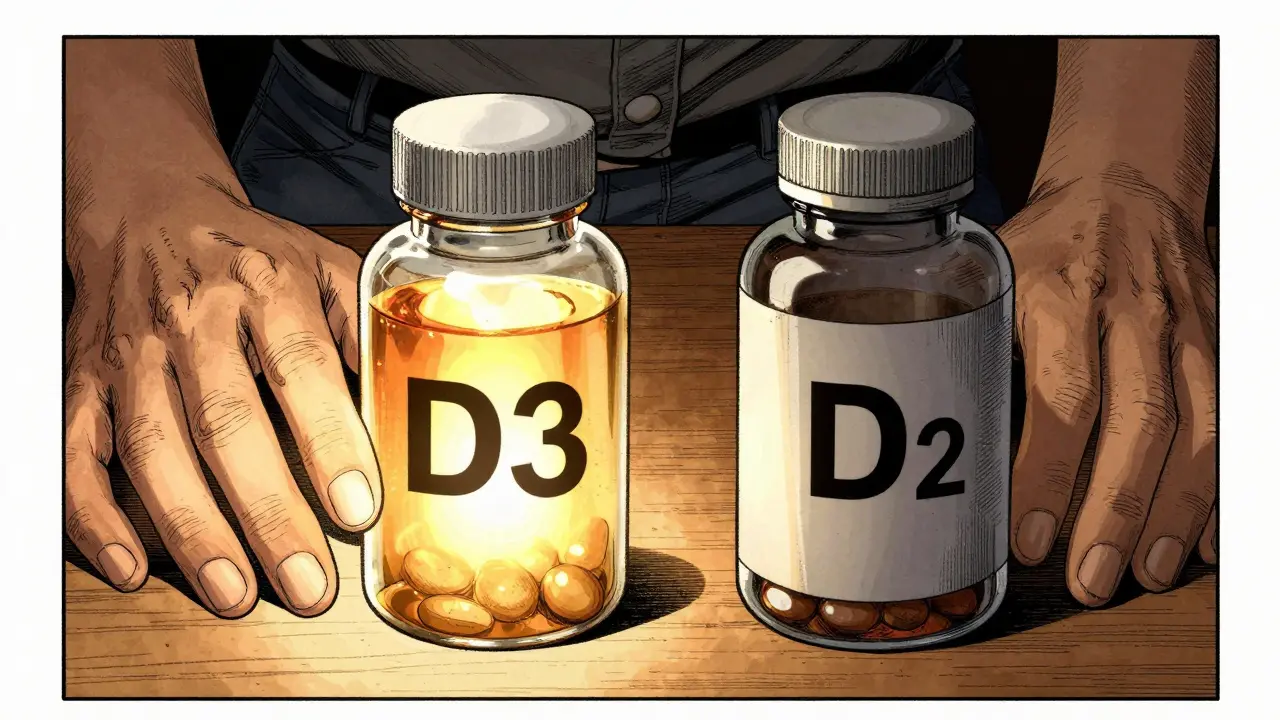
This is the first decision you face when browsing online stores. You will see bottles labeled D2 (ergocalciferol) and D3 (cholecalciferol). Do they matter? Yes.
Vitamin D3, derived from lanolin in sheep's wool, is the form naturally produced by human skin. Research consistently shows that D3 raises blood levels of Vitamin D more effectively and maintains them longer than D2. Most clinical trials use D3 because it is the superior form for supplementation.
Vitamin D2, often derived from yeast or mushrooms, is sometimes used in vegan supplements. While it works, it is generally considered less potent per milligram. If you are vegetarian or vegan, look for D3 sourced from lichen, which is plant-based and equally effective as animal-derived D3. Don't settle for D2 unless necessary.
Choosing the Right Form and Dosage
Once you’ve decided on D3, you need to pick a format. Here is how the common types compare:
| Form | Absorption Rate | Best For | Pros & Cons |
|---|---|---|---|
| Softgels | High | Daily maintenance | Easy to swallow; oil-based enhances absorption. Can be large pills. |
| Liquid Drops | Very High | Children, elderly, precise dosing | Mixes with food/drink. Easy to adjust dose. Taste can be strong. |
| Chewables/Gummies | Moderate | Those who hate pills | Tasty and fun. Often contain sugar or artificial flavors. Check labels carefully. |
| Tablets | Moderate | Budget-conscious buyers | Cheap and widely available. May require taking with a fatty meal for best absorption. |
Regarding dosage, stick to the recommended 10 mcg (400 IU) daily for general health. Higher doses (1000-2000 IU) are common and generally safe for adults, but you should consult your GP if you plan to take more than 10 mcg daily long-term. Vitamin D is fat-soluble, meaning excess is stored in the body, not flushed out like water-soluble vitamins. Taking too much over time can lead to toxicity, causing high calcium levels and kidney issues. Start low, stay consistent.
Where to Buy Vitamin D Online in the UK
In the UK, you have several reliable channels to purchase Vitamin D. Since it is an over-the-counter supplement, you do not need a prescription. However, quality varies wildly between brands. Here is where to look and what to watch for.
1. Major Pharmacy Chains
Stores like Boots, a major British pharmacy chain known for its own-brand health products, Superdrug, a UK retailer specializing in beauty and health products, and LloydsPharmacy, one of the largest private pharmacy groups in the UK offer their own branded supplements. These are excellent choices because they adhere to strict manufacturing standards. Boots’ own-brand Vitamin D3, for example, is widely available online and often comes in multi-packs that last months. The benefit here is trust: you know the supply chain is regulated.
2. Dedicated Supplement Retailers
Websites like Vitabiotics, a UK-based manufacturer of evidence-based nutritional supplements or Healthspan, a brand focused on longevity and aging well through nutrition specialize in vitamins. They often provide detailed information about sourcing and third-party testing. Brands like Vitabiotics’ “Everyday D3” are popular because they are designed specifically for UK residents, accounting for our lack of sunlight. These sites frequently offer subscription models, ensuring you never run out.
3. General E-commerce Platforms
You can find Vitamin D on Amazon UK or eBay. While prices may be lower, caution is advised. Counterfeit supplements are a real issue. Always check seller ratings, read recent reviews, and ensure the product is sold by a reputable vendor or the brand itself. Look for seals of approval from organizations like the British Food Standards Agency (FSA), the government department responsible for food safety and hygiene in the UK.
4. The NHS Free Option
Did you know you might already qualify for free Vitamin D? The NHS offers free Vitamin D supplements to specific groups: pregnant and breastfeeding women, children under five, and adults over 65 living indoors. Some local pharmacies distribute these directly. Check with your GP or local pharmacist before buying if you fall into these categories.
What to Look for on the Label
When you are scrolling through product pages, ignore the flashy claims about "energy boosting" or "mood enhancement." Focus on these three things:
- Potency: Does it clearly state 10 mcg (400 IU) per serving? Avoid vague terms like "high strength" without numbers.
- Ingredients: Is it pure D3? Are there unnecessary fillers, allergens, or excessive sugars (in gummies)? Look for simple ingredient lists.
- Quality Assurance: Does the brand mention GMP (Good Manufacturing Practice) certification? This ensures the product was made in a clean, controlled environment.
Avoid products that mix Vitamin D with dozens of other ingredients unless you specifically need a multivitamin. Pure Vitamin D3 is cheaper, easier to dose correctly, and less likely to cause interactions with other medications.

Safety Tips for Online Purchasing
Buying online is convenient, but scams exist. To protect yourself:
- Check the URL: Ensure you are on the official website of the brand or a major retailer. Beware of lookalike domains.
- Read Reviews Critically: Look for reviews that mention effectiveness and side effects, not just delivery speed. Be skeptical of all-five-star reviews that sound robotic.
- Consult Your Pharmacist: If you are taking other medications, especially steroids or weight-loss drugs, ask your pharmacist if Vitamin D interacts with them. It’s a quick question that could save you trouble.
Storing Your Supplements
Once your order arrives, store it properly. Vitamin D is sensitive to heat and light. Keep your bottle in a cool, dry place away from direct sunlight. Do not store it in the bathroom, where humidity fluctuates. If you buy liquid drops, keep the cap tightly sealed to prevent oxidation.
Final Thoughts on Building a Routine
Taking Vitamin D is not a cure-all, but it is a foundational habit for health in the UK climate. By choosing a reputable source, opting for D3, and sticking to the recommended dosage, you support your bones, muscles, and immune system without breaking the bank. Whether you choose the convenience of Boots’ online delivery or the specialized range of Vitabiotics, the key is consistency. Set a reminder on your phone, pair it with your morning coffee, and make it part of your day. Your future self will thank you when winter rolls around again.
Can I take Vitamin D every day?
Yes, the NHS recommends taking a daily supplement of 10 mcg (400 IU) of Vitamin D, especially from October to March. Daily intake helps maintain stable blood levels, whereas sporadic high doses are less effective.
Is Vitamin D3 better than D2?
Yes, Vitamin D3 (cholecalciferol) is more effective at raising and maintaining blood levels of Vitamin D compared to D2 (ergocalciferol). D3 is the form naturally produced by the skin and is generally preferred for supplementation.
Where can I buy Vitamin D online in the UK?
You can buy Vitamin D from major pharmacy chains like Boots, Superdrug, and LloydsPharmacy, as well as dedicated supplement retailers like Vitabiotics and Healthspan. Always ensure you are purchasing from a reputable seller to guarantee quality.
Do I need a prescription for Vitamin D?
No, Vitamin D supplements are available over-the-counter in the UK. However, if you have specific health conditions or are taking other medications, it is wise to consult your GP or pharmacist before starting a new supplement regimen.
Can I get free Vitamin D from the NHS?
Yes, certain groups are eligible for free Vitamin D supplements through the NHS, including pregnant and breastfeeding women, children under five, and adults over 65 who live indoors. Contact your local pharmacy or GP to check eligibility.