Tip: Enter your meal details to see how fat impacts your medication's effectiveness.
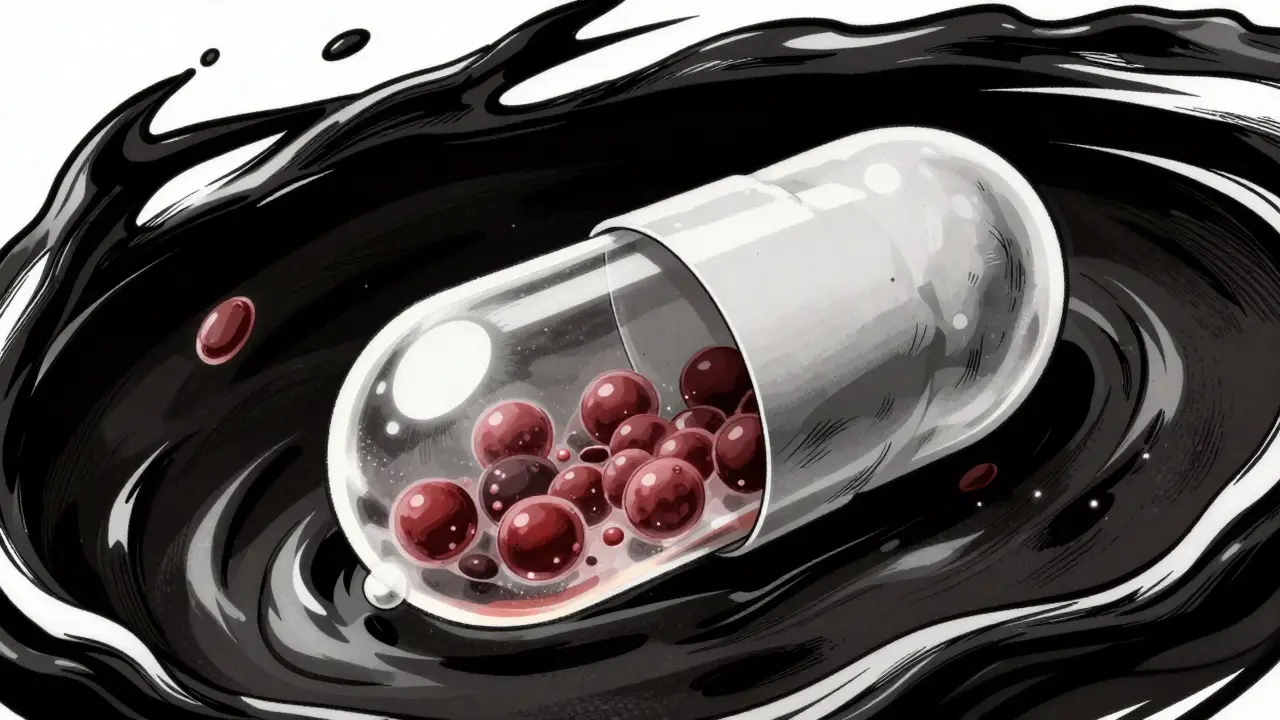
Have you ever been told to take a specific medication with a meal? It’s not just about preventing an upset stomach. For certain drugs, eating fat is the key to making them work at all. This phenomenon, known in pharmacology as the "food effect," is the backbone of a sophisticated class of medicines called lipid-based formulations. These are medicines designed to dissolve and absorb better when mixed with dietary fats. If you are taking one of these drugs, skipping your meal might mean you aren't getting the full dose.
The science behind this isn't new, but it is often misunderstood by patients. When you eat fat, your body triggers a complex digestive response that creates a natural delivery system for medicine. Pharmaceutical companies have learned to engineer drugs to ride this wave, significantly boosting their effectiveness. Understanding how this works can help you manage your health more effectively and avoid common pitfalls like inconsistent blood levels of your medication.
The Science Behind the Food Effect
To understand why fat matters, we need to look at what happens in your gut. Most drugs struggle because they don’t dissolve well in water. In fact, nearly 70% of new drug candidates fail early in development because they are poorly water-soluble. This is where Lipid-Based Drug Delivery Systems (LBDDS) come in. They turn a solid pill into a liquid-friendly solution once it hits your stomach acid and bile.
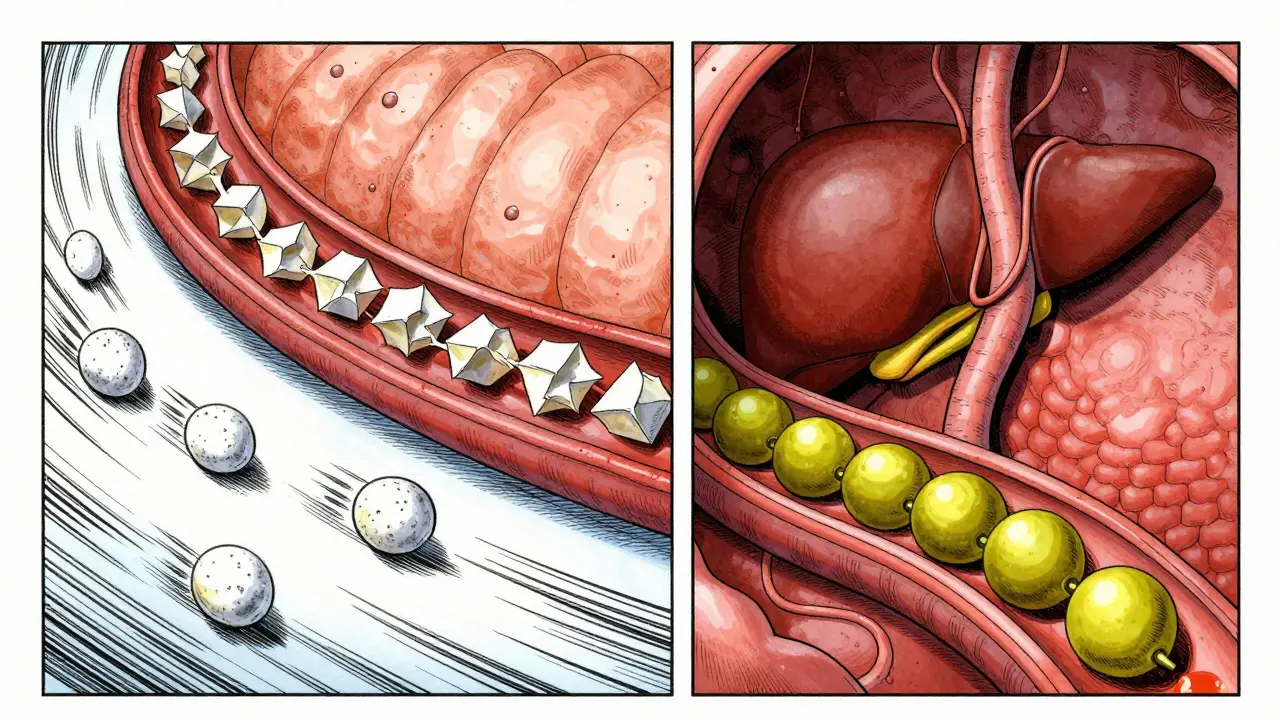
When you consume fat, your pancreas releases enzymes that break down triglycerides into smaller components. Simultaneously, your liver releases bile salts. These two ingredients mix in your small intestine to form microscopic structures called micelles and mixed micelles. Think of these micelles as tiny taxis. They pick up the drug molecules, which are now dissolved in the lipid mixture, and transport them across the intestinal wall into your bloodstream.
This process was pioneered by researchers like Christopher Porter from Monash University. His work showed that lipolytic products (the broken-down fats) and bile salts create colloidal structures that trap drug molecules. This keeps the drug soluble long enough for your body to absorb it. Without this fatty meal trigger, many of these drugs would simply pass through your system unabsorbed.
Types of Lipid Formulations: What’s in Your Pill?
Not all lipid-based medicines are created equal. The most common type you’ll encounter is the Self-Emulsifying Drug Delivery System (SEDDS). These are usually found in soft gelatin capsules. Inside, there is no powder; instead, there is a liquid mixture containing:
Oils (30-60%): Often medium-chain triglycerides (MCTs) or long-chain triglycerides (LCTs).
Surfactants (20-50%): Substances like Tween 80 or Cremophor EL that help mix oil and water.
Cosolvents (10-30%): Agents like Transcutol HP that keep the drug stable.
When this capsule dissolves in your stomach, it doesn’t just spill out. It spontaneously emulsifies, breaking into tiny droplets ranging from 100 to 300 nanometers. This massive increase in surface area allows the drug to be absorbed much faster than a traditional tablet.
Another emerging technology is the Solid Self-Emulsifying Drug Delivery System (SMEDDS). This turns the liquid SEDDS into a solid powder using carriers like silica. This makes the medicine easier to store and package in standard hard-shell capsules, though the mechanism inside the gut remains similar.
Why Fat Matters: MCTs vs. LCTs
Not all fats are the same when it comes to drug absorption. The length of the fatty acid chain plays a crucial role in how quickly and effectively your body processes the medication.
Comparison of Triglyceride Types in Drug Delivery
Feature
Medium-Chain Triglycerides (MCTs)
Long-Chain Triglycerides (LCTs)
Fatty Acid Chain Length
C6-C12 (Shorter)
>C12 (Longer)
Digestion Speed
Fast (15-30 minutes)
Slow (60-90 minutes)
Absorption Pathway
Directly into portal vein (bloodstream)
Via lymphatic system (bypasses liver initially)
Bile Salt Requirement
Lower
Higher
Ideal For
Rapid onset, general solubility enhancement
Drugs needing lymphatic transport (e.g., some antivirals)
MCTs, found in coconut oil and palm kernel oil, digest very quickly. They don’t require much bile to break down, which means they work even if your gallbladder function is compromised. LCTs, found in animal fats and olive oil, digest slower but can carry larger drug molecules via the lymphatic system. This bypasses the liver’s first-pass metabolism, potentially increasing the amount of active drug that reaches your systemic circulation.
Real-World Examples: Drugs That Need Fat
You might already be taking a lipid-based formulation without realizing it. Here are three common examples where the food effect is critical:
Cyclosporine (Neoral®): Used for organ transplant rejection prevention. The older version (Sandimmune®) had erratic absorption. Neoral®, a microemulsion (a type of LBDDS), shows 20-30% higher bioavailability. Taking it with a consistent meal ensures steady blood levels, reducing the risk of organ rejection.
Fenofibrate (Tricor® / Vybar®): Used to lower cholesterol and triglycerides. Studies show Tricor has 31% higher absorption than non-lipid versions. More importantly, 87% of patients reported fewer gastrointestinal side effects. Vybar®, approved recently, eliminates the food effect entirely, allowing dosing with or without food, but still relies on lipid chemistry for its high solubility.
Itraconazole (Sporanox® oral solution): An antifungal medication. The capsule form requires an acidic environment and food for decent absorption. The oral solution (lipid-based) achieves 2.8 times higher bioavailability under fasting conditions, making it far more reliable for treating serious fungal infections.
For BCS Class II drugs (low solubility, high permeability), lipid formulations can increase the maximum plasma concentration (Cmax) by 1.5 to 3.5 times compared to traditional tablets. This isn’t just a minor improvement; it can mean the difference between a cure and treatment failure.
Pitfalls and Practical Advice for Patients
While these formulations are powerful, they come with quirks. The biggest challenge is consistency. If you take a lipid-based drug with a high-fat breakfast one day and a black coffee the next, your blood levels could swing wildly.
1. Stick to a Routine: Always take these medications with a meal that contains some fat. A banana won’t cut it. You need avocado, eggs, nuts, or dairy. Aim for at least 10-15 grams of fat per meal for optimal absorption, unless your doctor specifies otherwise.
2. Watch for Interactions: Some lipid formulations contain surfactants like Cremophor EL, which can cause allergic reactions or interact with other drugs. Always inform your pharmacist about all supplements and medications you take.
3. Cost Considerations: Lipid-based brands are often 20-40% more expensive than generic alternatives. For example, Sporanox oral solution costs around $1,200 for a 30-day supply, while generic itraconazole capsules might cost $300. However, if the generic isn’t absorbing properly due to poor diet compliance, you’re wasting money anyway. Talk to your doctor about whether the higher upfront cost is worth the reliability.
4. Gastrointestinal Issues: If you have conditions like Crohn’s disease, cystic fibrosis, or have had gastric bypass surgery, your ability to digest fats may be impaired. In these cases, lipid-based formulations might not work as intended. Dr. Gordon Amidon from the University of Michigan warns that variability in human lipid digestion presents significant challenges for consistent performance in such patient populations. Consult your specialist before relying on these drugs.
The Future of Lipid Medicine
The field is evolving rapidly. We are moving beyond simple SEDDS to smarter systems. Matinas BioPharma’s LNC technology platform uses enzyme-triggered release, demonstrating 92% bioavailability for amphotericin B in recent trials, compared to just 30% for conventional forms. This precision reduces toxicity and improves outcomes.
Researchers at MIT have also published proof-of-concept "smart lipid capsules" that adjust drug release based on real-time pH and enzyme concentration. While these are years away from widespread use, they highlight the trajectory: personalized lipid formulations tailored to individual digestion profiles.
Environmental concerns are also shaping the industry. Traditional fish oil derivatives are being replaced by plant-based alternatives to ensure sustainability. Companies like Gattefossé and BASF are leading this shift, providing comprehensive data on eco-friendly lipid excipients.
Can I take lipid-based medications on an empty stomach?
Generally, no. Most lipid-based formulations require dietary fat to trigger the formation of micelles necessary for absorption. Taking them on an empty stomach can lead to significantly reduced bioavailability, meaning you get less of the drug into your system. However, newer formulations like Vybar® are designed to minimize this food effect. Always check your specific medication’s label or consult your pharmacist.
What counts as a "high-fat meal" for medication purposes?
A high-fat meal typically contains at least 50% of calories from fat, but for practical daily use, aiming for 10-15 grams of fat is often sufficient to trigger adequate bile secretion. Good sources include two eggs, half an avocado, a handful of almonds, or a cup of whole milk. Avoid low-fat or fat-free meals when taking these drugs.
Why are lipid-based medications more expensive?
They are more complex to manufacture. Developing a stable liquid or semi-solid formulation requires specialized excipients, rigorous stability testing, and often soft gelatin encapsulation. Production costs are estimated to be 25-35% higher than standard tablets. Additionally, the R&D timeline is longer, extending 18-24 months versus 12-15 months for conventional pills.
Do all drugs benefit from being taken with fat?
No. Only drugs with poor water solubility (BCS Class II and IV) benefit significantly. Drugs that are highly soluble (BCS Class I) do not need lipid assistance and may actually absorb slower if taken with a heavy meal due to delayed gastric emptying. Always follow the specific instructions provided by your healthcare provider.
Can I substitute my brand-name lipid drug with a generic?
It depends on the formulation. If the generic is also a lipid-based formulation (like a microemulsion), it should be comparable. However, if the generic is a standard tablet, it will likely have different absorption characteristics. Never switch without consulting your doctor, especially for narrow-therapeutic-index drugs like cyclosporine or warfarin.
This is actually huge for people who struggle with absorption issues. I always thought taking meds with food was just about stomach comfort but knowing it affects the actual drug delivery changes how i look at my prescriptions. Great read.
Casey Eickhoff
July 4, 2026 AT 09:51
It is fascinating to consider the biological mechanics at play here, indeed. The distinction between MCTs and LCTs is particularly relevant for those of us managing specific metabolic conditions. One must be diligent in maintaining consistency, as the variability in blood levels can be quite detrimental to therapeutic outcomes; therefore, a routine is not merely suggested, but essential.
Sarah Boomgaard
July 5, 2026 AT 01:48
You are all missing the point. This is just big pharma trying to sell you more expensive pills because they know you are stupid enough to believe you need special fat to live. It is a scam. Just eat normal food and take your pill like a human being. Why do we need to complicate life with these lipid systems when simple chemistry should work? It is ridiculous that we have to pay extra for this nonsense.
Ellen Zeman
July 5, 2026 AT 03:27
I totally get what Sarah is saying about the cost being crazy high though its kinda unfair to call it a scam since the science is real. I mean if you have bad digestion or something like crohns then yeah it might not work for you but for most people it helps. I tried taking my meds with just coffee once and felt terrible next day so now i always have eggs with them. Its just part of life really and we gotta adapt right?
Marlon Tomio
July 6, 2026 AT 16:26
The moral implication of forcing patients to adhere to strict dietary regimes for basic medication efficacy is troubling. We are essentially holding health hostage to culinary compliance. It is a failure of design, not biology. Drugs should work regardless of whether you ate an avocado or a rock. This dependency on external variables is unacceptable.
Mark Smalley
July 7, 2026 AT 16:32
I hear you Marlon, and it does seem frustrating! But honestly, our bodies are complex machines, and sometimes we just need to work with them rather than against them. It’s not about control, it’s about harmony with our own physiology. Have you considered that maybe the 'failure' isn't in the design, but in our expectation that technology should override natural processes entirely? It’s a perspective shift, really.
Sherrie Trecker
July 9, 2026 AT 00:43
Oh my god, can we stop pretending this is easy? I have to plan every single meal around my meds now. It’s exhausting. And don’t get me started on the side effects from the surfactants. My pharmacist barely explained anything. I feel like a lab rat constantly checking my diet. It’s a nightmare, truly a nightmare for anyone who isn’t rich enough to afford the perfect organic fatty meal every time.
rob van oudernallern
July 10, 2026 AT 17:02
i agree with sherrie its tough. i used to forget all the time and just grab a granola bar which has no fat basically. then i realized why i wasnt feeling better. now i keep nuts in my bag. its not perfect but its manageable. dont let the drama win lol
Mary Howarth
July 11, 2026 AT 04:38
Wow, this article opened my eyes to so many possibilities! I never realized that the type of fat mattered so much, like the difference between coconut oil and olive oil affecting how fast the drug works. It’s amazing how our bodies are designed to utilize these natural delivery systems, and pharmaceutical companies are finally catching up to nature’s wisdom. I’m going to start tracking my fat intake more carefully to ensure I’m getting the best results from my treatments. It’s empowering to know that small dietary tweaks can make such a big difference in our health outcomes!
Gavin Edley
July 12, 2026 AT 20:11
You lot are obsessed with this stuff. Who cares about micelles? I take my pills and I live my life. If you’re worried about absorption, maybe you shouldn’t be taking drugs in the first place. It’s weak. Real men don’t need fancy lipid formulations to survive. Stop whining about costs and just deal with it. Your body is supposed to handle stress, not rely on expensive oils.
jeremy pritchett
July 14, 2026 AT 03:58
gavin u are so out of touch man. this isnt about being weak its about science working for us. ignoring how ur body absorbs meds is stupid. i use mcts now and feel way better. wake up and smell the coffee... or eat some eggs instead. knowledge is power dude.
Kimberly Simbulan
July 16, 2026 AT 01:33
Sure, Jeremy, because nothing says 'empowerment' like needing to calculate grams of fat before breakfast. I’m sure the pharmaceutical engineers are thrilled you found their chemical cocktails 'powerful.' Keep telling yourself that while your wallet cries.
kavitha kumar
July 16, 2026 AT 08:06
this is too complicated for me to understand properly but i think it sounds important. i hope everyone takes care of themselves and eats well. the prices are scary though and i worry about people who cant afford good food. it is sad really that health depends on money so much these days


Gilbert Bankual
July 3, 2026 AT 18:14This is actually huge for people who struggle with absorption issues. I always thought taking meds with food was just about stomach comfort but knowing it affects the actual drug delivery changes how i look at my prescriptions. Great read.
Casey Eickhoff
July 4, 2026 AT 09:51It is fascinating to consider the biological mechanics at play here, indeed. The distinction between MCTs and LCTs is particularly relevant for those of us managing specific metabolic conditions. One must be diligent in maintaining consistency, as the variability in blood levels can be quite detrimental to therapeutic outcomes; therefore, a routine is not merely suggested, but essential.
Sarah Boomgaard
July 5, 2026 AT 01:48You are all missing the point. This is just big pharma trying to sell you more expensive pills because they know you are stupid enough to believe you need special fat to live. It is a scam. Just eat normal food and take your pill like a human being. Why do we need to complicate life with these lipid systems when simple chemistry should work? It is ridiculous that we have to pay extra for this nonsense.
Ellen Zeman
July 5, 2026 AT 03:27I totally get what Sarah is saying about the cost being crazy high though its kinda unfair to call it a scam since the science is real. I mean if you have bad digestion or something like crohns then yeah it might not work for you but for most people it helps. I tried taking my meds with just coffee once and felt terrible next day so now i always have eggs with them. Its just part of life really and we gotta adapt right?
Marlon Tomio
July 6, 2026 AT 16:26The moral implication of forcing patients to adhere to strict dietary regimes for basic medication efficacy is troubling. We are essentially holding health hostage to culinary compliance. It is a failure of design, not biology. Drugs should work regardless of whether you ate an avocado or a rock. This dependency on external variables is unacceptable.
Mark Smalley
July 7, 2026 AT 16:32I hear you Marlon, and it does seem frustrating! But honestly, our bodies are complex machines, and sometimes we just need to work with them rather than against them. It’s not about control, it’s about harmony with our own physiology. Have you considered that maybe the 'failure' isn't in the design, but in our expectation that technology should override natural processes entirely? It’s a perspective shift, really.
Sherrie Trecker
July 9, 2026 AT 00:43Oh my god, can we stop pretending this is easy? I have to plan every single meal around my meds now. It’s exhausting. And don’t get me started on the side effects from the surfactants. My pharmacist barely explained anything. I feel like a lab rat constantly checking my diet. It’s a nightmare, truly a nightmare for anyone who isn’t rich enough to afford the perfect organic fatty meal every time.
rob van oudernallern
July 10, 2026 AT 17:02i agree with sherrie its tough. i used to forget all the time and just grab a granola bar which has no fat basically. then i realized why i wasnt feeling better. now i keep nuts in my bag. its not perfect but its manageable. dont let the drama win lol
Mary Howarth
July 11, 2026 AT 04:38Wow, this article opened my eyes to so many possibilities! I never realized that the type of fat mattered so much, like the difference between coconut oil and olive oil affecting how fast the drug works. It’s amazing how our bodies are designed to utilize these natural delivery systems, and pharmaceutical companies are finally catching up to nature’s wisdom. I’m going to start tracking my fat intake more carefully to ensure I’m getting the best results from my treatments. It’s empowering to know that small dietary tweaks can make such a big difference in our health outcomes!
Gavin Edley
July 12, 2026 AT 20:11You lot are obsessed with this stuff. Who cares about micelles? I take my pills and I live my life. If you’re worried about absorption, maybe you shouldn’t be taking drugs in the first place. It’s weak. Real men don’t need fancy lipid formulations to survive. Stop whining about costs and just deal with it. Your body is supposed to handle stress, not rely on expensive oils.
jeremy pritchett
July 14, 2026 AT 03:58gavin u are so out of touch man. this isnt about being weak its about science working for us. ignoring how ur body absorbs meds is stupid. i use mcts now and feel way better. wake up and smell the coffee... or eat some eggs instead. knowledge is power dude.
Kimberly Simbulan
July 16, 2026 AT 01:33Sure, Jeremy, because nothing says 'empowerment' like needing to calculate grams of fat before breakfast. I’m sure the pharmaceutical engineers are thrilled you found their chemical cocktails 'powerful.' Keep telling yourself that while your wallet cries.
kavitha kumar
July 16, 2026 AT 08:06this is too complicated for me to understand properly but i think it sounds important. i hope everyone takes care of themselves and eats well. the prices are scary though and i worry about people who cant afford good food. it is sad really that health depends on money so much these days