
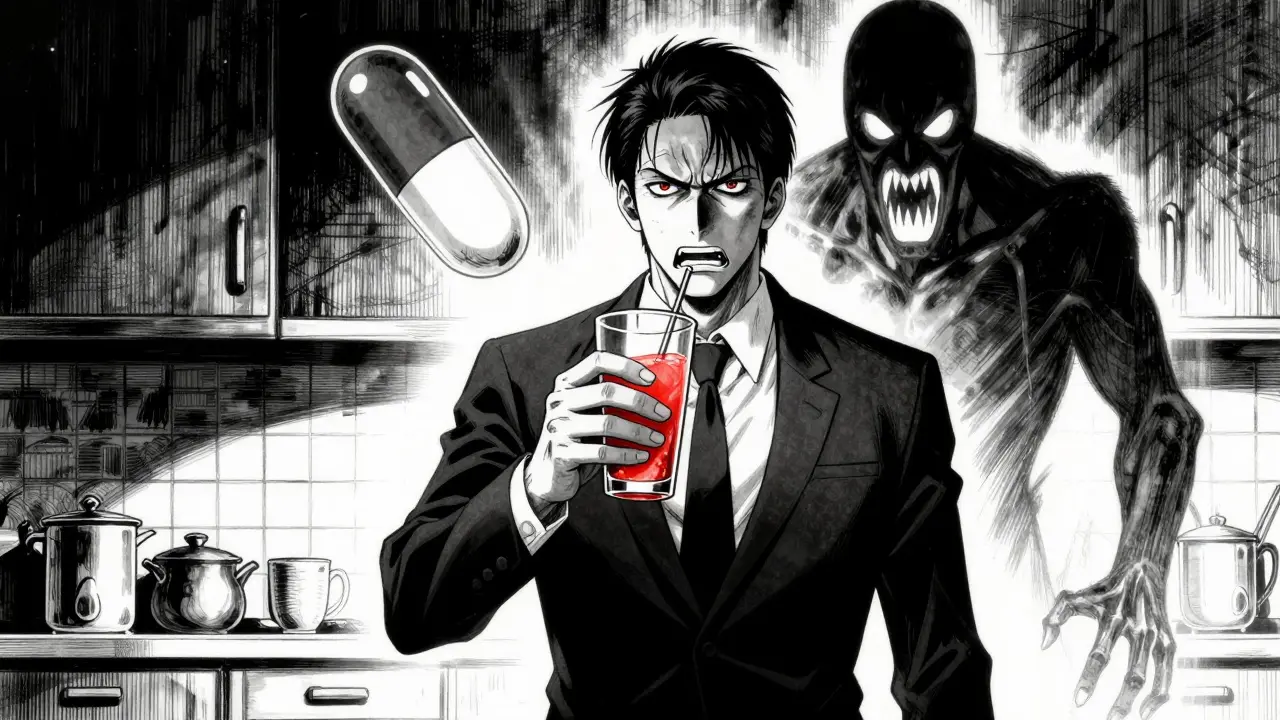
Imagine sitting down for a delicious breakfast of grapefruit juice and oatmeal, only to realize later that your morning heart medication has become dangerously potent in your system. This isn't a hypothetical nightmare; it is a real risk for millions of people who take prescription drugs daily. You might think you know what goes into your body, but the invisible chemistry between your favorite foods and your medications can turn a routine day into an emergency room visit.
In the United States alone, approximately 1.3 million emergency department visits happen every year due to adverse drug events. A significant chunk of these-about 12%-are linked directly to food-drug interactions. The good news? You have power over this variable. By creating a simple, personalized food and medication interaction checklist, you can stop guessing and start protecting your health. This guide will show you exactly how to build this life-saving tool at home, using resources that are free, accurate, and easy to maintain.
Why a Standard Med List Isn't Enough
Most of us keep a list of our medications. It usually includes the drug name, the dosage, and when we take it. That’s great for refills, but it’s useless when you’re deciding whether to eat spinach with your blood thinner or drink milk with your antibiotic. A standard list tells you *what* you are taking, but not *how* it behaves in your body.
A specialized interaction checklist bridges that gap. It documents specific combinations that could reduce a drug's effectiveness, increase toxicity, or trigger dangerous side effects. According to the American Pharmacists Association, patients who maintain comprehensive records like this experience 37% fewer adverse drug events. It transforms passive compliance into active safety management.
Gathering Your Arsenal: What You Need to Start
Before you write anything down, you need to gather your intelligence. Do not rely on memory. Memory fails under stress, and medication schedules are stressful enough.
- All Medications: Gather every pill bottle, including prescriptions, over-the-counter (OTC) drugs like ibuprofen or antacids, and dietary supplements. Yes, that herbal tea counts too.
- Original Containers: Keep them handy. You need the exact brand names, generic names, dosages (e.g., "5mg"), and prescribing physicians.
- Authoritative Sources: You cannot guess interactions. Use trusted tools like the FDA’s patient guides, the New Zealand Formulary interaction checker, or the SEFH Drug-Food/Herb Interaction Guide. Avoid random blog posts; stick to medical databases.
- A Notebook or Digital App: Choose your medium based on your lifestyle. Paper is universal and works during power outages. Apps offer automatic alerts but require smartphone access.
The FDA recommends spending about 30-45 minutes initially to set this up. Think of it as installing a security system for your internal biology. It takes effort once, but it pays off every single day.
Building the Checklist: Essential Components
Your checklist needs structure to be useful. If it’s just a jumble of notes, you won’t read it. Each medication entry should follow a consistent format. Here is the framework recommended by medication safety experts:
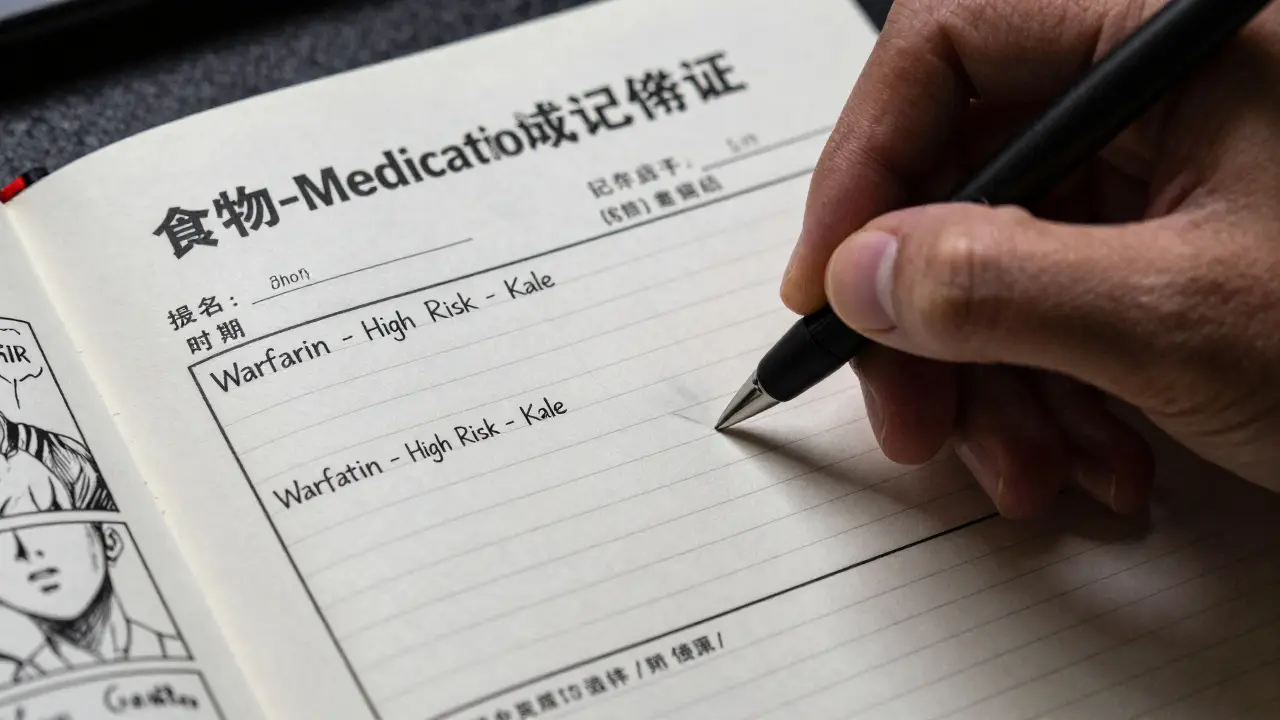
- Drug Name: Both brand (e.g., Coumadin) and generic (warfarin).
- Dosage & Schedule: "5mg once daily at 8 AM."
- Purpose: "Prevention of blood clots." Knowing why you take it helps you remember the stakes.
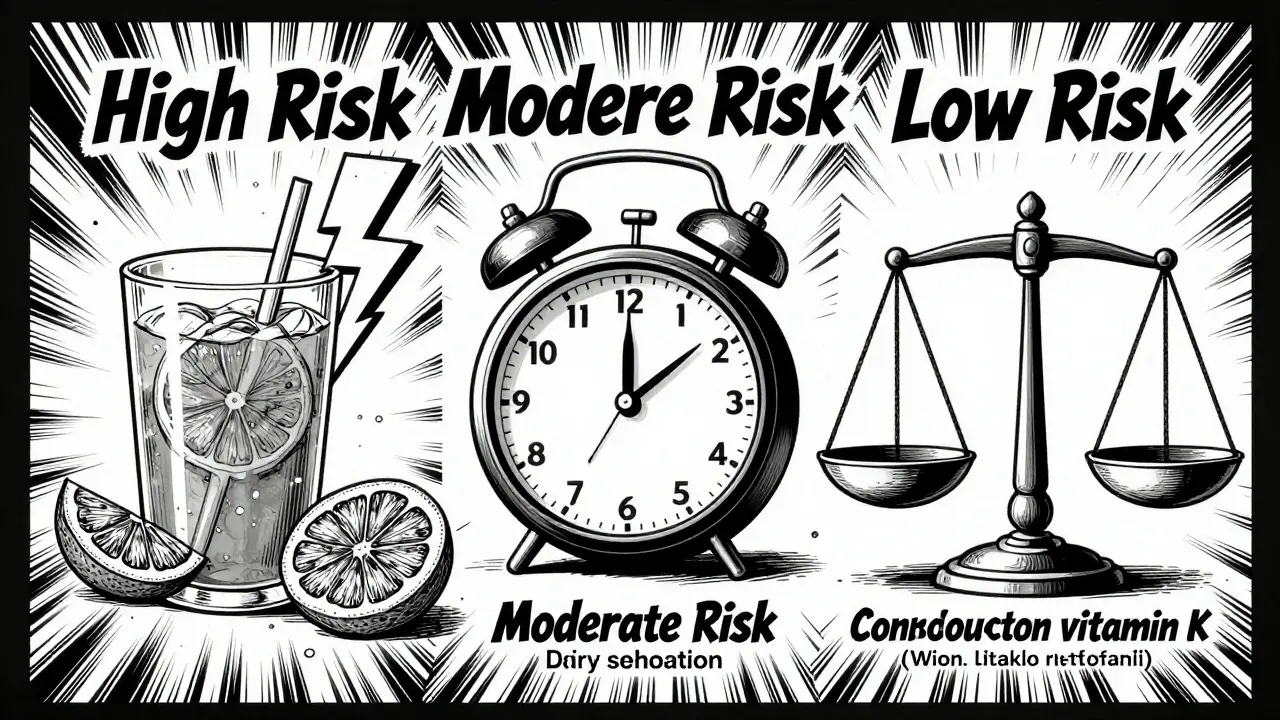
- Interaction Risk Level: Categorize each food interaction as High, Moderate, or Low risk.
- Specific Foods to Watch: Be precise. Not just "greens," but "kale, spinach, collard greens."
- Action Required: "Avoid completely," "Separate by 2 hours," or "Keep intake consistent."
- Source Reference: Note where you found this info (e.g., "FDA Drug Safety Communication #2024-087"). This builds trust in your own data.
For example, if you take ciprofloxacin, your entry shouldn't just say "antibiotic." It should state: "High Risk with dairy products. Action: Wait at least 2 hours after eating yogurt or drinking milk before taking dose. Source: Medsafe September 2024 publication." Specificity saves lives.
Understanding Risk Levels: High, Moderate, and Low
Not all interactions are created equal. Understanding the severity helps you prioritize without living in fear of every vegetable in your fridge.
| Risk Level | Definition | Example | Action |
|---|---|---|---|
| High Risk | Immediate danger; can cause toxicity or treatment failure. | Grapefruit juice with statins (like atorvastatin). Can increase drug concentration by 300-500%. | Strict avoidance. Do not consume. |
| Moderate Risk | Reduces efficacy or causes mild side effects; timing matters. | Dairy with tetracycline antibiotics. Calcium binds to the drug, preventing absorption. | Separate consumption by 2-4 hours. |
| Low Risk | Generally safe but requires monitoring for consistency. | Vitamin K-rich foods (spinach) with warfarin. Doesn't cancel the drug, but fluctuating intake does. | Keep daily intake consistent. Don't binge on salads one day and none the next. |
Dr. Robert L. Talbert from the University of Texas highlights that grapefruit juice interactions with statins are among the most clinically significant. One glass can spike drug levels to toxic ranges. On the flip side, warfarin users don't need to avoid kale entirely-they just need to eat similar amounts each day so their doctor can adjust the dose accurately.
Paper vs. Digital: Choosing Your Format
You have two main paths here, and both have pros and cons. The right choice depends on your tech comfort and lifestyle.
Paper-Based Checklists are surprisingly robust. The FDA offers a downloadable "My Medicines" template optimized for 8.5x11 paper. It’s accessible to everyone, including the 24% of Americans without smartphones. In emergencies, a laminated card on your fridge works even if the power is out. Studies show 92% adoption among seniors over 75 for paper methods. However, paper doesn’t update itself. If your doctor changes your dose, you must manually rewrite it.
Digital Apps like Medisafe or MyTherapy offer dynamic features. They can cross-reference your meds against updated databases and send reminders. A 2023 JAMA Internal Medicine study found digital tools reduced errors by 42% compared to paper. But they require iOS 14+ or Android 8.0+, and battery life. Plus, some apps struggle with regional food variations, as noted by users frustrated when apps didn't recognize traditional diets.
A hybrid approach often works best: keep a digital master copy for updates, but print a simplified, color-coded version for your kitchen counter. Red for high-risk avoids, yellow for timing separations.
Common Pitfalls and How to Avoid Them
Even the best checklist fails if it sits in a drawer gathering dust. Here is where most people slip up:
- Outdated Information: 68% of medication errors stem from outdated lists. Link your checklist review to your monthly pharmacy refill. If you get new pills, update the list immediately.
- Vague Descriptions: Writing "some greens" is useless. Write "1 cup cooked spinach." Preparation matters too; raw vegetables affect vitamin K content differently than cooked ones (up to 70% difference per Journal of Food Science).
- Ignoring OTCs and Supplements: St. John’s Wort, garlic supplements, and even antacids interact with prescriptions. Treat them with the same respect as your antidepressants.
- Skipping the Pharmacist Review: Patients who review their checklists with pharmacists during Medication Therapy Management (MTM) sessions maintain 92% accuracy versus 67% for self-managed lists. Ask your pharmacist to sign off on your list quarterly.
Real-World Success Stories
This isn't just theory. On Reddit’s r/Pharmacy community, a user shared how their checklist prevented acute kidney injury. They had noted the interaction between grapefruit juice and tacrolimus (an immunosuppressant). When a family member offered them juice, the checklist prompted them to refuse, avoiding a potentially fatal spike in drug levels.
Conversely, frustration exists. A Drugs.com reviewer complained that their app warned about kale with warfarin but ignored leafy greens in their traditional Chinese diet. This highlights the need for personalization. You must adapt general guidelines to your actual eating habits. If you eat bok choy instead of kale, research bok choy specifically.
Maintaining Your Checklist: The Weekly Habit
Creation is step one. Maintenance is step two, and it’s where the magic happens. Dedicate 5-10 minutes weekly to audit your list.
- Check Expirations: Remove old meds. Update doses if changed.
- Review Recent Meals: Did you try a new recipe? Add any new ingredients to your interaction watchlist.
- Verify Sources: Medical guidelines evolve. Check if there are new FDA warnings for your specific drugs.
- Share Updates: Email your updated list to your primary care provider and specialist. Ensure everyone sees the same picture.
The American Heart Association recommends including a "last updated" date field. This simple timestamp ensures timeliness. In a world where 47% of Americans aged 40+ take three or more prescriptions daily, this habit is non-negotiable for safety.
When to Call for Help
If you feel overwhelmed, you are not alone. Managing complex regimens is hard. Contact your pharmacist. They are medication experts, not just pill dispensers. Many Medicare Advantage plans now cover pharmacist-led MTM sessions that include food interaction reviews. Use this benefit. Bring your checklist, ask questions, and let them verify your work.
Also, keep emergency contacts visible on your checklist. Include at least two people who know your medical history. If you react badly to an interaction, having this info ready speeds up emergency care.
What is the most dangerous food-medication interaction?
One of the most dangerous is grapefruit juice with statins (cholesterol drugs) or certain calcium channel blockers. Grapefruit contains compounds that block an enzyme in your gut responsible for breaking down these drugs. This can cause drug levels in your blood to rise to toxic levels, potentially leading to muscle damage or kidney failure. Another severe interaction is tyramine-rich foods (aged cheeses, cured meats) with MAO inhibitors (a type of antidepressant), which can cause a hypertensive crisis with dangerously high blood pressure.
Do I need to avoid all green vegetables if I take blood thinners?
No, you do not need to avoid them entirely. For drugs like warfarin, the goal is consistency, not elimination. Vitamin K helps blood clot, so large swings in your vitamin K intake can make your medication less effective or too strong. Eat similar amounts of green vegetables every day. If you love spinach, have a small portion daily rather than a huge salad once a week. Discuss your typical diet with your doctor so they can adjust your dose accordingly.
Can over-the-counter medicines interact with food?
Yes, absolutely. Antacids containing calcium, magnesium, or aluminum can bind to antibiotics like tetracyclines and fluoroquinolones, preventing your body from absorbing them. Always separate these by at least two hours. Similarly, aspirin and other NSAIDs (like ibuprofen) can irritate the stomach lining, and taking them on an empty stomach or with alcohol increases the risk of bleeding and ulcers. Always check the label or ask your pharmacist about OTC interactions.
How often should I update my interaction checklist?
You should update your checklist immediately whenever you start a new medication, stop one, or change a dosage. Additionally, perform a full review at least once a month, ideally tied to your pharmacy refill schedule. Medical guidelines and new interaction studies emerge regularly, so checking for updates annually with your pharmacist or primary care provider is also wise.
Is a digital app better than a paper checklist?
It depends on your needs. Digital apps like Medisafe offer automatic interaction checks and reminders, which can reduce errors by up to 42%. However, they require a smartphone and internet connection. Paper checklists are universally accessible, work during power outages, and are preferred by many seniors. A hybrid approach-using an app for data management and printing a simplified, color-coded version for daily reference-is often the most effective strategy.
Peter Sverla
June 28, 2026 AT 10:04I've been looking into this because my dad is on warfarin and we always get confused about the spinach situation. The part about consistency rather than avoidance makes so much sense now.
Sydney Jarrett
June 29, 2026 AT 06:10While the premise is technically sound, the article fails to address the pharmacokinetic nuances of CYP3A4 inhibition in sufficient depth for a truly comprehensive guide. Most patients lack the cognitive bandwidth to manage such complex metabolic pathways without professional oversight, rendering these 'checklists' potentially dangerous if they foster a false sense of security regarding self-medication protocols.
Isis Fleming
June 29, 2026 AT 20:02It is quite unfortunate that medical professionals do not emphasize dietary interactions more frequently during consultations. I have found that creating a laminated card for the refrigerator is an excellent strategy for elderly family members who may struggle with digital interfaces. It ensures that critical information is readily accessible during meal preparation.
Fred Stone
June 30, 2026 AT 17:08honestly just use your phone camera to snap pics of all the bottles and keep them in a folder called meds its way easier than writing everything down every time u change something
Dawn Renee
July 1, 2026 AT 14:24The pharmaceutical industry has a vested interest in keeping patients confused and dependent on their products. These checklists are merely a distraction from the fact that many of these drugs are designed to create lifelong dependency while ignoring natural healing methods that have been suppressed by corporate greed.
Lorena Suarez
July 2, 2026 AT 16:53i really like the idea of color coding it makes it super easy to see what to avoid at a glance ive started doing this for my mom and she feels way less stressed about eating dinner now
Ben Murphy
July 3, 2026 AT 18:14It is morally reprehensible that healthcare systems allow patients to navigate these complex biochemical interactions without rigorous education. The negligence inherent in assuming a layperson can accurately assess toxicity risks based on a simplistic chart is a failure of the entire medical establishment's duty of care.
Divya Prakash
July 4, 2026 AT 21:52In my experience managing complex therapeutic regimens across diverse cultural dietary landscapes, the one-size-fits-all approach advocated here is profoundly inadequate. One must consider the intricate interplay between traditional herbal preparations and synthetic pharmaceuticals, a nuance entirely absent from this superficial overview which barely scratches the surface of true pharmacogenomic compatibility.
Mohit Patil
July 5, 2026 AT 11:59they want you to think its just food but its actually about controlling what goes into your body why do you think grapefruit is targeted its not random its calculated to keep people sick and coming back for more pills
Chandan Sharma
July 7, 2026 AT 04:48The elegance of a well-structured checklist lies in its ability to impose order upon the chaotic symphony of daily nutrition and pharmacology. To disregard such meticulous organization is to invite discord into one's physiological harmony, a prospect far too vulgar for those who appreciate the refined art of health management.
Katie Dixon
July 7, 2026 AT 19:23We need to take control of our own health instead of relying on big pharma to tell us what to eat or not eat. This list is a great start for anyone wanting to reclaim their bodily autonomy and stop letting corporations dictate their lifestyle choices.