

Antidepressant Lactation Safety Checker
Select a medication from the list to view its safety profile and Relative Infant Dose (RID).
* RID < 10% is generally considered low risk.
Safety Profile:
Untreated postpartum depression poses a far greater risk to your baby than any medication you might take. That is the clear consensus from major health organizations like the American College of Obstetricians and Gynecologists (ACOG) and the Centers for Disease Control and Prevention (CDC). Yet, many new mothers hesitate to start treatment because they fear passing harmful chemicals to their infants through breast milk. This hesitation often leads to suffering in silence, which can damage the mother-infant bond more severely than any drug interaction.
You are not alone in this dilemma. Approximately one in eight women experience clinically significant mood disorders after childbirth. The good news? Most antidepressants are compatible with breastfeeding. By understanding which medications have the lowest transfer rates into breast milk and how to monitor your baby, you can protect your mental health without compromising your nursing relationship.
Understanding the Risk-Benefit Balance
The core question isn't whether antidepressants are 'safe' in an absolute sense, but whether the benefits outweigh the theoretical risks. Research consistently shows that maternal depression affects infant development through disrupted bonding, inconsistent caregiving, and altered stress responses. In contrast, the actual amount of medication an infant receives through breast milk is usually tiny.
Clinicians use a metric called the Relative Infant Dose (RID) to evaluate safety. This calculates the percentage of the mother's weight-adjusted dose that the baby receives via milk. Generally, an RID of less than 10% is considered low risk. For context, most first-line antidepressants fall well below this threshold. The goal is to find the lowest effective dose for you that keeps your symptoms manageable while minimizing exposure to your child.
| Medication | Class | Relative Infant Dose (RID) | Safety Profile |
|---|---|---|---|
| Sertraline | SSRI | 0.5-3.2% | First-line choice; minimal detectable levels in infants |
| Paroxetine | SSRI | 0.9-8.6% | First-line choice; low transfer due to high protein binding |
| Amitriptyline | TCA | <2% | Low transfer; monitor for sedation |
| Citalopram | SSRI | 3.5-8.9% | Moderate safety; caution at high doses due to QT prolongation risk |
| Venlafaxine | SNRI | 1.4-5.9% | Intermediate data; watch for irritability if dose >150mg |
| Fluoxetine | SSRI | 5.9-15.2% | Higher risk; long half-life causes accumulation in infant serum |
| Bupropion | NDRI | 6-10% (theoretical) | Caution advised; associated with increased seizure risk in infants |
| Doxepin | TCA | Variable | Avoid; linked to infant apnea and cyanosis even at low doses |
Best Antidepressants for Breastfeeding Mothers
When choosing a medication, sertraline and paroxetine are widely regarded as the gold standards. A 2022 meta-analysis involving over 1,800 mother-infant pairs found no significant adverse effects in babies whose mothers took sertraline. In fact, infant serum levels were undetectable in 92% of cases. Paroxetine works similarly, with its high protein binding rate meaning very little free drug is available to pass into milk.
If SSRIs don't work for you, tricyclic antidepressants (TCAs) like amitriptyline can be effective alternatives. Because amitriptyline binds tightly to proteins in your blood, less than 2% of the maternal dose reaches the baby. However, TCAs can cause drowsiness, so you might notice your baby sleeping more deeply or feeding less frequently. This is usually temporary but requires close observation.
Newer treatments like zuranolone (Zurzuvae), approved by the FDA in August 2023 specifically for postpartum depression, offer rapid relief. Clinical trials showed 50% of participants achieved remission within 15 days. While zuranolone passes into breast milk at low concentrations (estimated RID of 0.5-1.5%), current guidelines suggest pumping and discarding milk for one week after treatment ends until more long-term data becomes available. Always discuss these newer options with your provider, as protocols are still evolving.
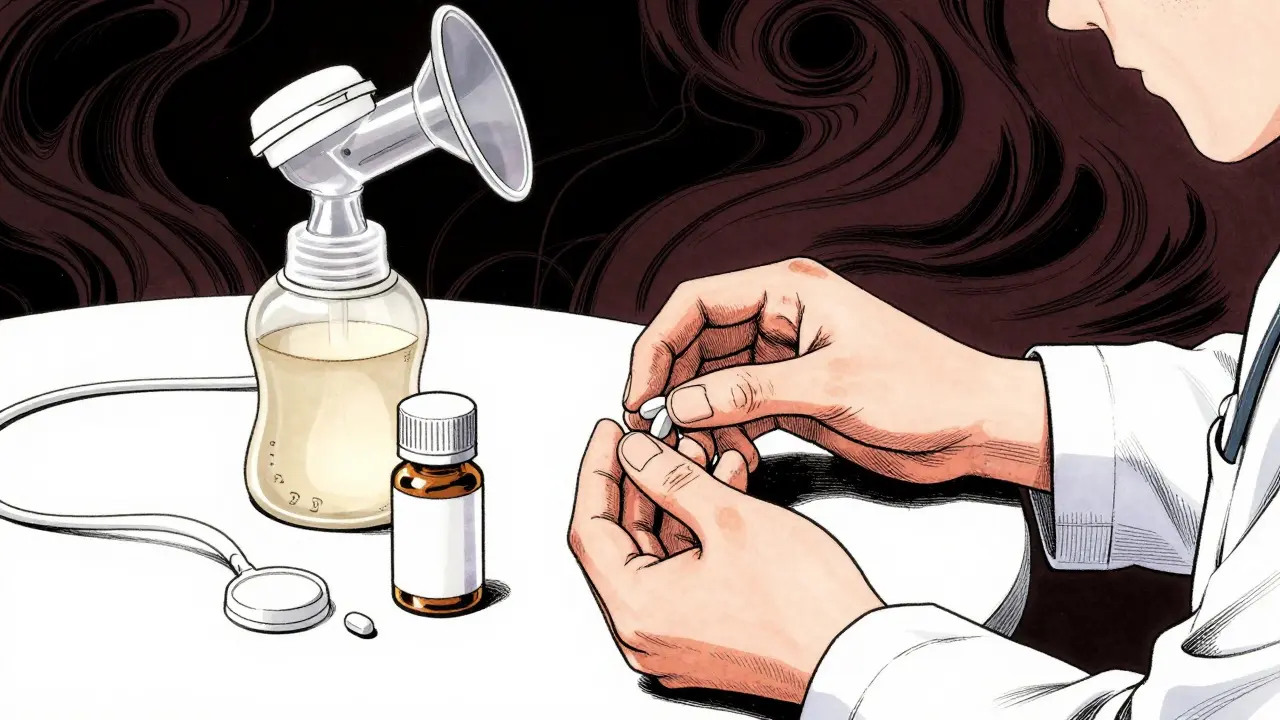
Medications to Use With Caution or Avoid
Not all antidepressants are created equal when it comes to lactation. Fluoxetine has a very long half-life, meaning it stays in your system-and your baby's-for weeks. Its active metabolite, norfluoxetine, can accumulate in infant serum to levels up to 30% of maternal concentrations. This accumulation increases the risk of side effects like jitteriness or sleep disturbances. If you were on fluoxetine before pregnancy, your doctor might switch you to sertraline once you start breastfeeding.
Bupropion presents a different concern. While some mothers tolerate it well, there is a theoretical risk of seizures in infants exposed to bupropion through breast milk. The InfantRisk Center advises caution, especially if you have a history of eating disorders or seizures yourself. Doxepin should generally be avoided entirely due to documented cases of infant apnea (stopped breathing) and cyanosis (blue skin color) even at low maternal doses.
Monitoring Your Baby for Side Effects
Even with 'safe' medications, every baby reacts differently. Infants younger than two months, preterm babies, or those with existing health conditions are more vulnerable to medication effects. Dr. Thomas Hale, founder of the InfantRisk Center, recommends watching for three main signs during the first two weeks of starting a new antidepressant:
- Excessive sedation: Is your baby harder to wake for feeds than usual?
- Poor feeding: Are they latching poorly or taking significantly less milk?
- Irritability: Is your baby unusually fussy, crying inconsolably, or having trouble settling?
Most reported side effects are mild and transient. A 2021 survey found that 86% of mothers saw no noticeable effects on their infants. However, about 12% discontinued medication due to perceived issues, primarily fussiness or sleep changes. If you notice these signs, do not stop the medication abruptly. Instead, contact your healthcare provider. They may adjust the dose, change the timing of your medication, or switch to a different drug.

Practical Tips for Minimizing Exposure
You can take simple steps to further reduce your baby's exposure to antidepressants. Timing matters. Since drug levels in your blood peak about one to two hours after you take a pill, try to nurse immediately before taking your dose. Then wait at least three to four hours before the next feed. This maximizes the time between your peak blood concentration and breastfeeding.
Keep a symptom diary for both you and your baby. Note when you take your medication, when you nurse, and any changes in your baby's behavior or sleep patterns. This data helps your doctor distinguish between normal developmental phases and potential medication side effects. Remember, it takes three to four weeks for antidepressants to reach full effectiveness. Don't give up too soon if you don't feel better immediately, but stay vigilant about monitoring your infant.
Non-Medication Support Strategies
Medication is often just one part of the puzzle. Therapy, particularly cognitive behavioral therapy (CBT) or interpersonal therapy (IPT), has strong evidence for treating postpartum depression. Combining therapy with medication yields the best outcomes for severe cases. Additionally, peer support groups can alleviate the isolation that often accompanies PPD. Organizations like Postpartum Support International offer online forums where thousands of mothers share their experiences with specific medications, providing real-world insights that complement clinical data.
Screening is also crucial. The Edinburgh Postpartum Depression Scale (EPDS) is a standard tool used at well-baby visits. If your score is 13 or higher, seek professional help immediately. Early intervention prevents mild symptoms from becoming debilitating. Remember, asking for help is an act of strength, not weakness. You deserve to feel well, and your baby benefits from a healthy, engaged mother.
Can I breastfeed while taking sertraline?
Yes, sertraline is considered one of the safest antidepressants for breastfeeding. It has a very low Relative Infant Dose (0.5-3.2%) and studies show undetectable levels in most infants. It is widely recommended as a first-line treatment for postpartum depression in nursing mothers.
What are the signs my baby is reacting to my antidepressant?
Watch for excessive sleepiness, difficulty waking for feeds, poor weight gain, unusual irritability, or vomiting. These symptoms typically appear within the first two weeks of starting a new medication. If you notice these signs, contact your pediatrician or psychiatrist immediately rather than stopping the medication on your own.
Is it safer to pump and dump while on antidepressants?
For most common antidepressants like sertraline or paroxetine, pumping and dumping is unnecessary because the amount of drug passed into milk is negligible. However, for newer medications like zuranolone, guidelines currently recommend pumping and discarding milk for one week after treatment completion. Always follow your specific provider's advice based on your prescription.
How long does it take for antidepressants to work for postpartum depression?
Traditional SSRIs and SNRIs typically take three to four weeks to show full therapeutic effects. Newer treatments like zuranolone work much faster, with many women experiencing improvement within 15 days. It is important to continue taking the medication as prescribed even if you don't feel immediate relief, unless side effects are severe.
Should I avoid fluoxetine while breastfeeding?
Fluoxetine is generally not the first choice for breastfeeding mothers due to its long half-life and tendency to accumulate in the infant's body. This can lead to higher risks of side effects like jitteriness or sleep disturbances. Doctors often prefer switching to sertraline or paroxetine for nursing patients to minimize infant exposure.