
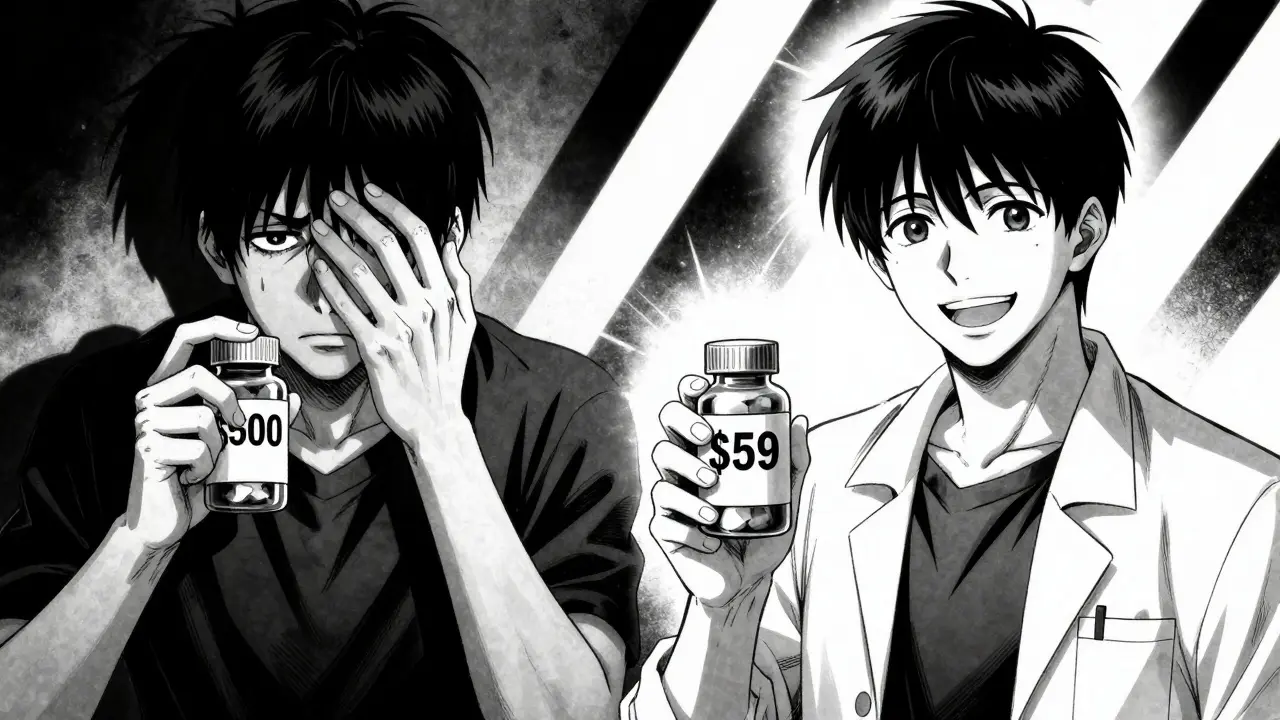
Imagine you have been paying $500 a month for a prescription. Suddenly, that same medication costs $50. This isn't magic; it is the result of a specific regulatory milestone known as first generic approval, which is the regulatory designation granted by the FDA to the first company that successfully submits an Abbreviated New Drug Application (ANDA) for a generic version of a brand-name drug. For patients, this moment means immediate savings. For the pharmaceutical industry, it represents a high-stakes race with massive financial rewards.
But what exactly triggers this price drop? Why does the "first" generic get special treatment? And how does this process actually work behind the scenes at the U.S. Food and Drug Administration (FDA)? Understanding this mechanism is key to grasping why some drugs remain expensive while others become affordable overnight.
The Origin Story: The Hatch-Waxman Act
To understand today's landscape, we have to look back to 1984. Before this year, the system was broken in two ways. Brand-name drug companies had little incentive to innovate because patents could be easily circumvented. Meanwhile, generic manufacturers faced impossible hurdles, having to conduct costly clinical trials to prove safety and efficacy for drugs that were already proven safe.
Congress passed the Drug Price Competition and Patent Term Restoration Act, commonly known as the Hatch-Waxman Act. This legislation created a balanced ecosystem. It allowed brand-name companies to extend patent terms slightly to recoup R&D costs. In exchange, it created a streamlined pathway for generics. Instead of full clinical trials, generic makers only needed to prove their product was therapeutically equivalent to the reference-listed drug through bioequivalence testing.
The results were dramatic. In 1984, generic drugs accounted for just 19% of prescriptions filled in the United States. By 2023, that figure soared to more than 90%. Since the Act's implementation, the FDA estimates these changes have generated approximately $1.7 trillion in healthcare savings. The first generic approval is the engine that drives this competition.
How the Race for First-to-File Status Works
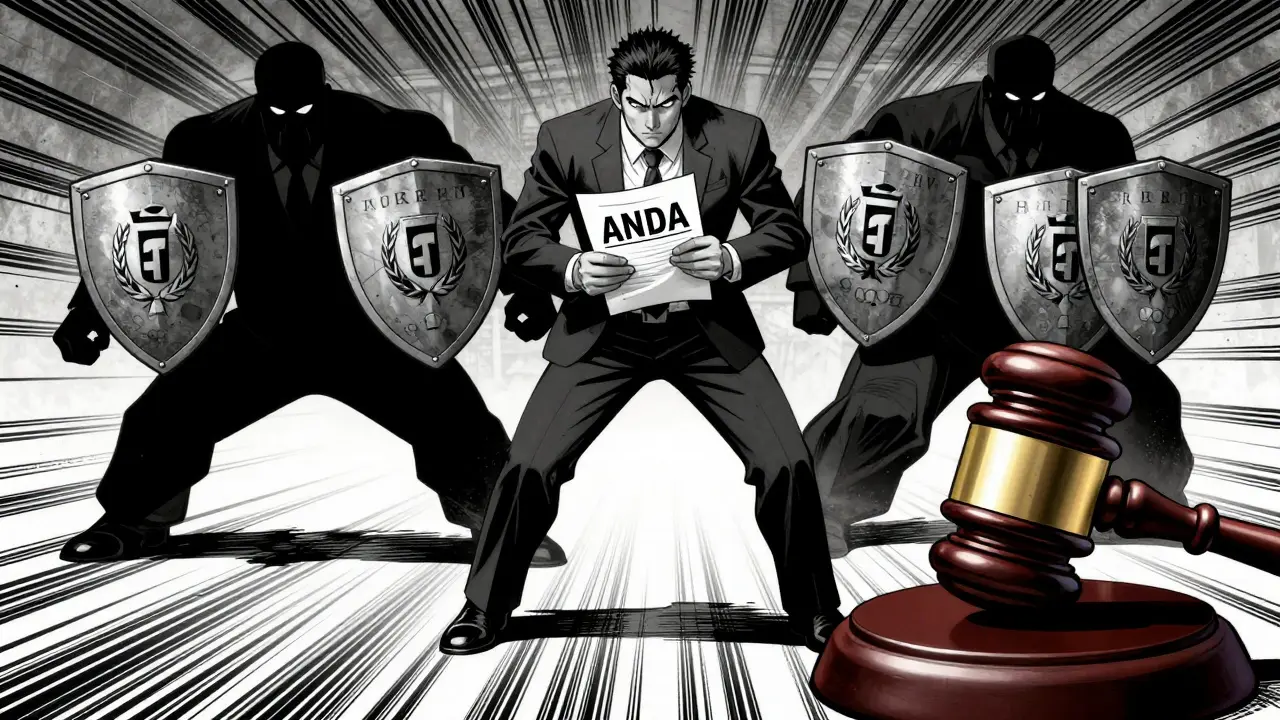
Not all generic approvals are created equal. The FDA grants a special prize to the winner of the "first-to-file" race. To qualify, a company must submit a substantially complete Abbreviated New Drug Application (ANDA) before anyone else. But there is a catch: the applicant must challenge the brand-name drug's patents.
This challenge is called a Paragraph IV certification, which is a legal declaration that the generic manufacturer believes the brand-name drug's patents are invalid or will not be infringed upon by the generic version. Filing this certification triggers a complex legal dance:
- The 45-Day Window: After filing, the brand-name manufacturer has 45 days to sue for patent infringement.
- The 30-Month Stay: If they sue, the FDA pauses its review for 30 months. This allows time for litigation to resolve who owns the rights to the market.
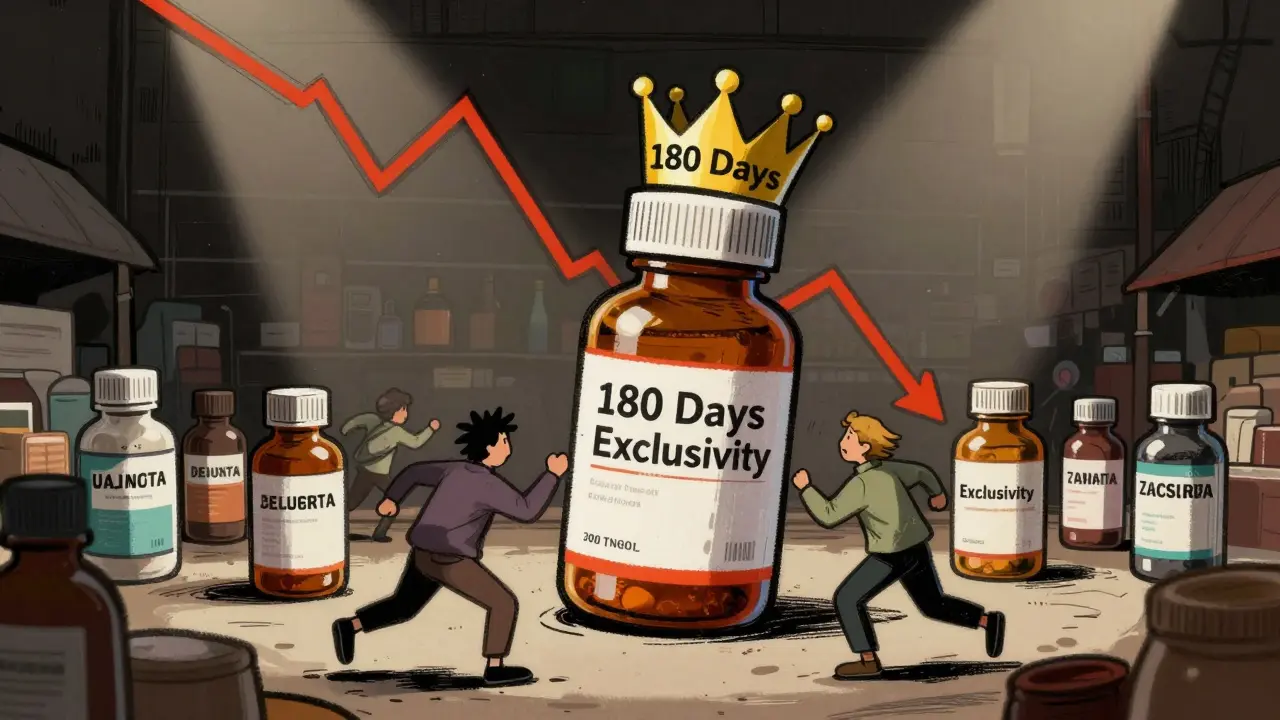
- The Exclusivity Reward: If the generic company wins-or if the brand-name company doesn't sue-the FDA grants 180 days of marketing exclusivity.
During these 180 days, the first generic company is the only generic competitor on the market. They face no other generic rivals, allowing them to capture significant market share before other competitors enter. This period begins either when the product is first marketed or when a court rules in favor of the generic manufacturer, whichever happens first.
The Financial Stakes: Why Companies Fight for It
You might wonder why a company would risk millions in legal fees to make a copycat drug. The answer is pure economics. The 180-day exclusivity period is incredibly lucrative.
For blockbuster drugs-those with annual sales exceeding $1 billion-the first generic entrant can realize additional profits ranging from $100 million to $500 million during this window. How? By pricing their product 15% to 20% below the brand-name drug. Because they have no other generic competition, they can still charge a premium compared to later entrants.
| Market Phase | Typical Price Reduction | Market Share Dynamics | Key Risk Factor |
|---|---|---|---|
| Brand-Name Only | N/A (High Price) | 100% Brand | Patent Expiration Looming |
| First Generic Entry (Exclusivity) | 15-20% off Brand | First Generic captures ~70-80% of generic volume | Patent Litigation Costs ($5-$15M) |
| Multiple Generics Enter | 70-90% off Brand | Price wars drive margins down | Supply Chain Disruptions |
Data shows that within six months of first generic entry, prices typically fall by 70% to 90%. Once multiple generics enter the market after the exclusivity period ends, prices stabilize at these lower levels. This rapid drop benefits insurers, Medicare, and patients directly.
Risks and Challenges for First Filers
It sounds like a free pass to profit, but the path is fraught with danger. The primary hurdle is the patent thicket. An average brand-name drug is protected by about 7.3 patents. Challenging these requires sophisticated legal strategies.
Companies often partner with specialized law firms, where hourly rates range from $650 to $1,200. Average legal expenses for a single Paragraph IV case run between $5 million and $15 million. If the court rules against the generic maker, they lose the investment and the chance at exclusivity.
Another major risk is the "multiple first filer" scenario. Approximately 10.6% of first generics from 2001 to 2022 involved multiple companies filing simultaneously. When this happens, the FDA splits the 180-day exclusivity among them. This dilutes the benefit significantly. Industry experts note that this occurrence is a major concern for first filers, as it reduces the potential revenue stream.
There is also the threat of "authorized generics." These are brand-name drugs sold by the original manufacturer without the branding, often at a lower price. Studies published in Health Affairs show authorized generics entered the market during 38% of first generic exclusivity periods between 2015 and 2022. This can erode the first generic's market share by 20% to 30%, cutting into their exclusive window profits.
What This Means for Patients and Pharmacists
From a patient perspective, first generic approvals are largely positive. A 2024 survey of 1,200 pharmacists found that 87% reported these approvals significantly improved patient access to medications. Furthermore, 73% noted increased medication adherence when patients switched from brand to first generics, likely due to reduced out-of-pocket costs.
Patient reviews support this. On Drugs.com, first generics receive an average rating of 4.2 out of 5.0, comparable to the 4.3 out of 5.0 for brand-name drugs. Common praise includes "identical effectiveness at half the price" and "no difference in side effects."
However, transitions are not always smooth. About 41% of pharmacists report supply chain disruptions during the launch phase. For example, the first generic version of Eliquis (apixaban) faced manufacturing delays that extended the exclusivity period by 90 days, causing temporary price spikes. Conversely, the first generic Humira (adalimumab), launched by Amgen in September 2023, achieved 42% market penetration within 90 days, providing stable access for millions.
The Future of Generic Approvals
The landscape is evolving. The FDA approved 939 generic drugs in fiscal year 2023, including 112 first generics. The focus is shifting toward complex generics-products like inhalers, topical creams, and ophthalmic solutions that are harder to copy. In 2023, 17 complex generics received first approval, up from 9 in 2022.
New regulations are also shaping the field. The 2022 CREATES Act addresses tactics used by brand-name manufacturers to delay generic testing by withholding samples. Additionally, the Inflation Reduction Act introduced provisions affecting the exclusivity clock for drugs with Risk Evaluation and Mitigation Strategies (REMS). Analysts project first generic approvals will increase by 8.3% annually through 2028, driven by the expiration of patents on $156 billion worth of branded drugs.
As Commissioner Robert Califf noted in January 2024, accelerating first generic competition remains the most effective tool for reducing prescription drug costs. For patients, keeping an eye on the "first generic" status of your medications can help you anticipate when your pharmacy bills might drop significantly.
What is the difference between a first generic and a regular generic?
A first generic is the very first company to receive FDA approval for a generic version of a brand-name drug. They are granted 180 days of marketing exclusivity, meaning they are the only generic competitor during that period. Regular generics enter the market after this exclusivity period ends, leading to intense price competition and lower costs for consumers.
Why do first generics cost less than brand names but more than later generics?
First generics invest heavily in legal challenges and regulatory submissions to secure their spot. During their 180-day exclusivity window, they have a monopoly on the generic market, allowing them to price 15-20% below the brand name while maintaining higher margins. Later generics compete fiercely on price, driving costs down further.
Are first generics as safe and effective as brand-name drugs?
Yes. The FDA requires first generics to demonstrate therapeutic equivalence through rigorous bioequivalence testing. The active ingredient, strength, dosage form, and route of administration must be identical. Studies show the average difference in absorption between generic and brand-name drugs is only 3.5%, which is comparable to differences between batches of the same brand-name drug.
What happens if a brand-name company sues the first generic applicant?
If a brand-name company sues for patent infringement within 45 days of the generic application, the FDA pauses its review for 30 months. This stay allows time for the courts to decide if the patents are valid. If the generic company wins or settles, the FDA resumes review and may grant approval along with the 180-day exclusivity.
Can I ask my pharmacist to switch me to a first generic?
Yes. Once a first generic is approved and available, pharmacists can typically substitute it for the brand-name drug unless your doctor specifies "dispense as written." You should consult your doctor or pharmacist to ensure the generic is appropriate for your specific health needs, especially for narrow therapeutic index drugs.