

Corticosteroid Side Effect Management Tool
Enter your current medication details to receive personalized risk assessment and management recommendations.
Risk Assessment Results
Facial Swelling Risk:
Weight Gain Risk:
Personalized Management Plan
Dietary Adjustments
Exercise Recommendations
Health Monitoring
Look in the mirror and notice your face looks rounder, puffier, or just 'different'? If you are taking corticosteroids, such as prednisone or dexamethasone, this is likely not new fat. It is a common, distressing side effect known as moon face (or Cushingoid facies). You are not alone. Approximately 1% of the U.S. population takes long-term steroids, and up to 30% of those patients develop visible facial changes. While medically benign, these changes can deeply affect your confidence and even your willingness to continue necessary treatment. The good news? You have control over how much worse it gets, and it will eventually go away.
Why Steroids Change Your Face Shape
To manage moon face, you first need to understand what is happening under the skin. It isn't just 'weight gain' in the traditional sense. Glucocorticoids trigger two specific physiological processes that reshape your appearance:
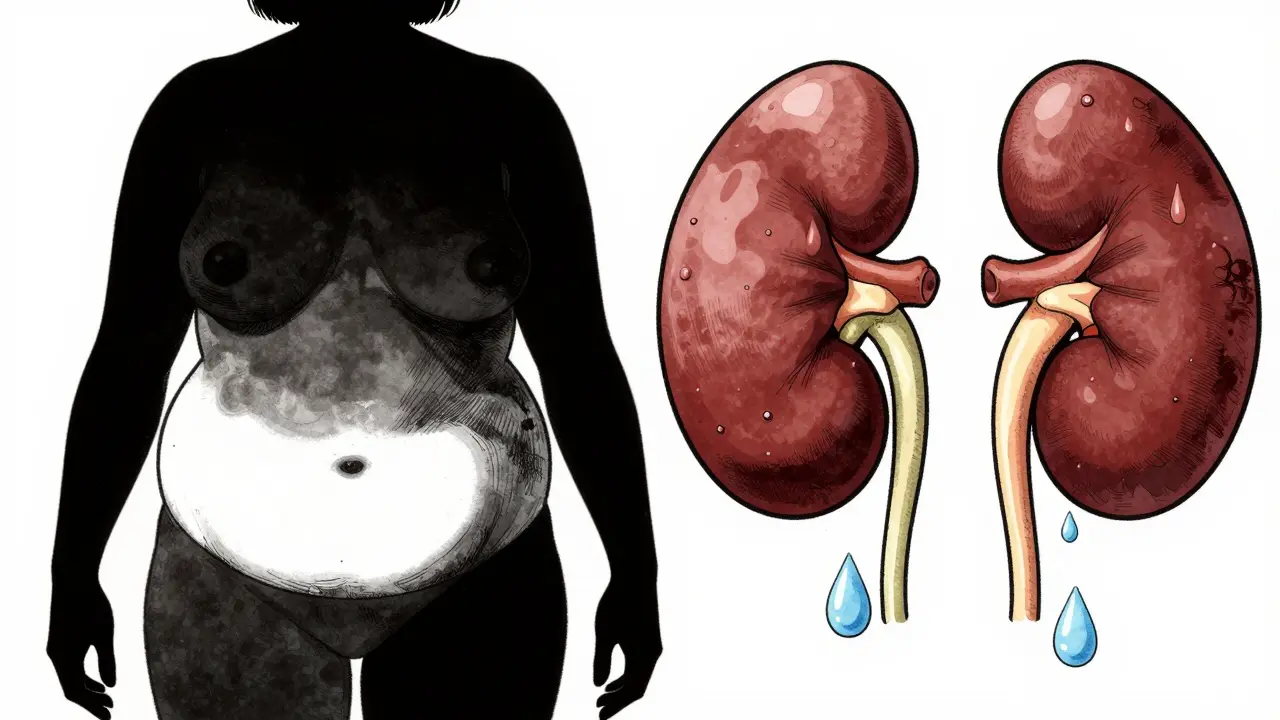
- Fat Redistribution: Steroids alter how your body stores fat. Instead of storing it evenly, they push fat deposits to your face, jawline, and upper back (often called a 'buffalo hump'). This happens because glucocorticoids increase lipogenesis (fat creation) in these specific areas while breaking down muscle tissue elsewhere.
- Fluid Retention: Steroids cause your kidneys to hold onto sodium and water. This fluid buildup adds immediate volume to your face, making it look swollen and round. This is often the most reversible component.
Research published in the Journal of the American Academy of Dermatology indicates that corticosteroid-induced lipodystrophy affects roughly 25-30% of long-term users. The risk increases significantly if you take more than 7.5 mg of prednisone equivalent daily, with incidence rates jumping to 42% for doses above 30 mg/day. Women and younger adults tend to be more susceptible due to hormonal interactions with fat distribution patterns.
The Golden Rule: Never Stop Abruptly
Before diving into diet or lifestyle tweaks, we must address the most critical safety rule. Do not stop or reduce your steroid dose without your doctor's explicit instruction.
Your adrenal glands naturally produce cortisol, but when you take synthetic steroids, your glands 'go on vacation' because they think there is enough hormone in your system. If you stop suddenly, your adrenals cannot wake up fast enough. This leads to adrenal insufficiency, a life-threatening condition characterized by severe fatigue, low blood pressure, and shock. Always follow a tapering schedule designed by your healthcare provider to allow your body to resume natural cortisol production safely.
Dietary Strategies to Reduce Swelling
You cannot change the medication's mechanism, but you can blunt its impact on fluid retention. Diet is your most powerful tool here.
1. Slash Sodium Intake
Sodium holds water. When steroids make your body prone to retaining salt, every extra pinch makes your face puffier. Aim for less than 1,500 mg of sodium per day. This means avoiding processed meats, canned soups, fast food, and salty snacks. Read labels carefully; hidden sodium is everywhere in packaged foods.
2. Hydrate Paradoxically
It sounds counterintuitive, but drinking more water helps flush out excess sodium. Aim for at least 2-3 liters of water daily. Proper hydration signals your body that it doesn't need to hoard fluids, which can reduce facial swelling within 10-14 days for many compliant patients.
3. Balance with Potassium
Potassium acts as a counterweight to sodium. Incorporate potassium-rich foods like bananas, spinach, sweet potatoes, and avocados. This helps maintain electrolyte balance and supports kidney function in excreting excess fluid.
| Nutrient | Action | Recommended Sources | Daily Goal |
|---|---|---|---|
| Sodium | Limits water retention | Fresh vegetables, herbs, spices | < 1,500 mg |
| Water | Flushes excess salt | Plain water, herbal teas | 2-3 Liters |
| Potassium | Balances electrolytes | Bananas, leafy greens, potatoes | 3,500-4,700 mg |
| Protein | Preserves muscle mass | Lean chicken, fish, tofu | 1.2-1.5g per kg body weight |
Exercise: Protecting Muscle and Metabolism
Steroids don't just add fat to your face; they break down muscle in your arms and legs. This loss of lean mass slows your metabolism, contributing to overall weight gain. To combat this, you need targeted exercise, but you must be gentle.
Avoid high-intensity interval training (HIIT) initially, as extreme stress can temporarily raise cortisol levels and worsen inflammation. Instead, focus on:
- Gentle Resistance Training: Light weights or resistance bands 2-3 times a week help preserve muscle mass. Stronger muscles burn more calories at rest, helping to offset the metabolic slowdown caused by steroids.
- Low-Impact Cardio: Walking, swimming, or cycling improves circulation and helps reduce fluid pooling without stressing the joints or adrenal system.
Even small movements matter. Consistency beats intensity when your body is already under chemical stress.
Monitoring Health Beyond Appearance
Moon face is a visible sign of higher internal risks. Studies link prolonged glucocorticoid use to increased risks of steroid-induced diabetes, osteoporosis, and hypertension. Don't ignore these silent threats.
- Check Blood Sugar: Get your fasting glucose checked every 3-6 months. Steroids raise blood sugar levels, sometimes leading to type 2 diabetes even in people who were previously healthy.
- Monitor Blood Pressure: Fluid retention raises blood pressure. Keep a home monitor handy and track weekly readings.
- Bone Density: Long-term use weakens bones. Discuss calcium and Vitamin D supplementation with your doctor, and consider a DEXA scan if you've been on steroids for more than three months.

Psychological Support and Body Image
Let's talk about the emotional toll. Changing your appearance can be devastating. Research shows that body image disturbance from moon face is a leading reason why patients skip doses or quit treatment entirely. This is dangerous, as untreated underlying conditions (like lupus, asthma, or IBD) pose far greater health risks than the side effects.
If you feel anxious or depressed about your appearance, speak to your care team. Psychological support is a valid part of medical management. Many patients find relief through counseling or support groups where they can share experiences without judgment. Remember: this is temporary. Your face will return to normal once the medication is tapered off, typically within 6-12 months after discontinuation.
When to See Your Doctor Immediately
While moon face is expected, certain symptoms indicate complications requiring urgent attention:
- Severe headaches or vision changes (could indicate increased intracranial pressure).
- Rapid, unexplained weight gain beyond facial swelling (could signal heart or kidney issues).
- Extreme fatigue, dizziness, or nausea (signs of adrenal crisis if tapering too fast).
- Slow-healing wounds or frequent infections (signs of immune suppression).
How long does moon face last after stopping steroids?
Facial swelling and fat redistribution typically begin to improve within weeks of reducing the dose, but complete resolution usually takes 6 to 12 months after discontinuing therapy. The timeline depends on how long you took the medication and your individual metabolism. Patience is key, as the body needs time to rebalance its natural cortisol production and redistribute fat stores.
Can diet really reduce steroid weight gain?
Diet cannot stop fat redistribution entirely, but it can significantly reduce fluid retention, which accounts for a large portion of the 'puffiness.' By limiting sodium to under 1,500 mg daily and increasing water intake, many patients see noticeable reductions in facial swelling within 2 weeks. Additionally, controlling calorie intake helps prevent excess weight gain from increased appetite, a common side effect of steroids.
Is moon face permanent?
No, moon face is not permanent. It is a direct result of elevated glucocorticoid levels. Once the medication is tapered and stopped, your body will gradually eliminate the excess fluid and redistribute the fat. While some residual changes may persist longer in cases of very high-dose, long-term therapy, the dramatic facial rounding resolves completely for the vast majority of patients.
What is the difference between moon face and general weight gain?
General weight gain distributes fat relatively evenly across the body. Moon face is characterized by specific fat deposition in the cheeks and jawline, combined with significant fluid retention. You might also notice a 'buffalo hump' (fat pad on the upper back) and thinning limbs, which distinguishes steroid-induced changes from typical caloric surplus weight gain.
Should I take diuretics to reduce swelling?
Do not take over-the-counter diuretics without consulting your doctor. Steroids already affect your electrolyte balance, particularly potassium and sodium. Adding a diuretic can lead to dangerous imbalances, dehydration, or kidney strain. Your physician may prescribe a specific diuretic if necessary, but self-medicating poses serious health risks.