

If you've been prescribed a biologic medication for an autoimmune condition, you're likely feeling a mix of relief and apprehension. These drugs are game-changers for managing everything from rheumatoid arthritis to inflammatory bowel disease, but they come with a catch: they work by dialing down your immune system. While that stops your body from attacking its own joints or gut, it also makes it easier for germs to move in. Statistics show that people on biologics face about a 2.1 times higher risk of hospitalized infections compared to those on non-biologic therapies. That sounds scary, but here is the good news: most of these risks are predictable and preventable if you and your doctor follow a strict safety roadmap.
| Key Area | Crucial Action | Why It Matters |
|---|---|---|
| Pre-Screening | Test for TB and Hepatitis B | Prevents dormant infections from waking up |
| Vaccines | Update shots before starting | Live vaccines can't be given during therapy |
| Monitoring | Track fever and respiratory signs | Early detection stops hospital visits |
| Timing | Screen 4 weeks before dose 1 | Allows time for vaccine response |
Understanding the Infection Risk
To manage the risk, we first need to understand what we're dealing with. Biologics is a class of therapeutic products derived from living organisms, including monoclonal antibodies and fusion proteins, designed to target specific parts of the immune system. Because they suppress the body's natural defenses, they can open the door to infections that a healthy immune system would normally shrug off.
Not all biologics are created equal. For example, TNF Inhibitors is a group of drugs like adalimumab and infliximab that block tumor necrosis factor to reduce inflammation. These are common but carry a slightly higher risk of serious infections-roughly 1.6 to 1.9 times higher than some newer agents. On the other hand, IL-12/23 Inhibitors, such as ustekinumab, often show a lower infection profile in clinical registries. Meanwhile, JAK Inhibitors like tofacitinib are known to increase the risk of shingles (herpes zoster) by about 1.33 times compared to other biologic DMARDs.
Your individual risk isn't just about the drug; it's about you. If you are over 50, your risk increases by about 37% for every decade of age. Other red flags include taking more than 10mg of prednisone daily, or having comorbid conditions like diabetes or chronic kidney disease. If you fit into these categories, your doctor will likely be much more aggressive with your screening and monitoring.
The Mandatory Pre-Therapy Screening Process
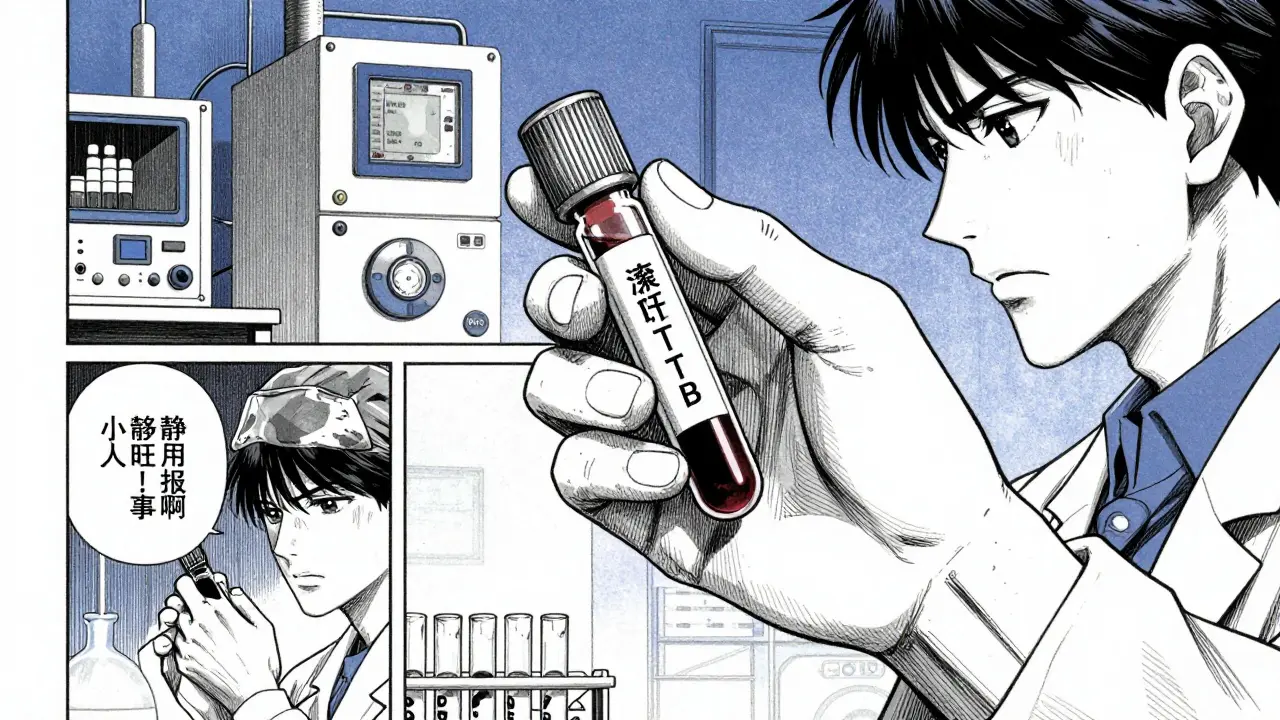
You shouldn't start a biologic without a thorough "wellness check" for dormant infections. This isn't just a formality; it's a safety barrier. The biggest concern is latent tuberculosis (TB). If you have TB bacteria hiding in your body and you start a biologic, that bacteria can wake up and cause a full-blown, life-threatening infection. Most doctors use an interferon-gamma release assay (IGRA) to check for this, as it is highly specific.
Hepatitis B is another major priority. The CDC is the national public health agency of the United States that provides evidence-based guidelines for infection control. Their data shows that nearly 28% of patients with occult Hepatitis B can experience a dangerous reactivation if they start certain biologics without prophylaxis. To prevent this, you need a three-part blood test checking for HBsAg, HBsAb, and HBcAb. If you are positive for the core antibody (HBcAb), you'll likely need a DNA test to see if the virus is active.
A common mistake in busy clinics is skipping the VZV (chickenpox/shingles) serology. If you've never had chickenpox or the vaccine, starting a biologic can trigger a severe outbreak. Ensuring your IgG levels are at least 140mIU/mL is the benchmark for safety here.
Vaccination Guidance: Timing is Everything
When it comes to vaccines, the golden rule is: get them before you start the medicine. Once you are on a biologic, your body may not respond as well to vaccines, and some types of vaccines become outright dangerous.
There are two main types of vaccines to consider: inactivated and live. Inactivated vaccines, like the annual flu shot or the pneumococcal vaccine, are generally safe. However, they should ideally be administered at least two weeks before your first dose to ensure your immune system can build the necessary antibodies while it's still fully active.
Live vaccines-such as MMR (measles, mumps, rubella) or the varicella vaccine-are a different story. These contain a weakened version of the virus. Because biologics suppress your immune system, a live vaccine could actually cause the disease it's meant to prevent. These must be given at least four weeks before you start your biologic therapy. If you've already started your meds, you'll typically need to stop the drug for several weeks before getting a live vaccine, and then wait another few weeks before restarting.
| Vaccine Type | Examples | Timing Requirement | Safety Note |
|---|---|---|---|
| Inactivated | Flu, Pneumonia, Hepatitis B | > 2 weeks before start | Generally safe during therapy |
| Live Attenuated | MMR, Varicella, Yellow Fever | > 4 weeks before start | Contraindicated during therapy |
| Recombinant | Shingrix (Shingles) | Before initiation | Highly recommended for JAK inhibitors |
Real-World Safety: What Patients Experience
In a perfect world, every patient gets a full screening. In reality, things sometimes slip through the cracks. Patient forums and reviews show a recurring theme: coordination failures. Some patients report starting medications like Stelara without a review of their vaccine records, only to develop shingles months later because they missed the Shingrix vaccine. Conversely, many patients praise structured systems, like those at major academic centers, where latent TB is caught and treated for months before the first injection ever happens.
The difference often comes down to education. Research indicates that patients who receive a comprehensive infection prevention checklist are significantly less likely to experience serious infections. Knowing that a simple fever or a lingering cough is a "red flag" when you're on a biologic can be the difference between a quick round of antibiotics and a week in the hospital.
Practical Steps for Your Next Appointment
If you are preparing to start a biologic, don't be afraid to be the "squeaky wheel" regarding your safety. Your health depends on these steps being done in the right order. Here is a simple workflow to discuss with your provider:
- Request the Full Panel: Ask for TB (IGRA), Hepatitis B (all three markers), and VZV serology.
- Audit Your Vaccines: Check your records for flu, pneumonia, and shingles. If you're missing any, schedule them immediately.
- Confirm Timing: Ensure all vaccines are administered and blood tests are completed at least four weeks before your first dose.
- Set Up a Monitoring Plan: Ask your doctor, "What specific symptoms should I call you for immediately?" and "How often will we check my blood counts?"
- Keep a Record: Maintain your own folder of these screening results. Regulatory standards suggest keeping these for 10 years, but having them handy for a new specialist is more practical.
Can I get a flu shot while taking biologics?
Yes, you can. The flu shot is an inactivated vaccine, meaning it does not contain a live virus and cannot cause the flu. However, because your immune system is suppressed, the vaccine might not be as effective as it would be in a healthy person. It is still strongly recommended to get it to reduce your risk of severe illness.
What happens if my TB test comes back positive?
A positive IGRA test usually means you have "latent TB," where the bacteria are in your body but dormant. You aren't contagious, and you don't feel sick. However, biologics can "wake up" this bacteria. In this case, your doctor will typically put you on a course of preventive antibiotics for several months to clear the infection before you start the biologic medication.
Why is Hepatitis B screening so important?
Certain biologics can cause a "reactivation" of the Hepatitis B virus, even if you didn't know you had it. This can lead to severe liver failure. By testing for the surface antigen (HBsAg) and core antibody (HBcAb), doctors can identify at-risk patients and provide antiviral prophylaxis to keep the virus suppressed.
Are all biologics equally risky regarding infections?
No. While all immunomodulators carry some risk, TNF inhibitors generally have a higher rate of serious infections compared to IL-12/23 or IL-17 inhibitors. JAK inhibitors have a specific trend of increasing the risk of shingles. Your doctor will choose the agent that balances your disease severity with your personal risk factors.
What should I do if I develop a fever while on a biologic?
You should contact your healthcare provider immediately. Because biologics suppress the immune system, you might not show a "typical" high fever even during a serious infection. Any unusual fever, chills, or respiratory symptoms should be evaluated quickly to prevent the infection from spreading.
Next Steps for Different Patient Scenarios
Depending on your health history, your path forward might look different. If you are healthy and under 50, the focus is primarily on confirming you are up-to-date on vaccines and have no latent TB. You can likely follow a standard screening path and move straight to treatment.
If you are managing other conditions like diabetes or kidney disease, you are in a higher risk bracket. You should ask your doctor about a more frequent monitoring schedule (e.g., blood work every 3 months instead of 6) and consider a more aggressive vaccination strategy, including the most recent pneumonia updates.
For those living in rural areas with limited access to specialists, telehealth can be a lifesaver. Many clinics now use digital risk assessment platforms to ensure that the mandatory CDC screening checklist is completed before the medication is shipped to your home. If you aren't sure if your clinic is following these steps, ask for a copy of your pre-biologic safety checklist.
Joel Bonstell
May 2, 2026 AT 04:24I went thru this whole thing last year!! Just make sure you really push your doc for those blood tests. Some of them try to rush it but you gotta be the squeaky wheel like it says. It’s way better to wait a few weeks and be safe than to deal with a flare up of somethin old and dormant.
bharat films
May 3, 2026 AT 02:18Imagine actually believing a simple checklist solves systemic healthcare failure 🙄🤡. The stats are just numbers to keep us quiet. 📉
Sarah Mifsud
May 4, 2026 AT 03:44Totes agree with the point about the VZV tests. My doctor almost forgot to check my chicken pox status befor starting me on a JAK inhibitor and I almost had a panic attack lol.
Jenny X
May 5, 2026 AT 07:04It is quite fascinating how they emphasize the CDC guidelines. One must wonder why the 'dormant' infections are only an issue when these specific pharmaceutical monoclonal antibodies are introduced. The pharmacokinetic interaction between these synthetic proteins and the latent viral load is suspiciously convenient for the industry.
Srinivas Komakula
May 6, 2026 AT 17:45The molecular mimicry involved in these biologic pathways is concerning!!! Why are we not discussing the systemic epigenetic shifts caused by TNF inhibitors??? The risk of reactivation is not merely biological, but perhaps orchestrated by the very mechanisms of the pharmacopeia!!!
Mikaela -anonymous 😏
May 7, 2026 AT 19:12Oh look, another list of rules for our fragile bodies... how thrilling!!! I'm sure the 10-year record keeping is just a little suggestion and not a total nightmare for anyone with a real job... lol...
Spencer Farrell
May 9, 2026 AT 15:36One must contemplate the ontological paradox of suppressing the immune system to save the organism. We are essentially trading a localized autoimmune aggression for a systemic vulnerability, a Faustian bargain of the modern medical era.
Seema Karanje
May 10, 2026 AT 06:44Stop overthinking the philosophy and just get your shots!! If you don't follow the screening, you're literally gambling with your life! Get it done or deal with the consequences!
Ken Baldridge
May 12, 2026 AT 00:09The cytokine storm potential is definitely the elephant in the room here. We need to maintain a high-level of vigilance regarding the pro-inflammatory markers. It's all about that homeostasis, people! Stay focused and keep your clinicians on their toes with the latest evidence-based protocols.
J. Walter Jenkem
May 12, 2026 AT 15:18It's a good idea to keep a physical folder of those results. It makes transitions between specialists much smoother.
Kelly Feehely
May 13, 2026 AT 17:55Screeening is a joke if the labs are owned by the same companies making the drugs! They probably just tick a box and hope you don't notice the latent TB waking up in your lungs while they collect their insurance check!
Allison Maier
May 14, 2026 AT 15:59too many tables 🙄
kelvin villa saab
May 15, 2026 AT 07:05Honestly these docs just want to launder their reputations by making us do 50 tests before they give us the good stuff. Totally ridculous that we have to be the ones tracking the timing of vaccines!!
princess lovearies
May 16, 2026 AT 05:54It's okay to feel scared. Just take it one step at a time and trust that the preparation is there to keep you safe.