
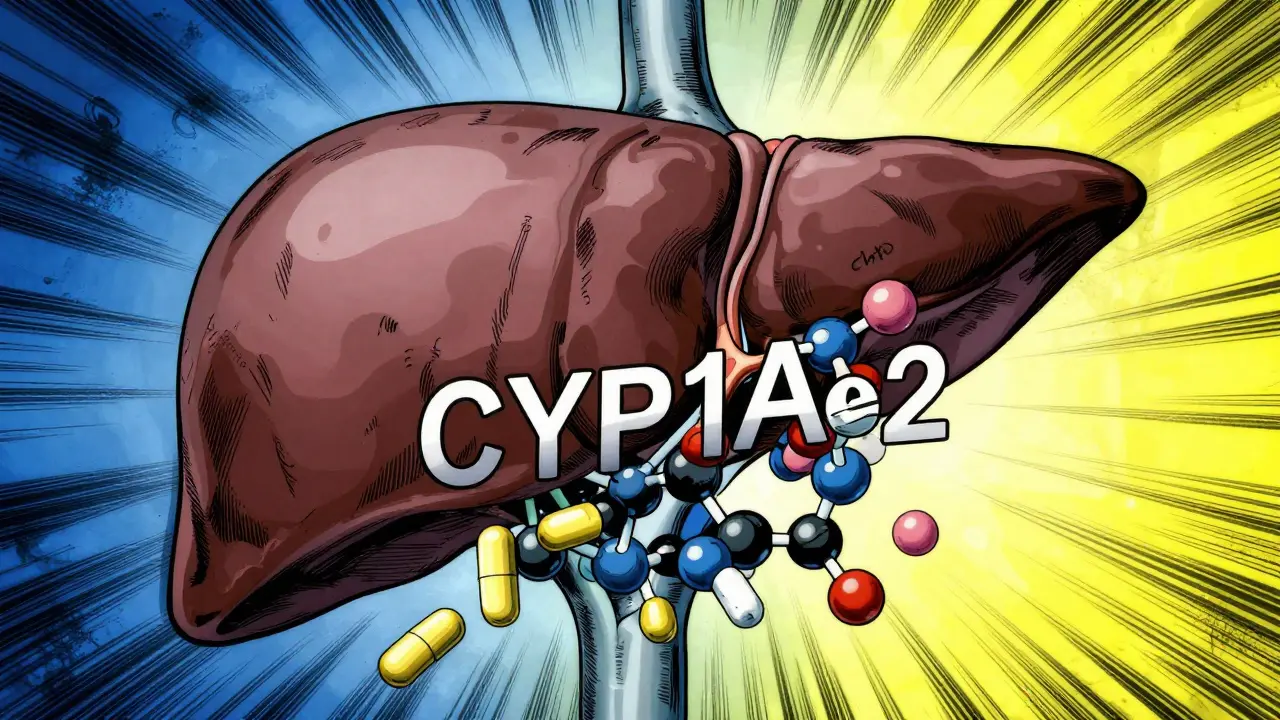
You probably don't think twice about your morning coffee, but if you're taking prescription meds, that caffeine hit could be doing more than just waking you up. It can actually change how your body processes medicine-either making a drug less effective or, in some cases, dangerously potent. While the FDA says 400mg of caffeine a day is fine for most adults, that "safe" limit doesn't account for how caffeine plays with the chemistry of your prescriptions.
The core of the problem is a specific protein in your liver called CYP1A2 is an enzyme responsible for metabolizing caffeine and about 10% of all clinically used drugs. When you flood your system with caffeine, it competes for this enzyme's attention. If the enzyme is busy dealing with your espresso, your medication might linger in your bloodstream too long, or it might get flushed out before it can even work. For some of us, genetics make this enzyme slow or fast, meaning two people can drink the same latte but have totally different reactions to their meds.
Quick Summary of Risks
- Absorption blocks: Some drugs can't get into your blood if coffee is in your stomach.
- Metabolic jams: Caffeine can slow down how fast your liver clears certain meds, increasing toxicity.
- Additive effects: Combining stimulants (like caffeine) with other stimulants can spike your heart rate.
- Timing is everything: A 60-minute gap can be the difference between a working dose and a wasted one.
High-Risk Interactions: When Caution is Mandatory
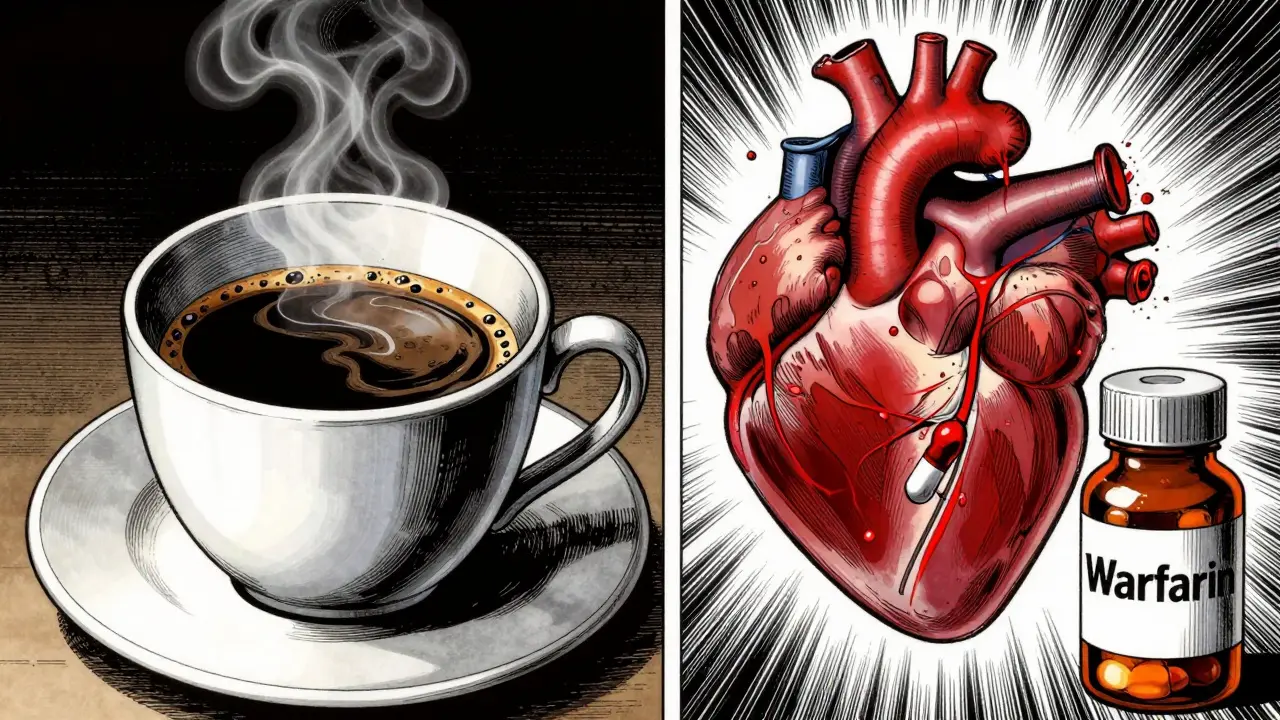
Some medication classes have a volatile relationship with caffeine. If you're taking anticoagulants, for example, you're dealing with a high-stakes balance. Warfarin is a blood-thinning medication used to prevent clots, and caffeine can inhibit its metabolism. This can jump your INR levels by 15-25%, which is a fancy way of saying your blood becomes too thin, significantly increasing your risk of internal bleeding.
Asthma patients using Theophylline should be especially careful. Because both theophylline and caffeine use the same CYP1A2 pathway, they can create a dangerous synergy. This can push theophylline levels 15-20% higher in your blood, potentially triggering nausea, a racing heart, or even seizures. If you're on this med, keeping your caffeine under 100mg (about one small coffee) is a smart rule of thumb.
| Medication Class | Risk Level | Primary Effect | Key Example |
|---|---|---|---|
| Anticoagulants | High | Increased bleeding risk | Warfarin |
| Bronchodilators | High | Toxicity/Tachycardia | Theophylline |
| Thyroid Hormones | Moderate | Reduced absorption | Levothyroxine |
| Antihypertensives | Moderate | Reduced efficacy | Verapamil |
The Absorption Gap: Why Timing Matters
Sometimes the issue isn't the liver; it's the stomach. If you take Levothyroxine (for hypothyroidism) with your morning coffee, you might be wasting a huge chunk of your dose. Research shows coffee can slash the absorption of this drug by up to 55%. Imagine taking a full pill but only getting half the benefit-that's why your TSH levels might spike even if you haven't missed a single dose. The gold standard here is to wait at least 60 minutes after taking your thyroid medication before you touch your coffee.
A similar problem happens with blood pressure meds like Verapamil. When taken with coffee, its ability to lower blood pressure can drop by 25-30%. To keep your heart health on track, aim for a 2-hour window between your calcium-channel blocker and your caffeine source.
The "One-Two Punch" of Stimulants
Have you ever felt your heart racing after drinking coffee while taking a cold remedy? That's not an accident. Many over-the-counter cold medicines contain Pseudoephedrine, a decongestant that acts as a stimulant. When you add caffeine to the mix, you create a synergistic effect that can push your heart rate up by 20-30 beats per minute. For someone with a sensitive heart, this can be genuinely dangerous.
Even more severe is the combination of caffeine with Ephedrine. This pairing can trigger a hypertensive crisis, with systolic blood pressure jumping by over 30 mmHg in a huge number of clinical cases. If you see a stimulant warning on your meds, treat your coffee intake with extreme caution.
Hidden Hazards in Energy Drinks
It's a common mistake to think a cup of coffee and an energy drink are the same because they both contain caffeine. They aren't. Energy drinks often pack 80-300mg of caffeine along with ingredients like taurine and ginseng. These extras can independently interfere with how your body handles drugs, making the interaction profile much more unpredictable than a standard brew. If you're on a complex medication regimen (polypharmacy), the risk of a clinically significant interaction is over three times higher when using these high-potency drinks.

How to Manage Your Caffeine and Meds
You don't necessarily have to give up your favorite drink, but you do need a strategy. The best approach is a combination of consistency and spacing. If you're on blood thinners, avoid sudden spikes in caffeine-don't go from one cup a day to five over a weekend, as this can destabilize your INR levels.
For those on antidepressants, particularly SSRIs, be mindful of your mood. Some people report a 33% drop in medication efficacy with high caffeine intake, while others find that caffeine simply worsens the anxiety the medication is meant to treat. Tracking your symptoms in a journal for two weeks after changing your caffeine habits can help you spot these patterns.
Can I just drink decaf coffee with my medication?
Decaf is generally safer, but it's not totally caffeine-free. More importantly, for drugs like levothyroxine, it's the chemical compounds in the coffee itself-not just the caffeine-that interfere with absorption. It is still best to maintain a gap between your medication and any coffee, even decaf.
Does caffeine affect all antidepressants the same way?
No. While some SSRIs can see a reduction in absorption, other medications like bupropion typically don't show a significant interaction with caffeine. However, because caffeine is a stimulant, it can mimic or worsen side effects like jitters and insomnia.
What should I do if I accidentally took my meds with coffee?
Don't panic, but don't make it a habit. If it's a one-time occurrence with a thyroid med, you might just have a slightly less effective dose. However, if you're taking high-risk meds like warfarin or theophylline and feel symptoms like heart palpitations or unusual bruising, contact your doctor immediately.
Why do some people react worse to caffeine and meds than others?
It comes down to your genetics, specifically the CYP1A2 enzyme. Some people are "fast metabolizers" who clear caffeine quickly, while "slow metabolizers" keep caffeine in their system much longer, which extends the window of time where a drug interaction can occur.
Are energy drinks more dangerous than coffee for med users?
Yes. Because energy drinks contain a concentrated dose of caffeine plus other stimulants like taurine and ginseng, they can create additive effects that coffee doesn't. They are linked to a higher percentage of serious adverse event reports in patients taking prescription medications.
Next Steps for Your Safety
If you're unsure about your current routine, start by listing all your medications-including vitamins and over-the-counter pills-and show them to your pharmacist. They can run a specific interaction check to see if any of your meds rely on the CYP1A2 pathway. If you notice a sudden change in how your medication is working, or if you're experiencing new heart palpitations, try tracking your caffeine intake for a week to see if there's a correlation. A simple shift in timing, such as moving your coffee to later in the morning, can often solve the problem entirely.
Del Bourne
April 8, 2026 AT 07:16It's so important to remember that these interactions aren't just theoretical. I've seen so many people struggle with their thyroid levels because they just can't imagine a morning without their coffee. A simple alarm on your phone to remind you of that 60-minute window can truly change your quality of life!
Brady Davis
April 9, 2026 AT 15:00Oh great, now I can't even enjoy my bean juice without worrying if my heart is going to explode. Just another reason why existing is a nightmare. 🙄
Danielle Kelley
April 11, 2026 AT 14:48This is exactly how they get us! They tell you it's just "chemistry" but it's clearly a way to make us dependent on these pharma companies by messing with our natural rhythms! Wake up people, the FDA doesn't tell you everything about what's actually in that coffee!
Jitesh Mohun
April 12, 2026 AT 22:47just read the labels people its not that hard stop complaining and check the chemistry
Toby Sirois
April 14, 2026 AT 14:56Honestly, if you're not tracking your CYP1A2 status, you're just guessing with your health. It's basic science. Most people are too lazy to actually understand how their liver works and then they wonder why their meds don't work. It's honestly embarrassing how little people know about their own bodies. Just do the work and get a genetic test if you're actually serious about wellness.
Jay Vernon
April 16, 2026 AT 03:04Thanks for the heads up! ☕️🙏 Stay safe everyone! 😊✨
dwight koyner
April 17, 2026 AT 06:57From a clinical perspective, the interaction between caffeine and Theophylline is particularly concerning due to the narrow therapeutic index of the medication. One should be extremely vigilant when monitoring for signs of toxicity, as the overlap in metabolic pathways can lead to rapid accumulation in the plasma.
Alexander Idle
April 17, 2026 AT 23:29Wait, so you're telling me my fancy $7 latte is actually a chemical weapon? This is absolutely tragic. Truly a catastrophe of epic proportions for my morning routine. I'm simply devastated by this revelation, yet I shall persevere with great elegance.
Sarabjeet Singh
April 19, 2026 AT 05:49Good to know about the timing gap. Better safe than sorry.
Rupert McKelvie
April 19, 2026 AT 07:34I'm sure most of us will be just fine as long as we're mindful. It's all about finding a balance that works for your specific body and lifestyle.
Vivek Hattangadi
April 20, 2026 AT 19:36This is such a helpful breakdown! I think we could all benefit from sharing our experiences with medication timing. Maybe we could start a list of common med-coffee gaps to help others stay on track? I'd be happy to help organize that if anyone is interested in collaborating on a simple guide!
Rauf Ronald
April 21, 2026 AT 00:08Spot on! I always tell my clients that consistency is key. If you're going to have your coffee, just do it at the same time every day so your levels stay stable. It's all about the routine, folks! Let's get those schedules dialed in!
Michael Flückiger
April 22, 2026 AT 17:32Wow!!! I never knew about the energy drink part!!! I'll definitely be switching back to plain old coffee... or maybe just water!!! Thanks for the warning!!!