
Why You Need to Check Your Medicine Cabinet Right Now
Most people don’t think about their medicine cabinet until they need something-and by then, it’s often too late. You reach for that painkiller, cough syrup, or antibiotic, only to find it’s been sitting there for two years. Maybe it’s faded. Maybe it smells odd. Maybe you can’t even remember why you bought it. That’s not just inconvenient. It’s dangerous.
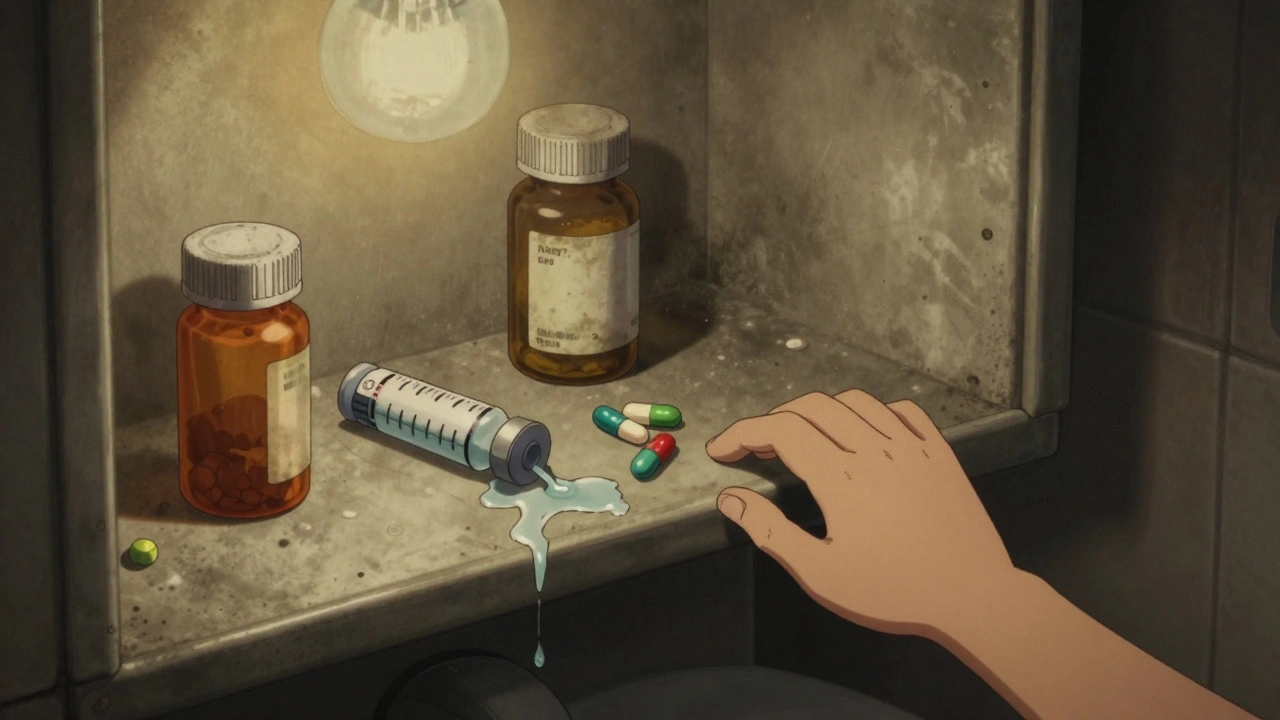
Expired medications don’t just lose their strength. Some become harmful. Tetracycline antibiotics can turn toxic. Insulin and epinephrine can stop working entirely. Liquid antibiotics may grow bacteria. And if you have kids or grandchildren visiting, those colorful pills look like candy.
The FDA says using expired drugs is risky. And it’s not just about effectiveness. A cluttered cabinet increases the chance of accidental poisoning, wrong dosages, or dangerous drug interactions-especially for older adults. In 2022, U.S. poison control centers reported over 67,000 cases of children ingesting medications from home cabinets. That’s not a statistic. That’s someone’s child.
What to Look For: The Visual Red Flags
Don’t just check the expiration date. Look at the medicine itself. Expiration dates are just one part of the story. Here’s what to watch for:
- Color changes-Pills that have turned yellow, brown, or faded are likely degraded. Even if the date is still valid, toss them.
- Smell or taste-If your pain relievers smell like vinegar or your ointment smells rancid, it’s gone bad. Medications shouldn’t have strong, off odors.
- Texture changes-Pills that crumble, tablets that stick together, or capsules that leak are no longer safe.
- Cloudy liquids-Insulin, liquid antibiotics, or eye drops that look cloudy, milky, or have particles in them? Throw them out. Clear is safe. Cloudy is not.
- Unmarked containers-If you can’t read the label or don’t remember what’s inside, don’t guess. Get rid of it.
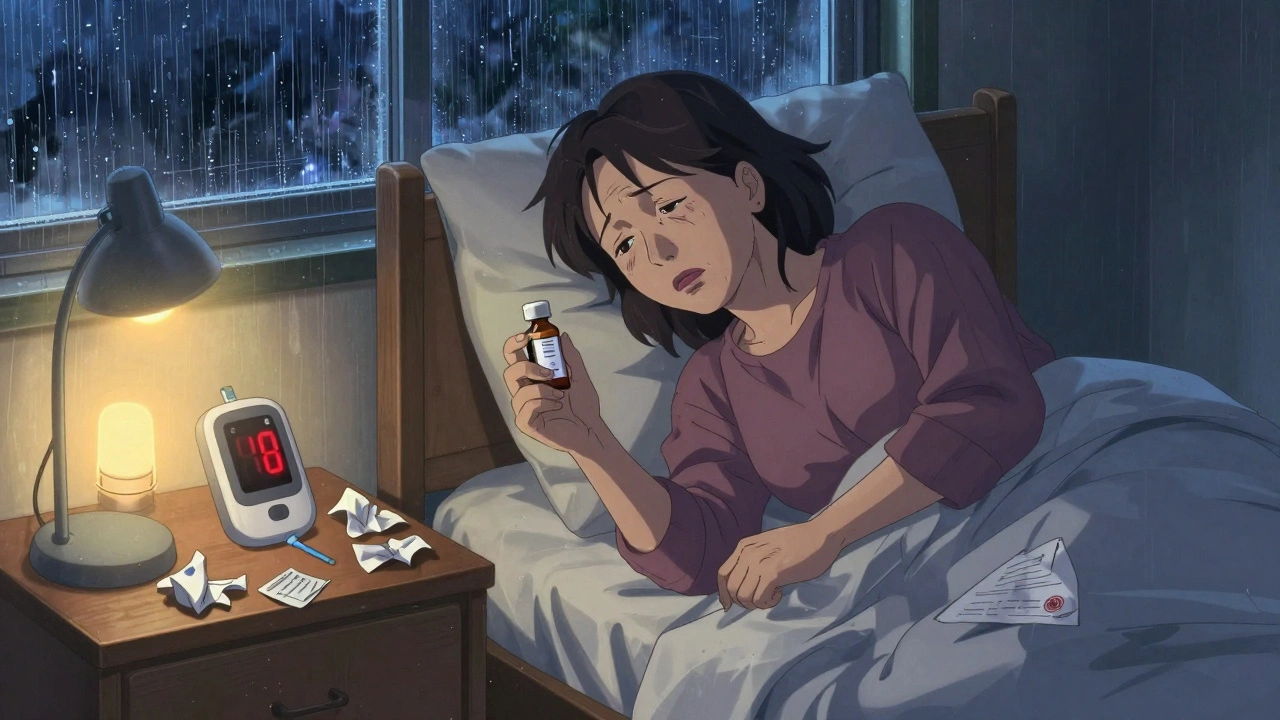
One real-life example: A woman in Manchester kept her old insulin for "just in case." It had been sitting in the bathroom for 18 months. When she used it, her blood sugar spiked. The insulin had lost nearly 40% of its potency. She ended up in the hospital.
Where Not to Store Your Medications
The bathroom is the worst place in your house for medicine. Humidity from showers and baths breaks down drugs faster than you think. Yale New Haven Health found that storing pills in a bathroom cabinet reduces their potency by 15-25% in just six months.
Same goes for the kitchen counter near the stove or a window sill. Heat and sunlight damage medications too. Even a few weeks of direct sun can ruin your allergy meds or thyroid pills.
Where should you store them? A cool, dry place-like a bedroom drawer, a kitchen cabinet away from the sink, or a locked box on a high shelf. Temperature matters. Most medications are fine between 68°F and 77°F. If your home gets hot in summer, consider moving them.
The One-Year Rule for Prescriptions
Here’s something most people don’t know: Even if your prescription bottle says the expiration date is two years away, you should throw it out after one year. That’s the rule followed by the National Kidney Foundation and recommended by pharmacists across the UK and US.
Why? Because once you open a bottle, the seal is broken. Moisture, air, and handling start breaking down the ingredients. And if you didn’t finish the course-say, you felt better after five days of antibiotics-you’re not going to use the rest. So why keep it?
Keeping unused opioids, painkillers, or sedatives around is a recipe for trouble. The CDC says 70% of misused prescription drugs come from home medicine cabinets. That’s not just teens stealing pills. It’s grandparents accidentally grabbing the wrong bottle. Or visitors taking something they shouldn’t.
How to Dispose of Expired Medications Safely
Never flush pills down the toilet or toss them in the trash without preparation. Here’s how to do it right:
- Use a take-back program-The safest option. Pharmacies, hospitals, and police stations across the UK and US offer free drop-off boxes. In 2023, the DEA collected over a million pounds of unused meds in one day alone. Find your nearest site through your local pharmacy or NHS website.
- Mail-back envelopes-CVS, Walgreens, and other major pharmacies now offer free prepaid mailers. Just put your meds in the envelope, seal it, and drop it in the mailbox. No postage needed.
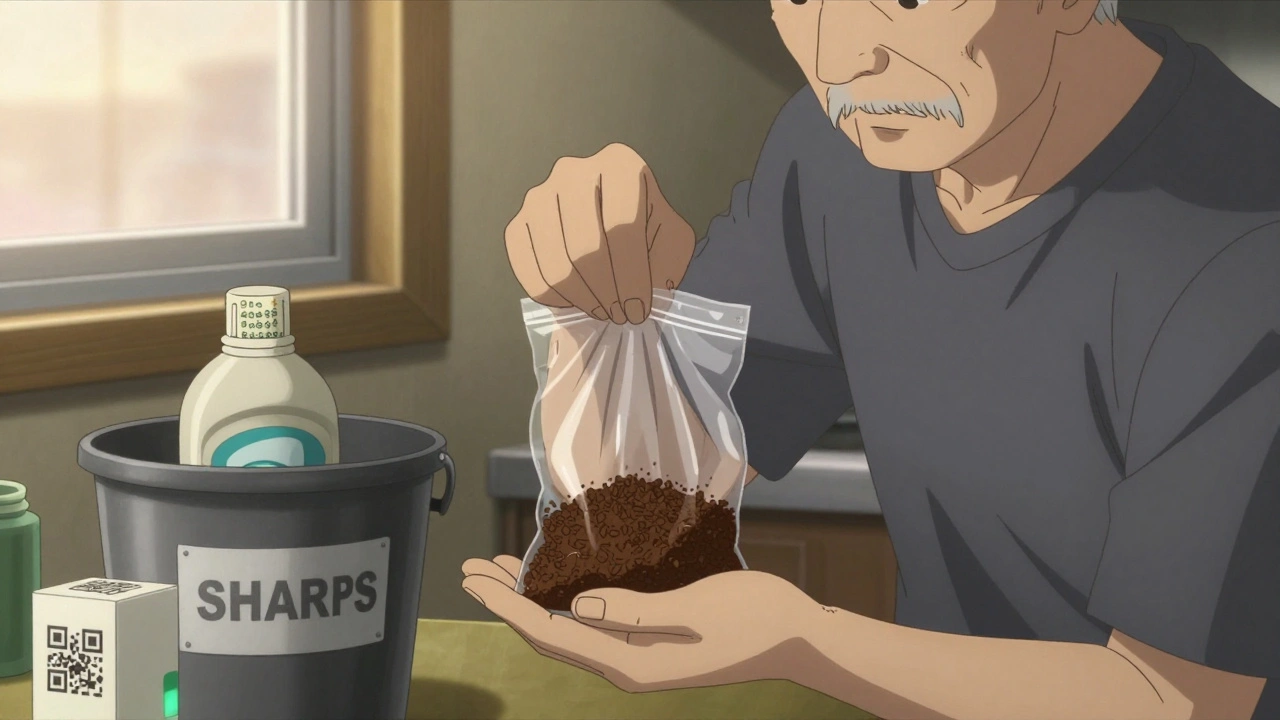
- Home disposal (if nothing else is available)-Remove pills from bottles. Mix them with something unappealing: used coffee grounds, cat litter, or dirt. Use a 2:1 ratio-two parts filler to one part meds. Put the mix in a sealed plastic bag or container. Scratch out your name and prescription info on the empty bottle before recycling it.
- Needles and sharps-Use a hard plastic container like an empty laundry detergent bottle. Seal it with heavy-duty tape. Label it "SHARPS-DO NOT RECYCLE." Drop it off at a pharmacy or hospital.
Don’t be tempted to just throw pills in the bin. Someone-maybe a child, a pet, or a stranger-could find them. And flushing them pollutes water systems. The EPA warns that pharmaceutical waste in rivers contributes to antibiotic resistance in wildlife.
What to Keep in Your Medicine Cabinet
Once you’ve cleared out the expired stuff, rebuild with purpose. You don’t need a pharmacy. You need essentials for minor emergencies:
- Adhesive bandages (20+ of assorted sizes)
- Gauze pads (at least 10)
- Medical tape
- Digital thermometer (no mercury)
- Alcohol wipes (10+)
- Hydrogen peroxide (for cleaning minor cuts)
- Petroleum jelly (for chapped skin or minor burns)
- Scissors and tweezers
- Antihistamines (for allergies)
- Pain relievers (paracetamol or ibuprofen)
- Antacids
Keep a list of what’s inside-and when it expires. Some people use sticky notes. Others use QR code labels that link to a digital list. A pilot program in Connecticut showed that using QR codes improved adherence to checkups by 89%.
Make It a Habit: Twice a Year, No Exceptions
Don’t wait for a crisis. Set a reminder. The easiest way? Tie it to daylight saving time.
When the clocks go forward in March, check your cabinet. When they fall back in October, check again. That’s twice a year. Same time you change your smoke detector batteries. Same time you clean out the fridge.
92% of pharmacists surveyed in 2023 said this method works best. Why? Because it’s automatic. No app needed. No memory required. Just a simple seasonal cue.
If you have elderly parents or live with someone who takes multiple meds, do this together. Make it a routine. It’s not just about safety-it’s about peace of mind.
What’s Coming Next
Technology is catching up. Amazon and Google are testing smart medicine cabinets for 2025. These will monitor humidity and temperature inside, and send alerts to your phone if your meds are at risk. Some even scan barcodes and auto-remind you when something’s about to expire.
But you don’t need a smart cabinet to stay safe. Just a little attention. A few minutes twice a year. And the willingness to throw away what’s old.
Final Thought
Your medicine cabinet isn’t a storage closet. It’s a health tool. And like any tool, it needs maintenance. Expired drugs aren’t just useless-they’re a hidden risk. Getting rid of them isn’t wasteful. It’s responsible.
One less pill in the cabinet means one less chance for a child to get sick. One less chance for someone to overdose. One less chance for an infection to go untreated because your antibiotic lost its punch.
Take five minutes now. Check it. Toss it. Reset it. Your future self-and maybe someone you love-will thank you.
Stephanie Bodde
December 6, 2025 AT 05:28sean whitfield
December 6, 2025 AT 16:17Philip Kristy Wijaya
December 7, 2025 AT 04:04Jennifer Patrician
December 8, 2025 AT 19:32Mellissa Landrum
December 10, 2025 AT 16:36Mark Curry
December 12, 2025 AT 04:11Manish Shankar
December 13, 2025 AT 00:57luke newton
December 14, 2025 AT 15:37Ali Bradshaw
December 14, 2025 AT 21:59Lynette Myles
December 16, 2025 AT 20:50Jimmy Jude
December 17, 2025 AT 12:46ashlie perry
December 18, 2025 AT 06:32Deborah Jacobs
December 20, 2025 AT 02:32Lucy Kavanagh
December 21, 2025 AT 06:36Stephanie Fiero
December 21, 2025 AT 17:37