

Cystic fibrosis isn’t just another lung disease. It’s a genetic disorder that rewires how your body manages salt and water - and the consequences are everywhere. Thick, sticky mucus clogs the lungs, smothers the pancreas, and blocks bile ducts in the liver. For decades, it was a death sentence for children. Today, thanks to a revolution in medicine, many people with cystic fibrosis are living into their 50s and beyond. But this progress isn’t evenly distributed. The real story isn’t just about science - it’s about access, cost, and who gets left behind.
What Exactly Is Cystic Fibrosis?
Cystic fibrosis (CF) is caused by mutations in the CFTR gene a gene on chromosome 7 that controls the movement of chloride ions across cell membranes. When this gene breaks, your body can’t properly regulate salt and water. Instead of thin, slippery mucus, you get thick, gummy mucus that builds up in organs. It’s not contagious. You don’t catch it. You inherit it - and you need two bad copies of the gene, one from each parent, to have the disease. If you only have one, you’re a carrier. Most people don’t even know they carry it until they have a child with CF.
The most common mutation, F508del a specific flaw in the CFTR protein that causes it to fold wrong and get destroyed by the cell, affects about 70% of people with CF worldwide. But there are over 2,000 known mutations. Some are rare. Some are unique to a single family. And until recently, most of them had no targeted treatment.
How CF Affects the Body
It’s easy to think of CF as a lung disease. But that’s only part of the picture. The mucus doesn’t just sit in the airways - it blocks ducts everywhere.
- In the lungs, it traps bacteria like Pseudomonas aeruginosa a stubborn, antibiotic-resistant bug that thrives in CF mucus. Chronic infections lead to inflammation, scarring, and eventually lung failure - the #1 cause of death in CF.
- In the pancreas, mucus blocks the release of digestive enzymes. About 85% of people with CF need to take pancreatic enzyme pills with every meal - sometimes 12 capsules a day - just to absorb calories and nutrients.
- In the liver, bile ducts get clogged in 30% of cases, leading to scarring and cirrhosis.
- In the reproductive system, 97-98% of men with CF are infertile because they’re born without the vas deferens. Women can have children, but pregnancy carries higher risks.
And here’s the diagnostic clue: sweat. People with CF have abnormally salty sweat. The sweat test - measuring chloride levels above 60 mmol/L - remains the gold standard for diagnosis. Most babies in the U.S. are screened for CF at birth now, thanks to newborn screening programs that started in 2010.
The Old Way: Managing Symptoms, Not the Cause
Before 2012, treatment was all about damage control. People with CF spent hours every day on airway clearance - hitting their chest with a vibrating device, using a PEP mask, or doing manual physiotherapy. Inhaled antibiotics, bronchodilators, and mucolytics were part of the daily grind. Enzyme pills. Vitamin supplements. High-calorie diets. Many adults spent 2-3 hours a day just on their treatment routine.
And it worked - sort of. In 1960, the median life expectancy was 14 years. By 2022, thanks to better care, it jumped to 50.9 years. But that was still a long, hard road. People missed school. They missed work. They missed out on normal life. And for many, the disease still won.
The Game-Changer: CFTR Modulators
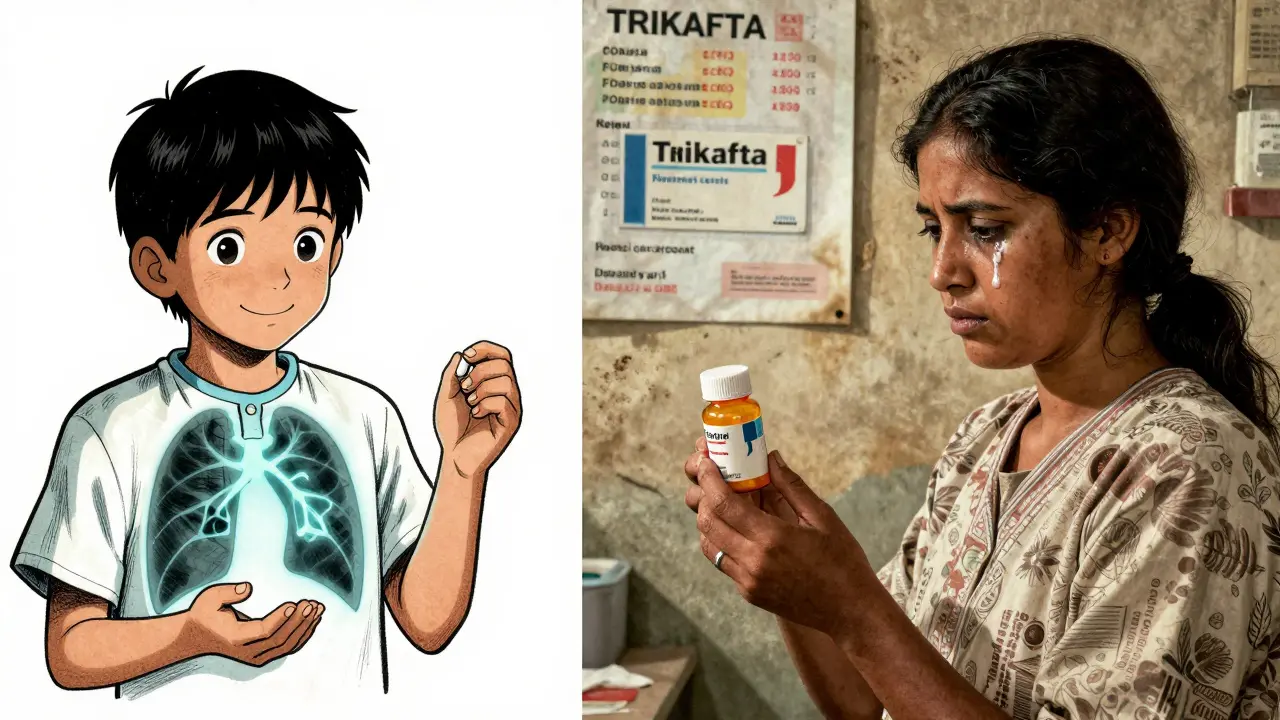
The real turning point came in 2012 with the approval of ivacaftor marketed as Kalydeco, the first drug to fix the faulty CFTR protein at the molecular level. It worked for people with the G551D mutation - a rare one, affecting only about 4% of the CF population. But it proved something: you could fix the root cause.
Then came the triple combo: elexacaftor/tezacaftor/ivacaftor sold as Trikafta, a once-daily pill that fixes the most common mutation, F508del. Approved in 2019, it helped people with at least one F508del mutation - about 90% of the CF population. Clinical trials showed a 13.8% jump in lung function (FEV1) and a 63% drop in lung flare-ups. Real-world stories echo this: one 28-year-old told a CF forum their daily airway clearance dropped from 90 minutes to 20 minutes within three months.
By 2023, 90% of people with CF in the U.S. had access to at least one modulator. And for the first time, many patients stopped needing daily nebulizers, stopped losing weight, stopped getting hospitalized every few months.
The Dark Side: Cost, Access, and Side Effects
But here’s the ugly truth: these drugs cost about $300,000 a year in the U.S. Even with insurance, many families pay $1,200 a month out-of-pocket. A 2022 survey of over 7,800 CF patients found 42% felt financial strain.
And globally? Only 35% of people with CF have access to modulators. In low-income countries, it’s often less than 10%. The World Health Organization called this an “orphan drug inequity crisis.” Most CF deaths today happen in places where these drugs aren’t available.
Side effects aren’t rare either. Some patients develop liver enzyme spikes. A 2023 study in the Journal of Cystic Fibrosis found 3.2% had to stop treatment because of liver toxicity. Others report headaches, nausea, or cataracts. For some, the trade-off isn’t worth it.
The 10% Left Behind
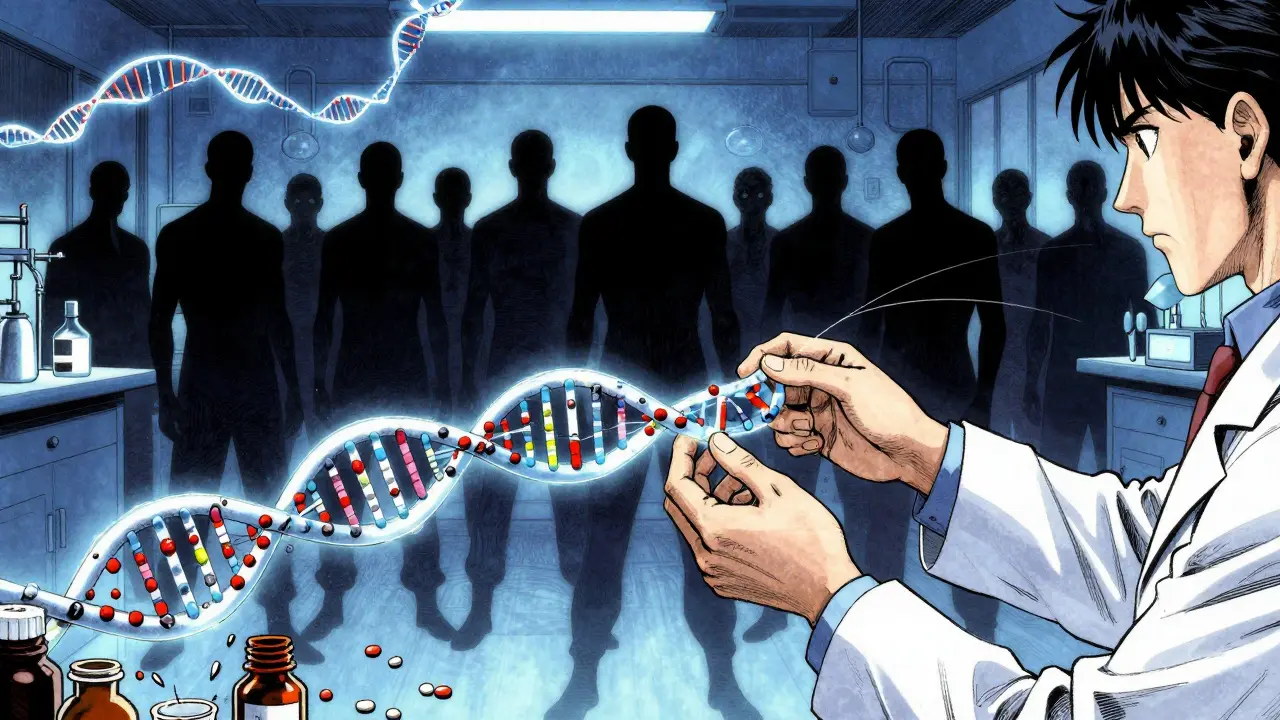
Here’s the biggest gap: 10% of people with CF have mutations that don’t respond to current modulators. These are often Class I mutations - nonsense mutations that stop the CFTR protein from being made at all. For them, modulators do nothing. They’re stuck with the old, grueling routine.
That’s why new research is focused on them. Trials are underway for mRNA therapies like PTC Therapeutics’ Ataluren, designed to trick cells into reading through stop signals in the gene. Others are testing CRISPR gene editing to permanently fix the CFTR gene in stem cells. Aradigm is testing a new inhaled antibiotic specifically for the toughest lung infections. The Cystic Fibrosis Foundation has pledged $100 million to tackle this gap - the “Path to a Cure” initiative.
What’s Next? The Future of CF Care
The market for CF drugs hit $6.2 billion in 2022. Vertex Pharmaceuticals controls 95% of it. But the game is shifting. Trikafta is now approved for kids as young as 2. The median age of CF patients is rising - 52% are now adults. More people are living long enough to face heart disease, osteoporosis, and diabetes - complications we didn’t see in the 1990s.
Research is moving beyond modulators. Scientists are exploring:
- Gene therapy delivered via nasal spray
- Stem cell transplants to rebuild lung tissue
- Anti-inflammatory drugs that target the immune system’s overreaction
- AI-driven tools to predict which patients will respond to which drugs
And support is better than ever. The Cystic Fibrosis Foundation runs 260 accredited care centers in the U.S., offers 24/7 clinical help, and hosts an annual conference with 3,500+ professionals. Online communities like CF Buddy Connect connect 12,500+ people for peer support.
Final Thoughts: Progress Isn’t Fair
Cystic fibrosis has gone from a childhood killer to a manageable chronic disease for many. That’s a medical miracle. But it’s not a universal one. The same drugs that give someone in Manchester or New York a near-normal life are out of reach for someone in Nairobi or Manila. Science has solved the biology. The challenge now is justice - making sure no one is left behind because of where they live or how much they earn.
Can you outgrow cystic fibrosis?
No. Cystic fibrosis is a genetic condition you’re born with. You can’t outgrow it. But with modern treatments, especially CFTR modulators, many people live long, active lives. The disease doesn’t disappear - but its impact can be dramatically reduced.
Is cystic fibrosis the same as COPD?
No. COPD (chronic obstructive pulmonary disease) is usually caused by smoking or long-term exposure to lung irritants. CF is genetic. While both cause breathing problems, CF starts in childhood, affects multiple organs, and involves thick mucus due to a specific gene defect. COPD doesn’t cause pancreatic or liver issues like CF does.
Can two parents without CF have a child with it?
Yes. Both parents must be carriers - meaning they each have one mutated CFTR gene but don’t have the disease themselves. If two carriers have a child, there’s a 25% chance the child will inherit two bad copies and have CF. About 1 in 25 people of European descent are carriers.
Do CFTR modulators cure cystic fibrosis?
No, they don’t cure it. Modulators fix the faulty CFTR protein’s function, which improves symptoms and slows disease progression. But they don’t replace the defective gene. You still have the mutation. If you stop taking the drug, the problem returns. They’re life-changing - but not a cure.
Why is Trikafta so expensive?
Trikafta was developed through years of research, clinical trials, and regulatory approval - all funded by pharmaceutical companies. The FDA granted orphan drug status, giving Vertex Pharmaceuticals market exclusivity. With only about 100,000 people worldwide eligible, the cost is spread across a tiny patient pool. Many argue the price reflects profit over public health, especially since the Cystic Fibrosis Foundation invested heavily in early research.
What’s the life expectancy for someone with CF today?
As of 2022, the median predicted survival for someone born with CF in the U.S. is 50.9 years. For those who started modulator therapy early, many are expected to live into their 60s or beyond. But this number varies widely by country, access to treatment, and mutation type. In places without modulators, life expectancy remains closer to 30 years.
For those living with CF, the future is no longer about waiting to die. It’s about managing a complex, lifelong condition - with new tools, new hope, and new challenges.
Jeff Card
March 5, 2026 AT 12:06Just read this whole thing and honestly? I’m in awe. The science here is wild - we’re talking about fixing a broken protein at the molecular level. It’s like upgrading a 1998 dial-up connection to fiber optic overnight. And yet, the fact that 90% of people get this miracle drug while others are left with nothing? That’s the real tragedy.
Gretchen Rivas
March 5, 2026 AT 20:38My sister has CF. She started Trikafta at 16. Now she runs marathons. I’ve seen her go from needing 3 hours of daily treatments to 30 minutes. It’s not a cure, but it’s the closest thing to magic we’ve got.
Mike Dubes
March 7, 2026 AT 13:26the fact that we can even fix this at a genetic level is insane. i remember when people with cf were just told to eat lots of butter and hope for the best. now we got pills that make your lungs not suck? wild. also side effects are real tho - my cousin had liver issues and had to stop. no one talks about that enough.
Milad Jawabra
March 8, 2026 AT 21:48Let me tell you something - if you think this is just about medicine, you’re delusional. This is about capitalism. Vertex made billions while families in India are begging for scraps. These drugs aren’t expensive because they’re hard to make - they’re expensive because they’re profitable. And guess who pays? The people who can’t afford insurance. The ones in Africa. The ones without a voice. We need to break the patent monopoly. Now.
Stephen Vassilev
March 9, 2026 AT 23:44Jessica Chaloux
March 11, 2026 AT 12:53my heart is breaking reading this. i had a friend with cf who died at 22. she used to send me memes about how she ‘outgrew’ her nebulizer. i still have her last text: ‘they say i’ll live to 50… but what if i don’t make it to 30?’ 💔
tatiana verdesoto
March 13, 2026 AT 06:55My cousin is one of the 10% left behind. She has a nonsense mutation. She’s 18, and her lung function is dropping. She’s on 12 pills a day, IV antibiotics every other week, and still gets hospitalized every 3 months. I wish people would stop acting like modulators solved everything. For her? They didn’t change a thing. We need research for the outliers - not just the 90%.
Donna Zurick
March 14, 2026 AT 10:04Just wanted to say thank you for writing this. I’ve been living with CF since I was 5. I’m 41 now. I’ve been on Trikafta for 3 years. I work full-time. I travel. I hug my kids without worrying about coughing. It’s not perfect. But it’s enough. For the first time in my life, I feel like I’m not just surviving.
Darren Torpey
March 14, 2026 AT 18:27Imagine your body’s a car. CF is like a faulty fuel pump. For decades, we just kept cleaning the gas tank, replacing the spark plugs, and praying. Then someone invented a magic wand that fixes the pump itself. That’s Trikafta. But guess what? Only people with the right model car get the wand. Everyone else? Still stuck with duct tape and hope. We need more wands. For every car.
Lebogang kekana
March 15, 2026 AT 17:22As someone from South Africa, I can’t believe we’re even having this conversation. My cousin has CF. She’s 12. She’s never seen a modulator. She gets one nebulizer treatment a week because the clinic ran out. Her dad sells his tractor to buy enzymes. I cry every time I think about it. This isn’t science - it’s a luxury. And it’s killing people who didn’t choose this.
Deborah Dennis
March 15, 2026 AT 21:25Everyone’s acting like this is a miracle. But let’s be real - these drugs are toxic. Liver damage? Cataracts? Weight loss? It’s trading one hell for another. And the ‘life expectancy’ numbers? They’re inflated because they only count people who can afford treatment. What about the rest? We’re lying to ourselves.
Matt Alexander
March 17, 2026 AT 17:12Quick explainer for anyone confused: CFTR modulators don’t fix your genes. They just help your broken protein work better. Think of it like giving a broken zipper a little tug - it still doesn’t fix the teeth, but now it zips. You still have CF. You still need to clear your lungs. You still need enzymes. But now? You can breathe easier. That’s huge.
Ethan Zeeb
March 18, 2026 AT 02:59I’m not saying modulators are bad. But let’s not pretend they’re the endgame. The real solution is gene editing - CRISPR, stem cells, nasal delivery. We’re patching a leaky boat while ignoring the fact that the hull is rotting. We need to rebuild the whole damn ship. And we need to do it fast.
marjorie arsenault
March 19, 2026 AT 14:58I’m a nurse who works with CF patients. I’ve seen kids on 20 pills a day, coughing until they vomit. Then Trikafta comes in. One kid stopped needing oxygen. Another started playing soccer. I cried. Not because it’s perfect - but because it’s proof that science can heal when we choose to care.
Tobias Mösl
March 19, 2026 AT 22:42Let’s cut through the noise. The entire CF treatment industry is a Ponzi scheme. Vertex didn’t invent this - the Cystic Fibrosis Foundation did. They funded the research, then handed it over to a private company. Now they’re charging $300K/year because they can. And governments? They’re complicit. This isn’t medicine. It’s corporate extortion. Wake up.