
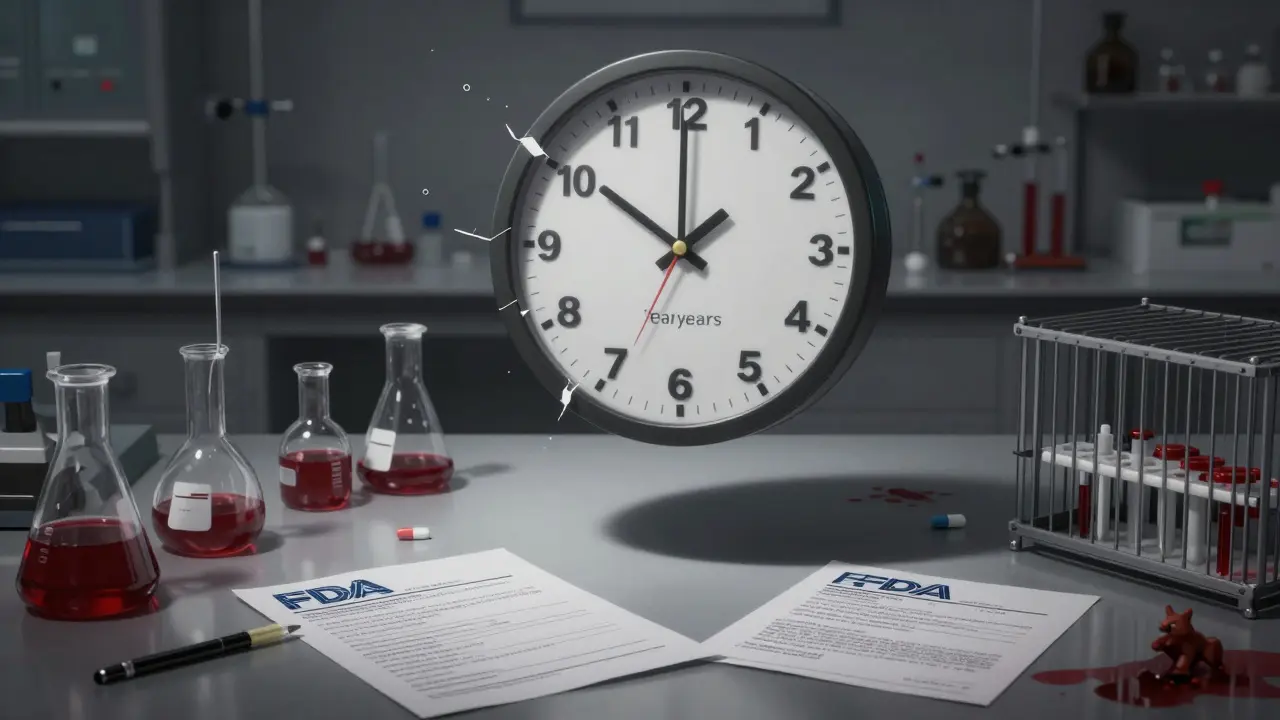
Most people assume that when a pharmaceutical company gets a patent on a new drug, they get 20 years of exclusive rights to sell it. That’s what the law says. But here’s the truth: by the time that drug hits the pharmacy shelf, effective patent life is already cut in half.
Why the 20-Year Clock Starts Before the Drug Even Exists
The 20-year patent term begins the day the inventor files the application - not when the drug is approved. That means the clock is ticking while scientists are still testing the molecule in labs, running animal studies, and designing clinical trials. By the time the FDA gives final approval, it’s common for 7 to 10 years to have already passed.For example, a drug filed for patent in 2010 might not get FDA approval until 2018. That leaves only 12 years of market exclusivity before generics can enter - not the full 20. And that’s if nothing goes wrong. Delays in clinical trials, unexpected side effects, or requests for more data from regulators can eat up even more time.
The Hatch-Waxman Act: A Compromise That’s Now Being Strained
In 1984, Congress passed the Drug Price Competition and Patent Term Restoration Act - better known as the Hatch-Waxman Act. Its goal was simple: balance innovation with affordability. It gave brand-name drugmakers a way to get back some of the lost time by offering patent term extension (PTE). The law allowed up to five extra years of protection, but with a hard cap: no drug could have more than 14 years of market exclusivity after FDA approval.This made sense at the time. Back then, most drugs took 5-7 years to get through trials. But today, the average development time is closer to 10 years. So even with the maximum five-year extension, many drugs still end up with just 10-12 years of real exclusivity after launch.
Secondary Patents: The Hidden Strategy Behind Longer Exclusivity
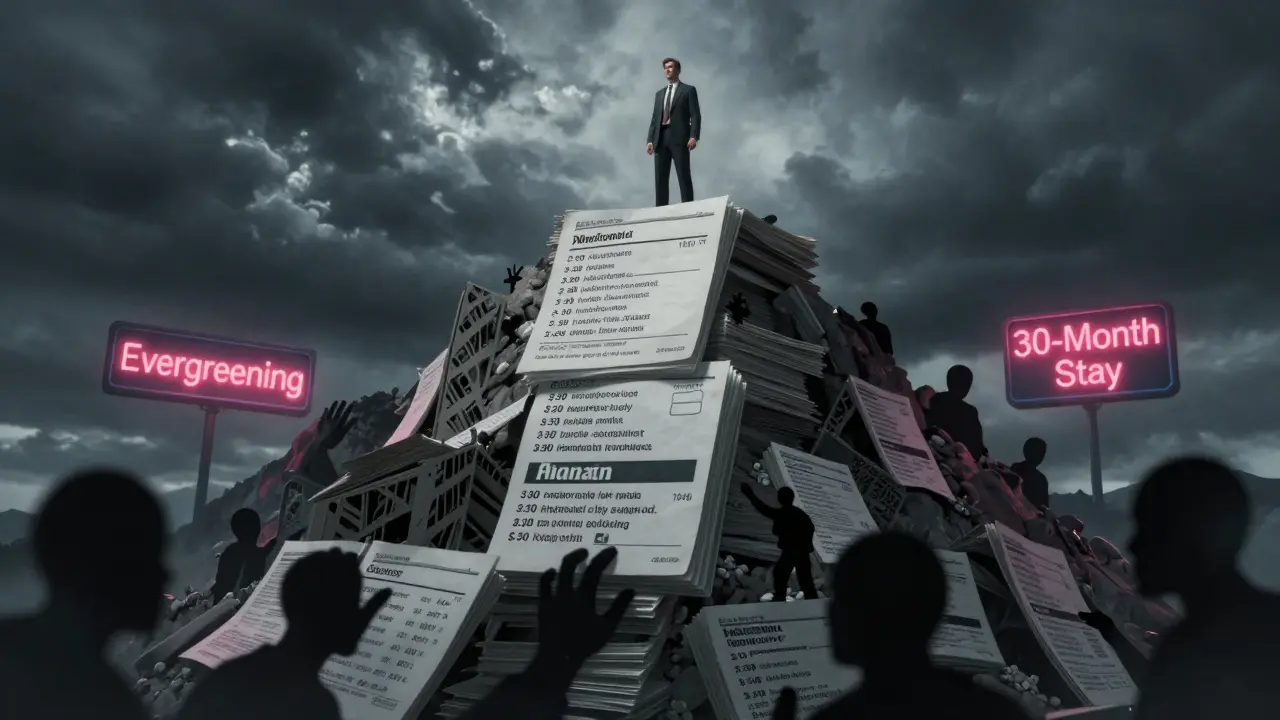
Here’s where things get tricky. While the original patent covers the active ingredient, companies file dozens of secondary patents - on things like new pill coatings, extended-release formulas, combination therapies, or even specific patient dosing schedules. These aren’t new drugs. They’re tweaks. But under U.S. law, each one can delay generic entry.A 2023 study from the R Street Institute found that blockbuster drugs often have 20 to 30 patents tied to them. These aren’t all filed at once. Many come years after approval. A drug approved in 2015 might get a new patent in 2020 for a once-daily version, then another in 2022 for a pediatric formulation. Each one triggers a 30-month legal delay if a generic company tries to enter the market.
This practice, called “evergreening,” is legal - but it’s not what Congress intended. The Hatch-Waxman Act was designed to reward true innovation, not minor changes that don’t improve patient outcomes. Yet 91% of drugs that get patent extensions still maintain monopolies long after those extensions expire, thanks to this patchwork of secondary patents.
Regulatory Exclusivities: The Other Layer of Protection
Patents aren’t the only shield. The FDA also grants regulatory exclusivities, which are separate from patents and don’t require a lawsuit to enforce. These include:- New Chemical Entity (NCE) Exclusivity: 5 years of market protection for drugs with a completely new active ingredient.
- New Clinical Investigation Exclusivity: 3 years for new uses, formulations, or delivery methods of existing drugs.
- Orphan Drug Exclusivity: 7 years for drugs treating rare diseases affecting fewer than 200,000 people in the U.S.
- Pediatric Exclusivity: 6 months added to existing exclusivity if the company studies the drug in children.
These aren’t minor bonuses. They can add up. A drug with NCE exclusivity, pediatric extension, and a new formulation might enjoy 11+ years of protected sales - even if its main patent expires early.
Global Differences: How Other Countries Handle It
The U.S. isn’t alone in this struggle. Other countries have their own systems:- Canada offers a Certificate of Supplementary Protection (CSP), giving up to 2 years of extra protection after patent expiry.
- Japan allows up to 5 years of patent term extension - similar to the U.S., but with different rules on what counts as a delay.
- European Union has Supplementary Protection Certificates (SPCs), which can add up to 5 years, but only if the drug was approved within 5 years of patent filing.
The key difference? In many countries, the system is tighter. Secondary patents don’t always block generics. Regulatory exclusivities are shorter. And courts are more willing to strike down patents that don’t represent real innovation.
The Economic Reality: Why This Matters for Everyone
Developing a new drug costs about $2.6 billion (in 2013 dollars). That’s why companies need time to recoup that investment. Without exclusivity, no one would risk billions on a drug that might fail in Phase 3.But here’s the flip side: once exclusivity ends, prices drop 80-90% within a year. Generic manufacturers don’t need to repeat expensive trials. They just prove their version is bioequivalent. That’s why the timing of patent expiry is so critical.
By 2025, over $250 billion in annual drug sales will be at risk from patent expirations. Companies facing this “patent cliff” are already shifting strategies - developing biosimilars of their own, buying up generic makers, or pivoting to new markets. Patients, insurers, and pharmacies all feel the ripple effect.
What’s Next? Pressure Is Building
Critics say the system is broken. The original intent of Hatch-Waxman - to balance innovation and access - is being undermined by patent thickets and strategic delays. Legal challenges are growing. The FTC and state attorneys general are scrutinizing “pay-for-delay” deals, where brand companies pay generics to stay off the market.Some lawmakers are pushing for reforms: limiting secondary patents, speeding up FDA review, or capping exclusivity periods. But change moves slowly. For now, the system remains a complex web of patents, exclusivities, and legal maneuvers - all designed to stretch a 20-year clock into something that feels like a lifetime.
If you’re a patient, a caregiver, or even just someone paying for prescriptions, understanding this gap between paper patents and real-world exclusivity helps explain why some drugs stay expensive long after they should be cheap. It’s not about greed. It’s about a system that was built for a different time - and is now being stretched thin.
How long is the actual market exclusivity for most new drugs?
Most new drugs have 10 to 15 years of real market exclusivity after FDA approval. Even though patents last 20 years from filing, the time spent in clinical trials and regulatory review typically eats up 7-10 years. With patent term extensions and regulatory exclusivities, the total protected period can stretch to 12-15 years - but rarely reaches the full 20.
Can a drug have more than one patent?
Yes. A single drug can have dozens of patents. The main patent covers the active ingredient. Secondary patents cover things like new formulations, delivery methods, combinations with other drugs, or specific dosing regimens. These are often filed years after approval and are used to delay generic competition - a strategy called “evergreening.”
What’s the difference between a patent and regulatory exclusivity?
A patent is granted by the U.S. Patent Office and protects the invention itself - it can be filed at any time, even before the drug is approved. Regulatory exclusivity is granted by the FDA and is tied to the drug’s approval date. It doesn’t require a patent and can’t be challenged in court. For example, a drug can lose its patent but still be protected by 5-year NCE exclusivity.
Why can’t companies just get a full 20-year patent after approval?
Because patents are filed early - often during preclinical research - to secure legal rights before competitors copy the idea. The law doesn’t allow resetting the clock after approval. The Hatch-Waxman Act lets companies apply for up to 5 years of extension to make up for lost time, but even then, the total exclusivity after approval is capped at 14 years.
Do generic drugs enter the market immediately after a patent expires?
Not always. Even after a patent expires, a generic company can be blocked for up to 30 months if the brand-name company sues for infringement. This is called the “30-month stay.” Many lawsuits are filed strategically to delay generics. Also, if regulatory exclusivities are still active, generics can’t enter at all - even if the patent is gone.
Are there efforts to fix this system?
Yes. The FTC, state attorneys general, and some lawmakers are pushing to limit secondary patents, ban pay-for-delay deals, and cap exclusivity periods. Some proposals aim to require proof that new formulations actually improve patient outcomes before granting extra protection. But pharmaceutical lobbying remains strong, and major changes have been slow to pass.
Jessica Knuteson
January 27, 2026 AT 21:11rasna saha
January 29, 2026 AT 02:12Skye Kooyman
January 30, 2026 AT 23:39James Nicoll
February 1, 2026 AT 05:46Uche Okoro
February 1, 2026 AT 16:46Ashley Porter
February 3, 2026 AT 09:01Peter Sharplin
February 5, 2026 AT 06:46John Wippler
February 5, 2026 AT 12:53Kipper Pickens
February 6, 2026 AT 08:50Aurelie L.
February 7, 2026 AT 23:31