
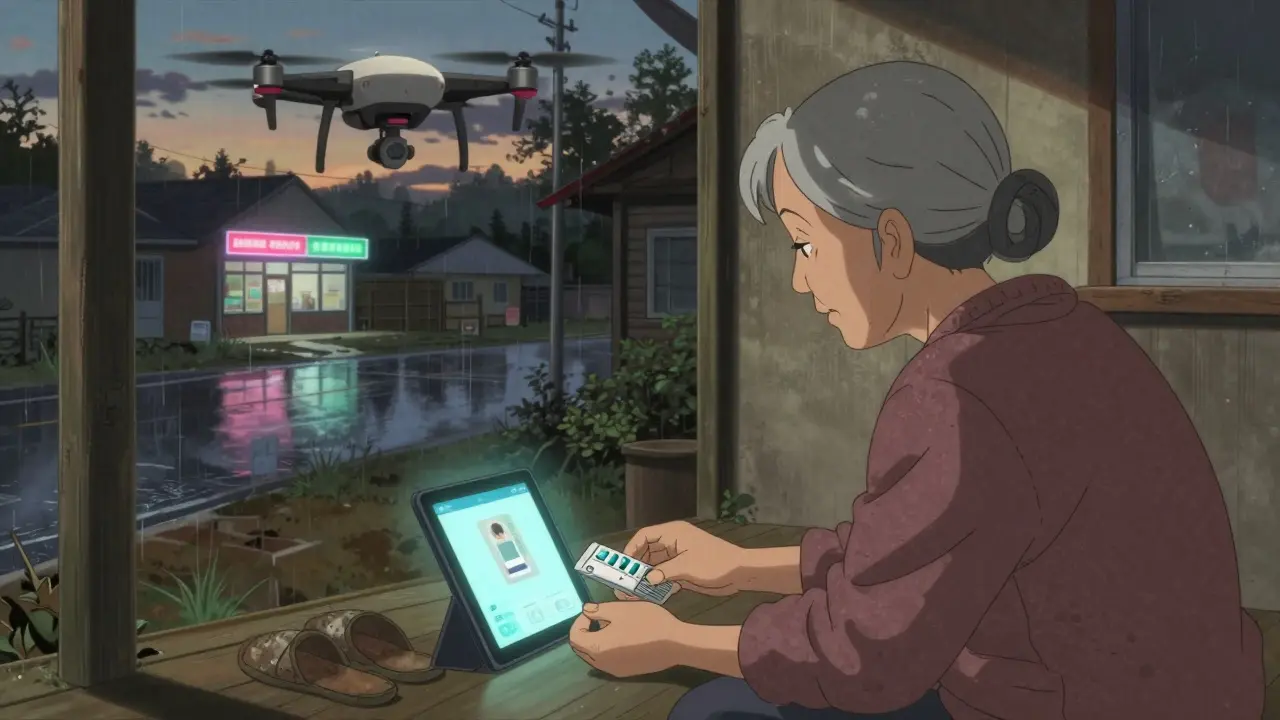
When you need your blood pressure meds or diabetes pills, do you still drive to the pharmacy, wait in line, and hope they have your prescription in stock? That’s changing fast. By 2026, digital pharmacy won’t just be an option - it’ll be the default for millions, especially when it comes to generic medications. The shift isn’t just about convenience. It’s about cost, speed, and access. And the numbers back it up: 90% of all prescriptions filled in the U.S. are for generics, and digital platforms are now handling over 31% of those deliveries - up from less than 20% just two years ago.
How Digital Pharmacy Works for Generic Drugs
At its core, a digital pharmacy connects your doctor’s prescription directly to a fulfillment center using secure, cloud-based systems. No more paper scripts. No more calling in refills. You order through an app, your insurance gets verified automatically, and your meds are shipped - often the same day. Companies like Truepill process over 10,000 prescriptions daily. CVS Health’s digital system cuts fulfillment time from 48 hours to just 5.2 hours. That’s not magic. It’s AI-driven inventory management, real-time tracking, and integrated telehealth.
Here’s how it flows: You have a virtual visit with a provider. They e-prescribe your generic lisinopril. The system checks your insurance, confirms coverage, and routes the order to the nearest fulfillment hub. Your pills are picked, packed, and shipped. Meanwhile, AI predicts when you’ll run out based on your refill history and even local weather patterns (yes, flu season spikes demand). The whole thing takes under six hours. And it’s accurate - digital systems hit 92.3% order accuracy, compared to 87.6% at traditional pharmacies.
Why Generics Are the Focus
Generic drugs aren’t just cheaper - they’re the backbone of affordable care. In 2024, the U.S. spent $124.7 billion on generics. That’s nearly half of all prescription spending. Digital pharmacies thrive here because generics are standardized, predictable, and easy to automate. There’s no need for complex consultations. No brand-name marketing. Just a pill that works like the name-brand - at 22.7% less cost on average, according to GoodRx’s 2024 report.
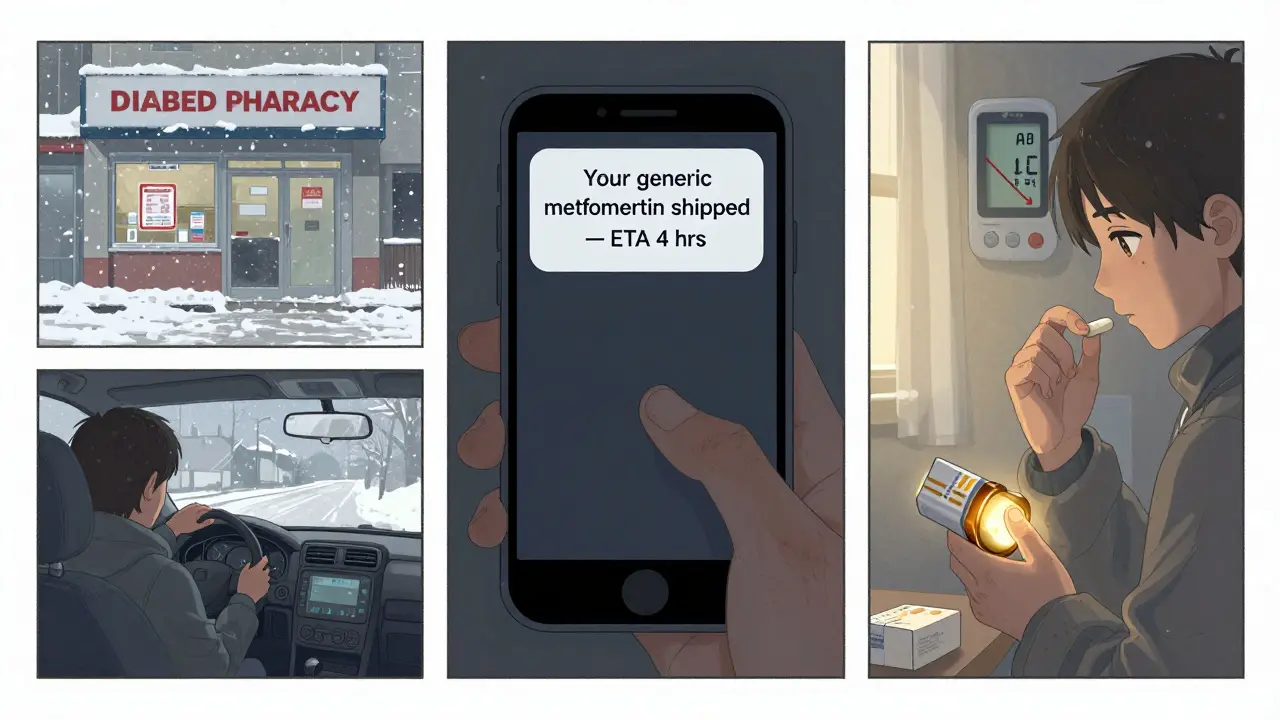
For patients in rural areas, this is life-changing. Over 36 million Americans live in “pharmacy deserts” - places with no nearby pharmacy. Digital delivery cuts out the 50-mile drive. One study found patients in these areas save $17.30 per prescription just on gas and time. And adherence improves. A CVS Health case study showed a diabetic patient lowered their A1C by 1.8 points after switching to automated generic delivery with reminder alerts.
What’s Changing by 2026
By 2026, digital pharmacy won’t just deliver pills - it’ll anticipate needs. Here’s what’s coming:
- AI that knows your body: Platforms will start using pharmacogenomic data - your genetic info - to choose the best generic version for you. Not all generics are equal. Some work better for certain people. By 2026, 74% of platforms will use this data to personalize choices.
- Smart dispensers: Devices that unlock only when it’s time to take your pill. They track intake and alert your doctor if you miss doses. Studies show they boost adherence by 28% for chronic meds.
- Instant insurance checks: Right now, 18.4% of orders fail because of insurance mismatches. New AI systems will fix this before you even hit “order.”
- Same-day delivery networks: Think Amazon Prime, but for meds. Urban areas will get deliveries in under 12 hours. Rural areas? Still slower, but down from 38 hours to under 20.
CVS Health rolled out its SmartDUR™ system in late 2024. It uses AI to assess therapeutic equivalence - meaning it doesn’t just swap any generic. It picks the one proven to work best for your specific condition. That’s huge. It reduces errors that used to happen when a system auto-substituted a generic your insurance didn’t cover - a real pain point users complained about on Reddit.

Where It Still Falls Short
Don’t get fooled. This isn’t perfect. Digital pharmacy excels at routine, single-drug regimens - like statins or metformin. But when you’re on five meds with complex interactions? It stumbles. Only 43% of digital platforms support full medication therapy management. That’s compared to 89% of brick-and-mortar pharmacies.
And errors happen. In 2023, an FDA alert reported incorrect levothyroxine dosing on one digital platform, affecting 217 patients. Why? AI suggested a generic substitution based on cost - but didn’t factor in the patient’s thyroid sensitivity. Dr. Michael Cohen of ISMP warns: “Automation without human oversight increases risk.”
Seniors struggle too. Twenty-four percent of people over 65 say they can’t navigate the apps. That’s not just tech illiteracy - it’s poor design. Many platforms still use tiny buttons, confusing menus, and no voice options. The fix? Simpler interfaces, phone-based support, and partnerships with community centers to help older adults set up accounts.
Who’s Winning the Market
The digital pharmacy space is split into three camps:
| Provider Type | Examples | Market Share |
|---|---|---|
| Integrated Retailers | CVS Health, Walgreens | 28.4% |
| Pure Digital Players | Ro, Honeybee Health | 14.3% |
| Specialty Platforms | Blink Health | 11.5% |
CVS leads because it combines physical stores with digital. You can order online, pick up in-store, or get it shipped. Ro and Honeybee focus on simplicity - fast, clean apps for common meds. Blink Health is all about price transparency. You see the exact cost before you order - no surprises.
Amazon Pharmacy entered the space hard, grabbing 19.7% market share by bundling meds with Prime. But it’s still catching up on clinical support. Most users love the speed and price - but miss having a pharmacist to call.
The Human Factor
Technology can’t replace a pharmacist who knows your history. That’s why the best digital systems now include video consultations with pharmacists - not just chatbots. The University of Florida is training all new pharmacy students to use AI tools for generic substitution. They’re learning how to audit algorithms, spot bias, and override automated decisions.
Users say the biggest win is price transparency. In 63% of positive reviews, people praise knowing the cost upfront. The biggest complaint? Insurance confusion. Forty-one percent of negative reviews mention billing errors or coverage denials. That’s not a tech problem - it’s a systems problem. Insurance companies haven’t fully synced with digital platforms yet.
What You Need to Know
If you’re thinking about switching to a digital pharmacy for your generics:
- Check if your insurance is accepted - not all platforms work with all plans.
- Look for platforms that offer pharmacist video chats - not just email.
- Use apps that let you see which generic version you’re getting. Not all are equal.
- Set up refill alerts. Most platforms let you auto-renew, but you should still review each order.
- For seniors or non-tech users: Ask a family member to set up the account. Use phone support. Don’t rely on the app alone.
And if you’re on multiple medications? Stick with a local pharmacy for now. Or find a digital service that offers full medication reviews. Not all do.
What’s Next
By 2027, Deloitte predicts digital pharmacies will handle nearly half of all generic prescriptions. That’s a seismic shift. But success won’t come from tech alone. It’ll come from fixing the gaps: better insurance integration, stronger oversight on AI substitutions, and designs that don’t leave older adults behind.
The future isn’t just about faster delivery. It’s about smarter, safer, and more personal care - all while keeping meds affordable. The technology is here. Now, the system just needs to catch up.
Are digital pharmacies safe for generic medications?
Yes - but with caveats. Most digital pharmacies use HIPAA-compliant systems with AES-256 encryption and FDA-regulated fulfillment centers. However, errors can occur when AI auto-substitutes generics without checking patient-specific factors like allergies or drug interactions. Always review the generic version you receive and use platforms that offer pharmacist consultations.
Can I use digital pharmacies if I’m over 65?
You can, but many seniors struggle with the apps. About 24% report difficulty using digital platforms. Look for services that offer phone support, simplified interfaces, or in-person setup help. Some pharmacies now partner with senior centers to assist with enrollment. Always have a family member or caregiver help set up your account if needed.
Do digital pharmacies save money on generics?
Yes, often significantly. On average, digital pharmacies offer generics at 22.7% less than retail prices, according to GoodRx’s 2024 report. You also save on transportation and time - especially if you live far from a pharmacy. Some platforms, like Blink Health, show prices upfront so you can compare. But always check insurance coverage - some plans only cover certain digital providers.
What if my insurance doesn’t cover the generic they send?
This is a common issue. Some platforms auto-substitute generics based on cost, not your plan’s formulary. If your insurance doesn’t cover the version they send, you’ll pay full price - or get a delay. Always confirm the generic name matches your prescription. Use platforms that show your coverage status before you order. If you get the wrong one, contact customer service immediately - most will correct it at no cost.
Can digital pharmacies handle complex medication regimens?
Most struggle. Only 43% of digital platforms currently support comprehensive medication therapy management - compared to 89% of traditional pharmacies. If you take five or more meds, have kidney or liver issues, or are on high-risk drugs like blood thinners, stick with a local pharmacy or choose a digital service that offers pharmacist reviews. Complex cases need human oversight.
Sam Pearlman
February 17, 2026 AT 04:23Linda Franchock
February 17, 2026 AT 18:48Haley DeWitt
February 18, 2026 AT 01:32Adam Short
February 18, 2026 AT 12:36Prateek Nalwaya
February 19, 2026 AT 13:33Dennis Santarinala
February 21, 2026 AT 02:18Steph Carr
February 22, 2026 AT 09:38Brenda K. Wolfgram Moore
February 22, 2026 AT 22:37Agnes Miller
February 23, 2026 AT 11:36Geoff Forbes
February 23, 2026 AT 13:19Jonathan Ruth
February 24, 2026 AT 05:29Philip Blankenship
February 25, 2026 AT 12:26Oliver Calvert
February 27, 2026 AT 03:48Kancharla Pavan
February 27, 2026 AT 21:28James Lloyd
March 1, 2026 AT 06:37