
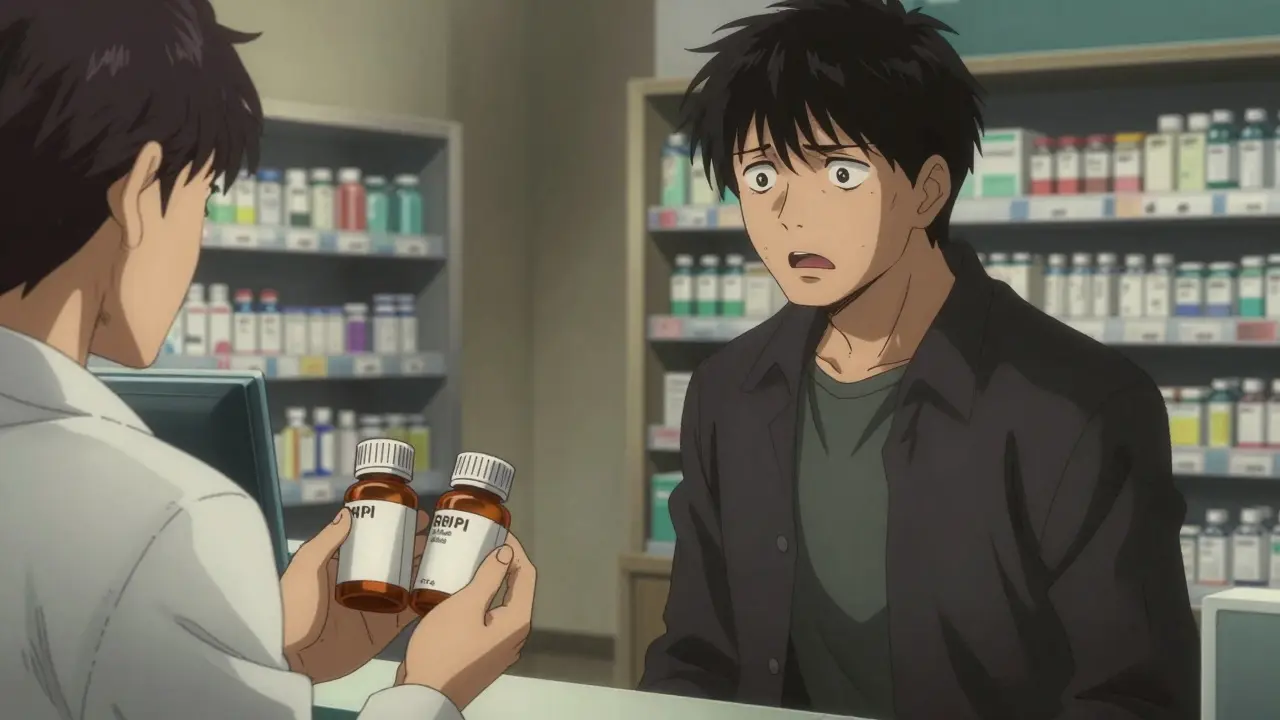
You're at the pharmacy counter, and the pharmacist tells you the medication your doctor prescribed is $200. Then they mention there's a generic version for $20. It feels like too good to be true. Why would one version cost ten times more than the other if they do the same thing? You might wonder if the cheaper option is a "watered-down" version or if it simply won't work as well for your specific health needs. The truth is, for the vast majority of people, the only real difference is the price tag and perhaps the color of the pill.
Key Takeaways
- Generic drugs use the same active ingredients as brand names and must be bioequivalent.
- Generics typically cost 80-85% less than the original brand-name versions.
- Differences in appearance (color, shape) and inactive ingredients are common and usually harmless.
- Most prescriptions in the US (9 out of 10) are filled as generics.
- Some specialized medications, like narrow therapeutic index drugs, may require a more detailed discussion with your provider.
What Actually Makes a Medication "Generic"?
When a pharmaceutical company develops a new drug, they get a patent. This patent usually lasts about 20 years from the filing date, giving them exclusive rights to sell that drug while they recoup their research and development costs. Once that patent expires, other companies can apply to make a generic version.
To get approval, a generic drug must be bioequivalent meaning it has the same active ingredient and works in the body in the same way and at the same rate as the brand-name drug. The U.S. Food and Drug Administration the federal agency responsible for protecting public health by ensuring the safety, efficacy, and security of human and veterinary drugs requires generics to meet the same strict standards for strength, quality, purity, and efficacy. If you're taking a generic, you're getting the same chemical "engine" that powers the brand-name version.
So, why do they look different? Trademark laws prevent generic companies from making their pills look exactly like the brand name. This means your pill might change from a blue oval to a white circle. They might also use different inactive ingredients substances like binders, fillers, or flavorings that do not affect how the drug works but help with the pill's structure or taste. While these don't change the drug's efficacy, they are the primary reason some people might have a different reaction to one version over another.
The Real Cost Difference
The price gap is staggering. Generic drugs are often 80% to 85% cheaper than their brand-name counterparts. This isn't because the generic is "low quality," but because the generic manufacturer didn't have to spend billions on the initial clinical trials and marketing that the original company did.
| Feature | Brand-Name Drug | Generic Drug |
|---|---|---|
| Active Ingredients | Original Formula | Identical to Brand |
| FDA Approval | Full Clinical Trials | Bioequivalence Proof |
| Appearance | Patented Look | Different Color/Shape |
| Price | High (Premium) | Low (80-85% Less) |
| Inactive Ingredients | Standardized | May Vary by Manufacturer |
To put this in perspective, the U.S. healthcare system saved about $1.67 trillion between 2007 and 2016 just by using generics. For a regular person, this might mean the difference between paying $15 and $120 for a monthly prescription. When costs are too high, some people start skipping doses, which is far more dangerous than switching to a generic.
When Should You Be Cautious?
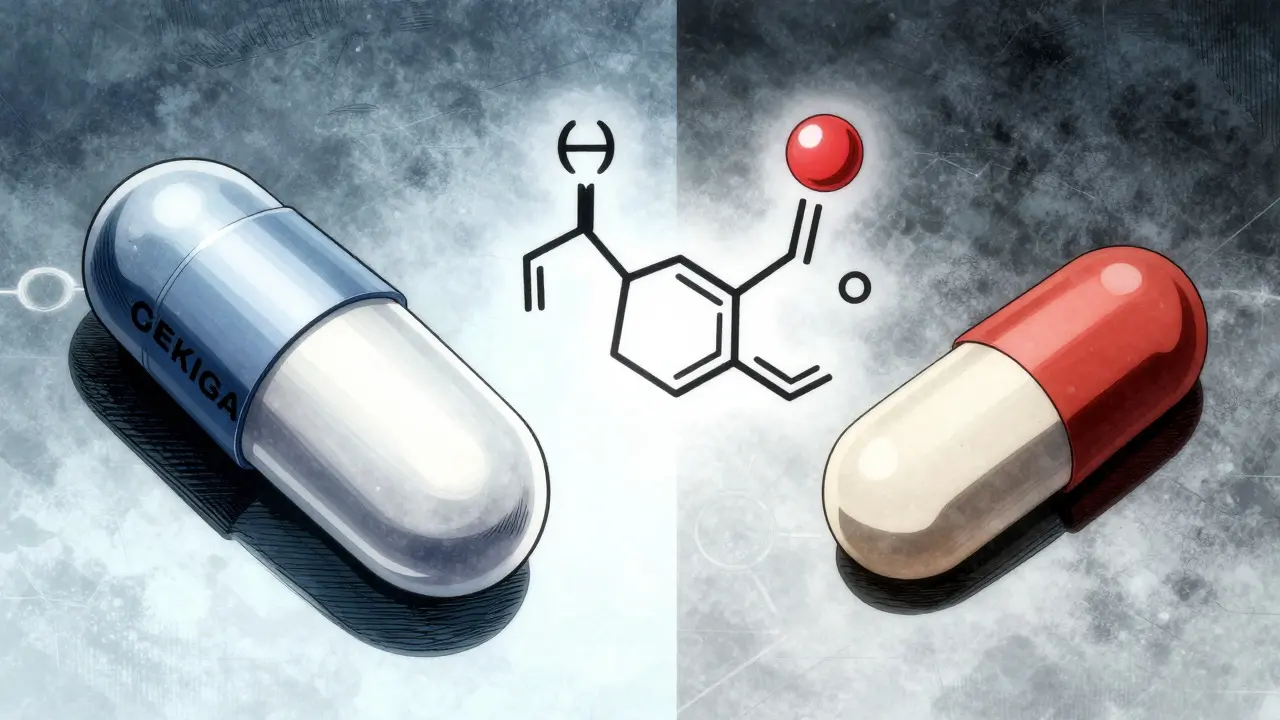
For 95% of medications, the switch is seamless. However, there are a few cases where you and your doctor should have a deeper conversation. One area is narrow therapeutic index drugs medications where a very small change in the dose or blood concentration can lead to a significant increase in side effects or a loss of effectiveness. Think of these as "precision" drugs where the margin for error is tiny.
Examples include certain blood thinners like warfarin or some anti-seizure medications. While the FDA still considers approved generics for these drugs to be safe and effective, some doctors prefer the absolute consistency of a single brand-name manufacturer to avoid even the slightest fluctuation in how the body absorbs the drug. A study by Humana showed that generics typically have only a 3.5% difference in absorption compared to brands, which is well within the allowed 20% range, but for a very sensitive patient, that small gap matters.
Another category is biologics complex medications derived from living organisms rather than chemical synthesis. These aren't "generic" in the traditional sense. Instead, they have biosimilars highly similar but not identical versions of a biologic drug. Because biologics are so complex, the approval process is different, and the conversation with your doctor about switching needs to be more nuanced.
How to Have the Conversation with Your Doctor
Many people feel awkward bringing up money with their doctor, but providers actually want to know if a medication is too expensive. If you can't afford the drug, you won't take it, and the treatment fails. Here is how to handle the discussion effectively.
First, understand that in many states, pharmacists are required to substitute a generic unless the doctor specifically writes "dispense as written" on the prescription. If you see that note on your script, it's a great opening to ask why. You can ask, "I noticed this is marked 'brand name only.' Is there a reason a generic wouldn't work for me in this case?"
If you are starting a new medication, be direct. Use these specific questions to get the answers you need:
- "Is there a generic version of this medication available?"
- "Given my health history, will the generic work just as well as the brand name?"
- "Are there any specific reasons-like the narrow therapeutic index-why I should stick with the brand?"
- "If I switch to a generic, what should I look for in terms of effectiveness or side effects?"
Be transparent about your budget. Telling your doctor, "I'm worried about the out-of-pocket cost for the brand name," allows them to look for the most cost-effective alternative right away, rather than you finding out at the pharmacy and having to call the office for a new script.

Dealing with the "Switch"
The most common issue people face when moving to a generic isn't a lack of efficacy-it's psychological or visual. Imagine taking a small blue pill for years and suddenly you're handed a large white one. It's easy to feel like it's "not the same medicine." This can lead to a nocebo effect, where you perceive negative side effects simply because you expect the new version to be different.
If you feel a difference after switching, don't panic, but do track it. Keep a simple log of your symptoms for two weeks. If you notice a genuine change in how you feel, bring that log to your doctor. While rare, some people are sensitive to the inactive ingredients (the dyes or fillers) in a specific generic manufacturer's version. In those cases, your doctor can either switch you back to the brand or try a generic from a different manufacturer.
Your pharmacist is also your best ally here. They see thousands of prescriptions and know which generics are most common and which ones patients tend to struggle with. If you're nervous about the change, ask the pharmacist to explain the bioequivalence of the specific generic they are giving you.
Are generic drugs less effective than brand-name drugs?
No. The FDA requires generic drugs to have the same active ingredients, strength, and dosage form as the brand-name version. They must be bioequivalent, meaning they deliver the same amount of active ingredient into your bloodstream in the same amount of time. Extensive data shows they provide the same clinical benefits.
Why do some doctors insist on brand-name medications?
In most cases, it's not necessary. However, for a small number of "narrow therapeutic index" drugs, where a tiny variation in dose can cause serious problems, some doctors prefer the brand name for extreme consistency. This is also common with complex biologics, which require "biosimilars" rather than simple generics.
If the active ingredient is the same, why are generics so much cheaper?
Generic manufacturers don't have to pay for the initial research, development, and massive clinical trials required to prove the drug works for the first time. They only need to prove that their version is bioequivalent to the existing brand, which costs significantly less, allowing them to pass those savings to the consumer.
Can I switch from a brand-name drug to a generic at any time?
Usually, yes, but you should always consult your doctor first. While most switches are safe, your provider can ensure that the generic is appropriate for your specific condition and that you won't experience any fluctuations in treatment, especially if you are on a high-sensitivity medication.
What should I do if my generic medication looks different from my usual one?
Don't worry; this is normal. Trademark laws prevent generics from looking exactly like brand names. As long as the pharmacy label confirms it is the correct medication and dose, the change in color or shape does not affect how the medicine works. If you're unsure, ask your pharmacist to verify the drug.
Next Steps for Patients
If you're currently on a brand-name medication and want to save money, start by checking the FDA's "Orange Book" or asking your pharmacist if a generic equivalent exists. Once you know it's available, schedule a brief check-in with your provider to discuss the switch.
For those already on generics who are experiencing new side effects, don't assume it's the "cheap version." It could be a reaction to a specific inactive ingredient. Ask your doctor if they can specify a different generic manufacturer on the prescription to see if a different formulation works better for your body.
Toby Sirois
April 11, 2026 AT 01:34People actually believe the FDA protects them. Give me a break. You trust these people with your life based on a "bioequivalence" chart? It's common sense that a cheaper pill is a risk. If you can't afford the brand name, that's your problem, but don't pretend the quality is identical.
charles mcbride
April 11, 2026 AT 10:54It is truly wonderful to see more information being shared to help people save money on their health care. This knowledge empowers patients to have a constructive dialogue with their providers for a better future.
Alexander Idle
April 11, 2026 AT 16:40Seriously though, the whole process of switching is such a nightmare. I once had my pill change from a tiny yellow one to a giant white monster and I swear I felt like a different person for a week. It's a total tragedy that we have to deal with this stress just to avoid being robbed by a pharmacy. Like, why is the system so broken? It's honestly exhausting just thinking about the logistics of calling a doctor's office and waiting on hold for forty minutes just to ask if a generic is okay. I can't even imagine the trauma of a pharmacist telling you the price has doubled overnight. It's a disaster area over there. Just a complete and utter shambles of a medical system. I'm practically shaking just recalling the last time I had to argue about a co-pay. The sheer audacity of these companies is unmatched. It's a circus and we're all just clowns in it. Truly a catastrophe.
Sarabjeet Singh
April 13, 2026 AT 13:01Saving money is always a good goal.
Daniel Trezub
April 15, 2026 AT 00:58Actually, the whole "same active ingredient" thing is a bit of a simplification. Some people have genuine reactions to the fillers that the industry just dismisses as "psychological." It's kind of a stretch to say 95% of switches are seamless when the industry ignores the minority who actually struggle.
Rupert McKelvie
April 15, 2026 AT 01:56This is a very helpful guide for anyone feeling overwhelmed by prescription costs. It's great to know that we have options to keep our health affordable without sacrificing the quality of our treatment.
Vivek Hattangadi
April 16, 2026 AT 19:23I totally agree with the point about the pharmacist being an ally! They really are the front line and can give a lot of great advice on which manufacturers are more reliable. If anyone is struggling with this, just reach out to your local pharmacist, they're usually more than happy to help you navigate the options!