
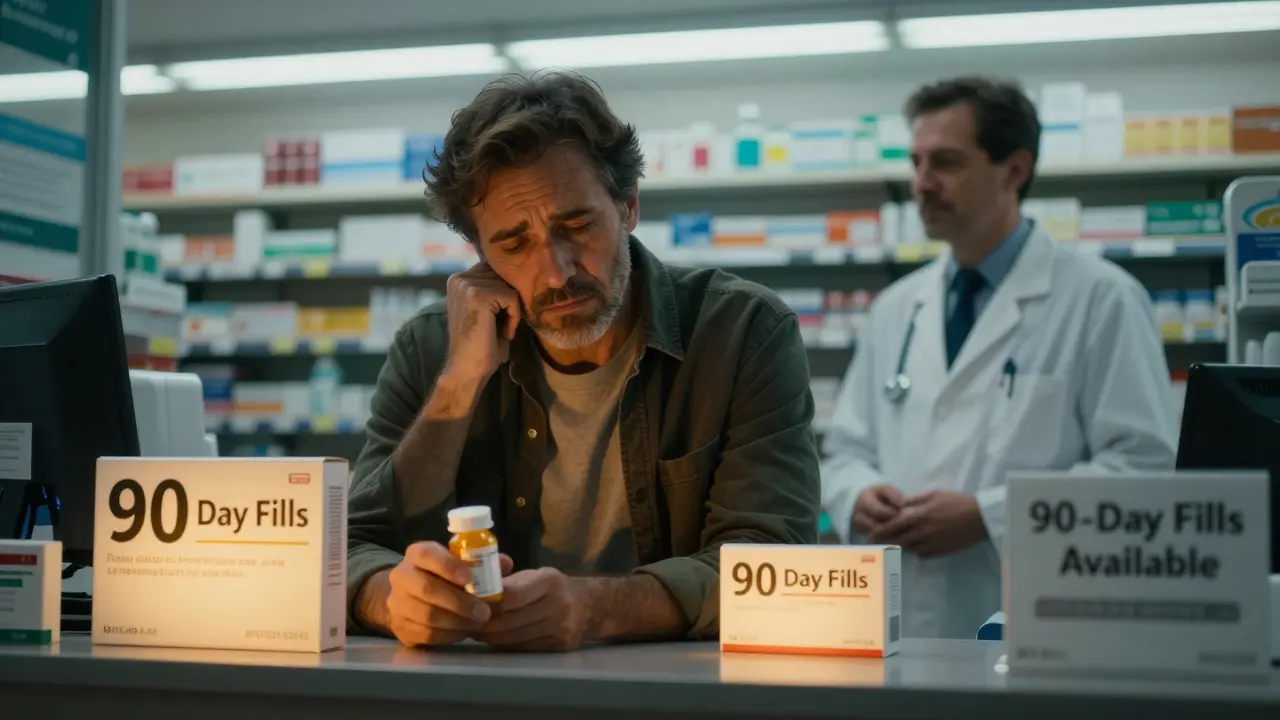
If you take medication every day for a chronic condition like high blood pressure, diabetes, or high cholesterol, you’re probably paying the same copay every month - even though you’re getting the same drug. What if you could get three months’ worth of pills for the same price as one month? That’s not a trick. It’s a 90-day prescription fill, and it’s one of the simplest ways to cut your out-of-pocket costs without changing your medication or insurance plan.
How a 90-Day Fill Saves You Money
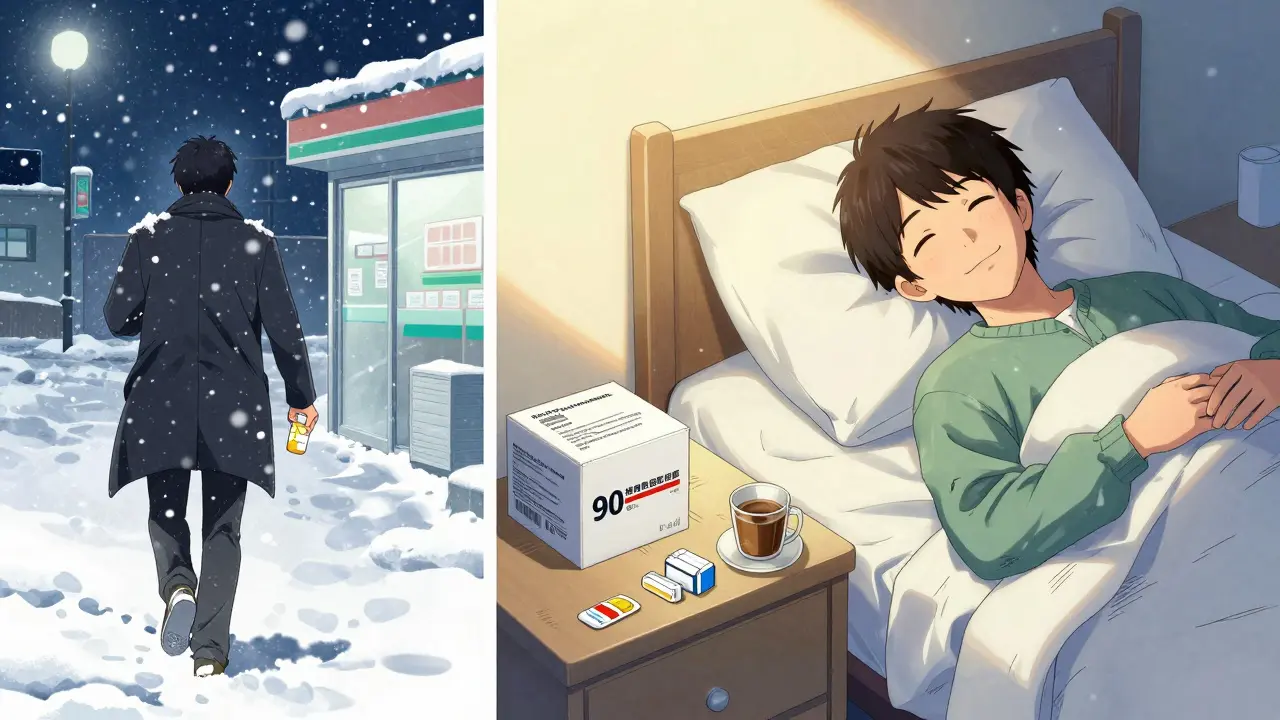
A 90-day prescription doesn’t mean you pay more upfront. It means you pay the same copay - say, $4.90 - for 90 days of medicine instead of 30. That’s three times the pills for the same price. If you’re paying $4.90 every 30 days, you’re spending $14.70 a month, or $176.40 a year. With a 90-day fill, you pay $4.90 every 90 days, or $19.60 a year. That’s a savings of nearly $157 per medication, per year. Some plans even offer lower copays for 90-day fills than for 30-day ones. For example, if your 30-day copay is $10, your 90-day copay might be $15 - still cheaper than paying $30 for three separate 30-day fills. The math is simple: fewer trips, same price, more medicine. And it’s not just about cash. You’re also saving time. Eight fewer pharmacy visits a year. No more rushing to refill before you run out. No more forgetting on a weekend. No more driving across town in bad weather. For people managing multiple medications, that adds up to hours saved every year.Who Qualifies for a 90-Day Fill?
Not every medication qualifies. These fills are meant for maintenance medications - drugs you take daily, long-term, for ongoing conditions. Common examples include:- High blood pressure (lisinopril, amlodipine)
- Cholesterol (atorvastatin, rosuvastatin)
- Diabetes (metformin, glimepiride)
- Thyroid (levothyroxine)
- Depression or anxiety (sertraline, escitalopram)
How to Get One: Two Simple Ways
There are two ways to get a 90-day supply. Both are easy, but one is faster than the other.Option 1: Ask Your Pharmacy
If your doctor already wrote a 30-day prescription with multiple refills (say, 3 or 4), you can walk into any network pharmacy and ask them to fill it as a 90-day supply. Most pharmacies will do it on the spot if your insurance allows it. You don’t need a new prescription. You just need to say: “Can I get a 90-day fill for this?” Some pharmacists might hesitate. They’re used to filling 30-day scripts and may not know the policy. If they say no, ask to speak to the manager or call your insurance provider directly. Many plans - including Medicare Part D, Medicaid, and commercial insurers - now require pharmacies to offer 90-day fills for maintenance meds.Option 2: Ask Your Doctor for a New Prescription
If your doctor hasn’t written enough refills, or if your plan requires a specific 90-day script, you’ll need to ask them to write a new prescription for 90 days. You can do this during your next appointment, or even by sending a secure message through your patient portal. Say something like: “I’m taking [medication] every day for my [condition]. I’d like to switch to a 90-day supply to save money and reduce trips to the pharmacy. Can you write a new prescription for 90 days with three refills?” Most doctors are happy to help. Studies show patients who get 90-day fills are more likely to stick with their meds. That’s better for your health - and better for their outcomes.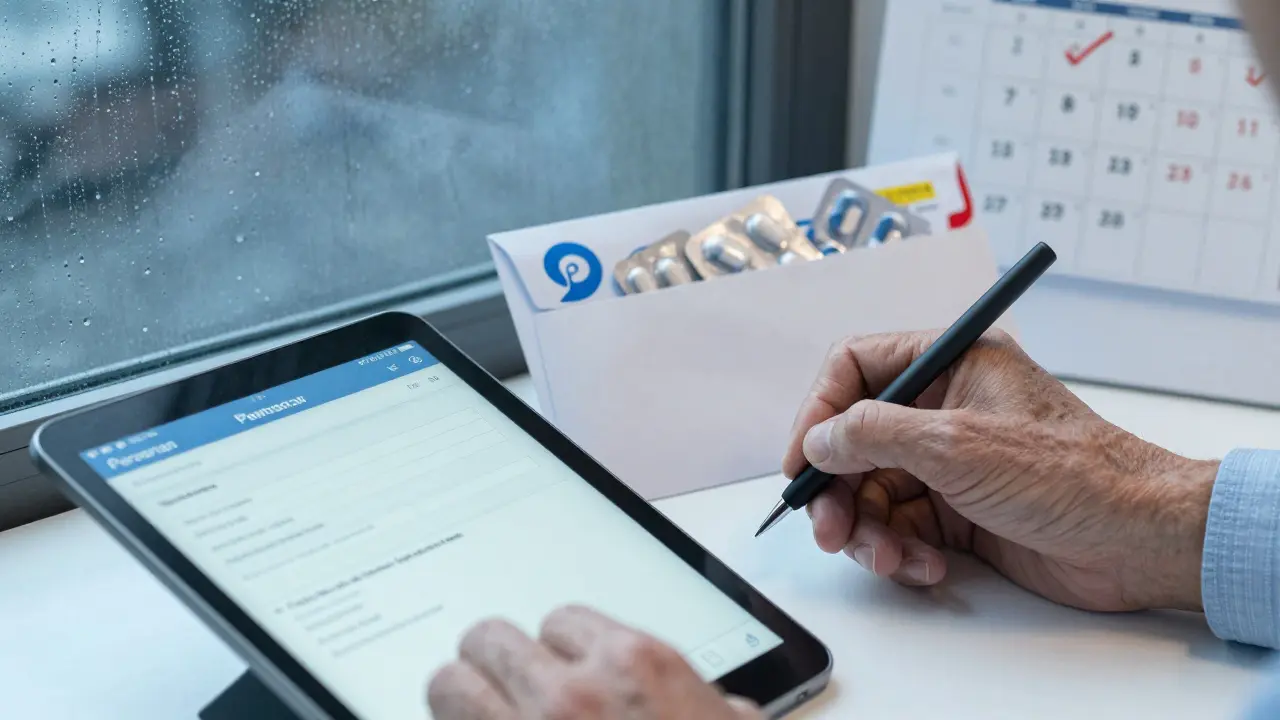
Mail-Order vs. Retail Pharmacy
You can get your 90-day fill two ways: at your local pharmacy or through mail-order.Mail-Order (Usually Cheaper)
Mail-order pharmacies like CVS Caremark, OptumRx, or HPSM’s Postal Prescription Services (PPSRX) specialize in 90-day fills. They ship your meds directly to your door - often for free. Many plans have lower copays for mail-order than for retail. For example, a $4.90 copay for 90 days at mail-order might be $10 at the corner pharmacy. The catch? You have to order ahead. You can’t just walk in. Most services require you to sign up online or by phone. But once you’re set up, refills are automatic. You’ll get your meds before you run out, no reminders needed.Retail Pharmacy (More Convenient)
Retail pharmacies like CVS, Walgreens, and Walmart now offer 90-day fills in-store too. You can get your three-month supply the same day you walk in. No waiting for shipping. No need to sign up for a mail program. The downside? Copays are sometimes higher than mail-order. But if you’re already going to the pharmacy for other things - like insulin syringes or a flu shot - it’s easy to grab your 90-day supply while you’re there.What to Do If Your Insurance Says No
Sometimes, your plan won’t cover a 90-day fill - especially for newer drugs or if you’re on a narrow network. Don’t take “no” as final. First, call your insurance company. Ask: “Do you cover 90-day fills for [medication name] for maintenance conditions?” If they say no, ask why. Sometimes it’s just a system glitch. Other times, you need prior authorization. If prior authorization is required, your doctor can submit a simple form. Most are approved within 24-48 hours. You can also ask your pharmacist to help. Many pharmacies have staff trained to handle these requests. If your plan still won’t budge, check GoodRx or SingleCare. Sometimes, the cash price with a coupon is cheaper than your insurance copay - even for a 30-day supply. You can use that to pay out-of-pocket for a 90-day fill if your plan won’t cover it.Real Savings: The Numbers Don’t Lie
According to UnitedHealth Group’s 2025 report, Americans already save $600 million a year just by using 90-day fills. If adoption doubled - from 12% to 24% - savings would jump to over $1.2 billion. If 70% of maintenance meds were filled in 90-day supplies, annual savings could hit $1.9 billion in the first year alone. For an individual, that means:- One medication: Save $150+ per year
- Two medications: Save $300+
- Three medications: Save $450+
What About Adherence? Does It Actually Help?
Yes. Studies show people who get 90-day fills are far more likely to keep taking their meds. Why? Because they don’t run out. They don’t forget. They don’t skip doses because they’re too busy to refill. One study in the Journal of the American Medical Informatics Association found that patients on 90-day fills had 20% higher adherence rates than those on 30-day fills. Better adherence means fewer hospital visits, fewer complications, and lower overall healthcare costs. It’s not just about saving money. It’s about staying healthy.Common Myths Busted
Myth: “I’ll have too much medicine if I change my dose.”
Not true. If your dose changes, your doctor will write a new prescription. You don’t have to use the full 90-day supply. You can stop and refill with the new dose. Pharmacies won’t penalize you.
Myth: “My pharmacy won’t give me a 90-day fill.”
Most will. If they say no, ask why. It’s usually because they don’t know the policy - not because it’s not allowed.
Myth: “Mail-order is slow and unreliable.”
Not anymore. Most mail-order services deliver in 3-5 days, often with tracking. Many offer free shipping and automatic refills. Some even send reminders via text.
Next Steps: What to Do Today
1. Make a list of all your maintenance medications - the ones you take every day. 2. Check your last prescription. Does it have at least three refills? If yes, you can get a 90-day fill at the pharmacy now. 3. Call your insurance. Ask if they cover 90-day fills for each drug on your list. Ask for the copay amount for mail-order vs. retail. 4. Ask your doctor at your next visit - or send a message now - to switch your prescriptions to 90-day supplies. 5. Sign up for mail-order if you want the lowest price and no trips. Use your insurer’s preferred provider. It takes 10 minutes. The savings last all year.Can I get a 90-day fill for any medication?
No. Only maintenance medications for chronic conditions qualify - like those for blood pressure, cholesterol, diabetes, or thyroid issues. New prescriptions, antibiotics, painkillers, or as-needed drugs don’t qualify. Your insurance and pharmacy will check if the drug is eligible and if you’ve taken it before.
Do I need a new prescription from my doctor?
Not always. If your current prescription has three or more refills, you can ask your pharmacy to fill it as a 90-day supply. But if you only have one or two refills left, or if your plan requires a specific 90-day script, your doctor will need to write a new prescription. It’s easier to ask your doctor now than to wait until you run out.
Is mail-order safe for my medications?
Yes. Mail-order pharmacies are licensed and regulated just like retail pharmacies. They store medications properly, use secure packaging, and track shipments. Many offer temperature-controlled shipping for sensitive drugs. If you’re concerned, ask your insurer which mail-order provider they use - they’re usually top-rated and trusted.
What if I miss a dose or need to stop the medication?
No problem. If your doctor changes your dose or tells you to stop, you don’t have to use the full 90-day supply. You can return unused pills to the pharmacy (some will accept them) or dispose of them safely. Your next refill will be based on your updated prescription. There’s no penalty for not using the full supply.
Can I use a GoodRx coupon with a 90-day fill?
Yes - but only if you’re paying cash. If your insurance covers the 90-day fill, you must use your insurance copay. But if your insurance won’t cover it, or if the cash price with GoodRx is lower than your copay, you can pay out-of-pocket for the 90-day supply. Always compare the cash price with your insurance copay before deciding.
Why do some pharmacists seem reluctant to give 90-day fills?
Some retail pharmacies make less money on 90-day fills because they get paid a flat dispensing fee per prescription, not per pill. A 30-day fill brings in more frequent visits - and more opportunities for them to sell other products. But this doesn’t mean they can’t or won’t do it. Most pharmacies are required by insurance plans to offer 90-day fills. If you’re told no, ask to speak to the manager or call your insurer for support.
Jason Shriner
January 11, 2026 AT 17:59Alfred Schmidt
January 13, 2026 AT 14:25Michael Patterson
January 14, 2026 AT 15:38Jennifer Littler
January 15, 2026 AT 17:50Sam Davies
January 15, 2026 AT 20:03Christian Basel
January 17, 2026 AT 10:13Roshan Joy
January 19, 2026 AT 04:53Adewumi Gbotemi
January 21, 2026 AT 00:51Matthew Miller
January 22, 2026 AT 09:51Madhav Malhotra
January 22, 2026 AT 10:33Priya Patel
January 23, 2026 AT 01:47Sean Feng
January 24, 2026 AT 21:03