
To get the right medicine abroad, you need more than a dictionary. You need a strategy that focuses on active ingredients rather than brand names. Whether you're managing a chronic condition or just need a refill of your usual blood pressure meds, knowing how to communicate your needs precisely is the only way to ensure your safety. Here is how to handle your translate medication names process without risking your health.
The Danger of Brand Names
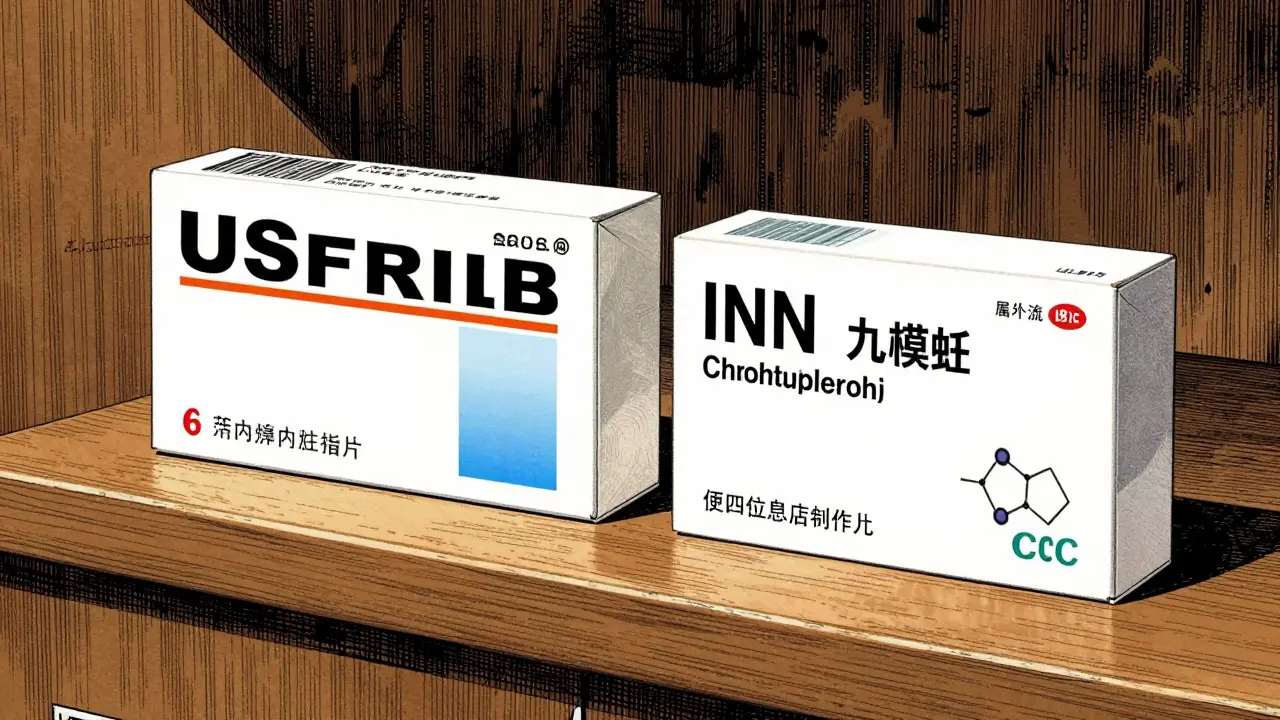
Most of us know our medicine by the brand name on the box, but brand names are marketing tools, not medical standards. For example, if you use Advil in the States, you'll find that in France, the equivalent is often called Ibuprofène. In Poland, you might see it sold as Abfen. While these are all the same drug, the names are totally different.
Some naming differences are even more sinister. Take the case of Ambien is a well-known sleep aid used in the United States . In Great Britain, there is a medication called Ambyen, which is used to treat irregular heartbeats. If a pharmacist confuses these two because of one letter, the results could be catastrophic. This is why you should never walk into a foreign pharmacy and simply ask for a brand name.
The Gold Standard: International Nonproprietary Names (INN)
If you want to be understood globally, stop using brand names and start using the International Nonproprietary Name (INN), which is a standardized system of generic names for pharmaceutical substances established by the World Health Organization (WHO) . The INN is the "universal language" of pharmacy. While brand names change by country, the generic name stays (mostly) the same.
Instead of asking for "Lipitor," ask for "Atorvastatin." Instead of "Zoloft," ask for "Sertraline." When you provide the generic name, the pharmacist can look up the local equivalent in their system, regardless of what the local brand is called. This removes the guesswork and significantly reduces the risk of getting the wrong medication.
| US Brand Name | Generic Name (INN) | Common Global Use |
|---|---|---|
| Advil / Motrin | Ibuprofen | Pain/Inflammation |
| Tylenol | Acetaminophen / Paracetamol | Pain/Fever |
| Glucophage | Metformin | Type 2 Diabetes |
| Ventolin | Albuterol / Salbutamol | Asthma/COPD |
Handling Dosages and Administration
Translating the name of the drug is only half the battle. The way doses are written varies wildly. In some countries, a dosage might be listed as "1g," which a pharmacist might read as 1 gram, while the patient thinks it means 1000mg. While these are mathematically the same, different labeling conventions can lead to confusion about whether you're taking a high dose or a low dose.
You also need to be careful with "SIGs" (the Latin abbreviations pharmacists use for directions). A shorthand like "bid" (twice a day) might be clear to a professional, but a translated label might say "twice daily" in one language and "every 12 hours" in another. To avoid errors, always ask the pharmacist to show you the dosage in numbers-specifically milligrams (mg) or micrograms (mcg)-rather than relying on descriptive words like "strong" or "standard dose."
Your Pre-Travel Checklist
Don't wait until you're at the airport to figure this out. Start your preparation at least two weeks before you leave. Here is a practical workflow to ensure you have everything you need:
- Request a Generic List: Ask your doctor for a written list of your medications that includes the International Nonproprietary Name (INN) and the exact dosage in milligrams.
- Gather Official Documentation: Bring a copy of your original prescription. Even if the pharmacist can't read the language, they can often recognize the chemical structure or dosage patterns.
- Pack Extras: Always bring more medication than you think you'll need. It's much easier to bring leftover meds home than to struggle through a translation crisis in a foreign city.
- Use a Trusted Resource: Check sites like Drugs.com/international to see what the common equivalents are in your destination country before you land.
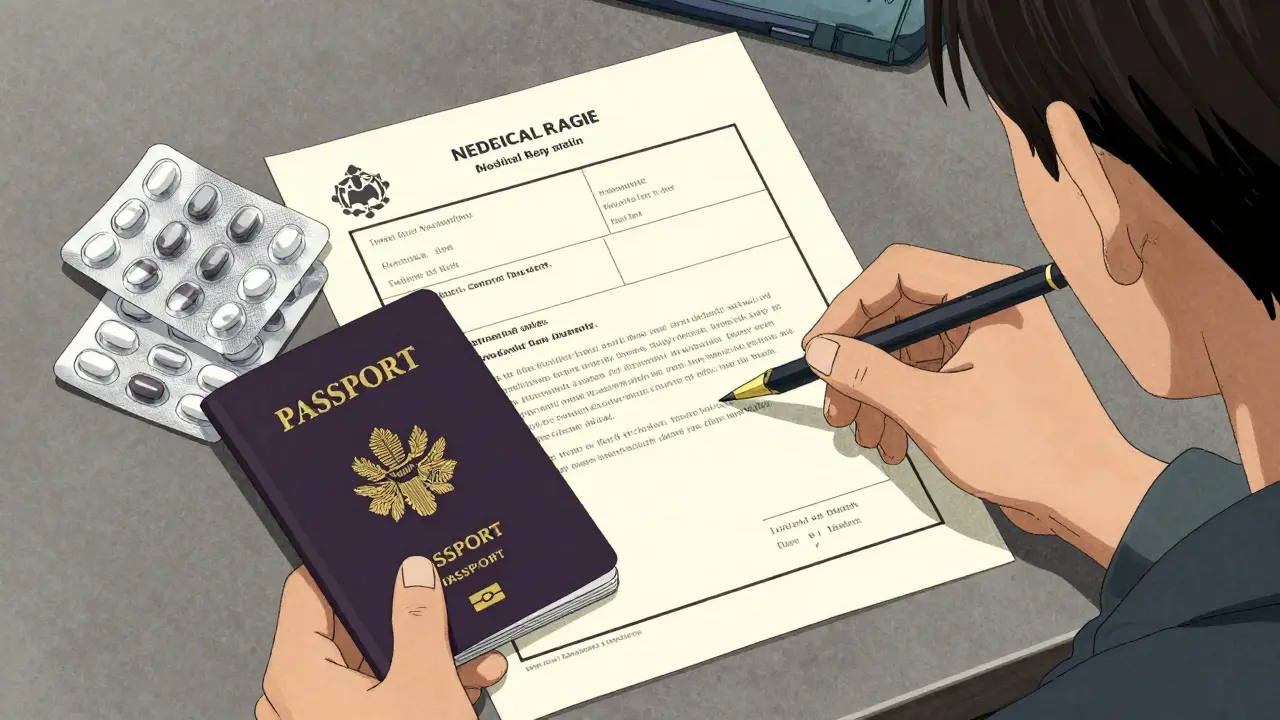
- Verify Identity: Keep your passport and a copy of your medical records handy. Many foreign pharmacies require proof of identity and a valid medical reason before dispensing prescription-strength meds.
Professional Translation vs. AI Tools
It's tempting to just use Google Translate, which is a free machine translation service , but for medicine, this is risky. AI tools are great for ordering a coffee or finding a bathroom, but they struggle with pharmaceutical precision. They often miss the nuance of medical terminology or misinterpret complex dosage instructions.
Professional services like RxTran or First Databank provide certified translations that are cross-referenced against global pharmaceutical databases. These services don't just translate words; they translate medical intent. While these are mostly used by pharmacies and hospitals, knowing that a "certified translation" exists tells you why you should be skeptical of a quick app translation. If you are traveling for a long period with complex needs, paying for a certified medical translation of your prescriptions is a small price to pay for peace of mind.
Avoiding Common Pharmacy Pitfalls
Even with a generic name, you might run into roadblocks. Some medications that are over-the-counter (OTC) in the US are strictly prescription-only in Europe or Asia. For instance, certain strong painkillers or decongestants might require a local doctor's note before a pharmacist will hand them over.
Another common issue is the "look-alike, sound-alike" problem. When you're speaking a second language, it's easy to mispronounce a drug name. Always write the name down. Never rely on verbal communication alone. Show the pharmacist the written generic name and the dosage. If the pharmacist seems unsure, ask them to cross-reference the drug using the WHO database. A good pharmacist will always prioritize safety over speed.
Can I just use a translation app at the pharmacy?
It's not recommended for medication. Translation apps often struggle with medical jargon and specific dosage formats. A slight error in translation can lead to taking the wrong drug or the wrong dose. Always use the generic (INN) name written on paper instead.
What is the difference between a brand name and a generic name?
A brand name is the commercial name given by a company (like Advil), while the generic name is the official medical name of the active ingredient (like Ibuprofen). Generic names are standardized globally through the INN system, making them much safer for international travel.
What should I do if the pharmacist says they don't have my medication?
Ask the pharmacist for a "therapeutic equivalent." This is a different drug that performs the same function. However, do not take an equivalent without consulting a healthcare provider or checking with your own doctor first, as different equivalents can have different side effects.
Do I need a doctor's note to get a refill abroad?
In many countries, yes. Even if you have your own prescription, local laws may require a prescription from a locally licensed physician. It is always best to bring a signed letter from your doctor explaining your condition and the necessity of the medication.
How do I ensure the dosage is correct during translation?
Focus on the numeric value and the unit (e.g., 10mg). Avoid words like "one pill" or "small dose." Confirm the total milligrams of the active ingredient per dose and have the pharmacist write it down so you can double-check it against your original prescription.
Next Steps for Travelers
If you're planning a trip soon, your first move should be to contact your pharmacy and request a "Patient Medication Profile." This document typically lists the generic names and dosages of everything you're taking. If you're traveling to a country with very strict drug laws (like Japan or the UAE), check their embassy website to see if your specific medication is banned or requires a special permit.
For those with complex regimens, consider using a travel-specific health clinic. They can provide you with a formal "Medical Necessity" letter in English, which is often the key to getting through customs and pharmacies without a headache. Remember, when it comes to your health, precision is everything. Don't leave your medication safety to chance or a free app.
Trey Kauffman
April 12, 2026 AT 01:56Oh wow, imagine needing a whole-ass strategy just to get a pill because we can't agree on a global naming convention. Truly the pinnacle of human achievement right here. 🙄
Robin Walton
April 13, 2026 AT 08:39I'm so glad this was posted. I remember the panic of trying to find a refill in a different country and feeling completely helpless. It's a scary situation to be in.
Danny Wilks
April 14, 2026 AT 05:58While the advice provided here is fundamentally sound, I find it quite interesting that many travelers underestimate the sheer variety of pharmaceutical regulations across borders, which often means that even with the correct generic name, you might encounter a bureaucratic wall that requires a localized prescription from a physician who is registered within that specific jurisdiction, regardless of how clear your English documentation might be.
Ben hogan
April 14, 2026 AT 06:21Utterly basic advice. Anyone with a modicum of intelligence already knows how generics work. I'm honestly exhausted by the need to explain the most elementary concepts of medicine to the masses just so they don't accidentally poison themselves. Pathetic.
Suchita Jain
April 14, 2026 AT 20:17It is imperative that one does not neglect the cultural nuances of medical practitioners in different regions. One must approach the pharmacist with the utmost respect and formal etiquette, as failure to do so may result in a lack of cooperation regardless of the accuracy of your INN list.
Kelly DeVries
April 15, 2026 AT 07:42omg literally just bring the original box with the chemical name on it lol why make it so complicated lol just show the picture and they get it’st totally fine
Chad Miller
April 16, 2026 AT 12:03ppl dont even care about safety anymore just want a quick fix and its sad how we rely on apps for everythng now
Simon Stockdale
April 17, 2026 AT 08:06I dont get why we gotta use some fancy WHO name when the US brands are the best in the world anyway and if the pharmacy in some random city dont know what Advil is then they aint doin their job right and its basically a joke that we gotta jump through hoops just to get the good stuff while other countries just copy us anyway!!!!
kalpana Nepal
April 17, 2026 AT 19:06India has best medicine and cheapest prices. Why go to Paris for meds? Our pharmacies are very good and we know everything.
Thabo Leshoro
April 17, 2026 AT 21:55I've had a similar struggle... especially with titration schedules... and the bio-availability of some generics can vary... it's really stressful!!
Lynn Bowen
April 18, 2026 AT 11:33I've lived in three different countries and the most important thing is just having a physical copy of your doctor's note. It bridges the gap when the generic name still causes a bit of hesitation at the counter.