

Imagine opening a crash cart in the middle of an emergency, only to realize the epinephrine inside expired three months ago. It’s a nightmare scenario that healthcare providers work hard to avoid. For years, pharmacists and nurses relied on manual checks-walking through shelves with clipboards or squinting at tiny print on vials. But in 2026, that old-school method is becoming a liability. Medication expiration tracking technology has moved from a luxury for big hospitals to a necessity for clinics, pharmacies, and even home care settings.
The shift isn’t just about convenience; it’s about safety and money. Expired drugs don’t just lose potency; they can become toxic. Meanwhile, wasting perfectly good medication because you forgot to rotate stock costs facilities thousands. Let’s look at how modern tools like RFID, eMAR, and smart cabinets are solving this problem without the headache of manual counting.
Why Manual Tracking Is Failing Modern Healthcare
Before jumping into the tech, it helps to understand why we need it. The traditional way of managing drug inventory involves human memory and physical labels. You buy a box of antibiotics, write the expiry date on a spreadsheet, and hope no one moves the box to a different shelf. It sounds simple until you’re managing hundreds of SKUs.
Human error is the biggest enemy here. According to industry data, manual inventory methods typically achieve only 65% to 75% accuracy. That means nearly one in four items might be miscounted or misplaced. In a high-pressure environment like an ER or a busy community pharmacy, that margin for error is dangerous. Plus, the time cost is huge. Pharmacists often spend hours each week doing tedious counts that could be used for patient counseling or clinical services.
Then there’s the regulatory pressure. Agencies like the FDA and DEA have tightened rules around drug security and traceability since the Drug Quality and Security Act of 2013. Keeping up with these mandates using paper logs is practically impossible. This gap between regulation and capability is exactly where technology steps in.
RFID: The Gold Standard for Real-Time Visibility
If you want the most robust solution, Radio Frequency Identification (RFID) is currently leading the pack. Unlike barcodes, which require line-of-sight scanning (you have to point a scanner directly at each label), RFID tags communicate via radio waves. This allows systems to read dozens or even hundreds of medications simultaneously in seconds.
KitCheck is a prominent RFID-based medication tracking system used by over 900 hospitals. Here’s how it works in practice: Every medication kit, tray, or cabinet is equipped with UHF (Ultra-High Frequency) RFID readers. When a nurse opens a drawer or a pharmacist restocks a shelf, the system instantly scans every item. It checks the quantity, verifies the lot number, and flags any item nearing its expiration date.
The speed difference is staggering. What used to take an hour of manual counting now takes minutes. Texas Children’s Hospital reported significant time savings when they implemented RFID for their 784 high-value drugs. More importantly, the accuracy jumps to nearly 100%. If a drug is expiring in two days, the system sends an automatic alert, preventing it from being dispensed to a patient.
However, RFID isn’t free. Implementation costs can range from $50,000 to $200,000 depending on facility size. You also need to tag your inventory, which requires upfront labor. But for large hospitals, the ROI comes from reduced waste and faster recall processes. If a specific batch of insulin is recalled, an RFID system identifies exactly which patients received it in seconds, not days.
eMAR Systems: Digital Records for Care Facilities
Not every setting needs heavy-duty RFID hardware. For long-term care facilities, intellectual and developmental disabilities (IDD) agencies, and smaller clinics, Electronic Medication Administration Record (eMAR) platforms offer a lighter touch.
eVero is an eMAR platform designed for IDD agencies and long-term care providers. These systems focus less on physical inventory scanning and more on the digital record of who took what medicine and when. They integrate with pharmacy ordering systems to automate reordering. Crucially, they include expiration alerts. When a new prescription is entered, the system calculates the expiration date based on the manufacturer’s data and warns staff before dispensing.
eMAR systems excel in environments where medication is administered to individuals rather than stocked in bulk trays. They often feature biometric logins for security compliance, ensuring that only authorized personnel can access controlled substances. While they don’t provide the real-time physical visibility of RFID, they drastically reduce administrative errors and improve audit trails for regulators like the DEA.
Automated Dispensing Cabinets (ADCs): Smart Storage
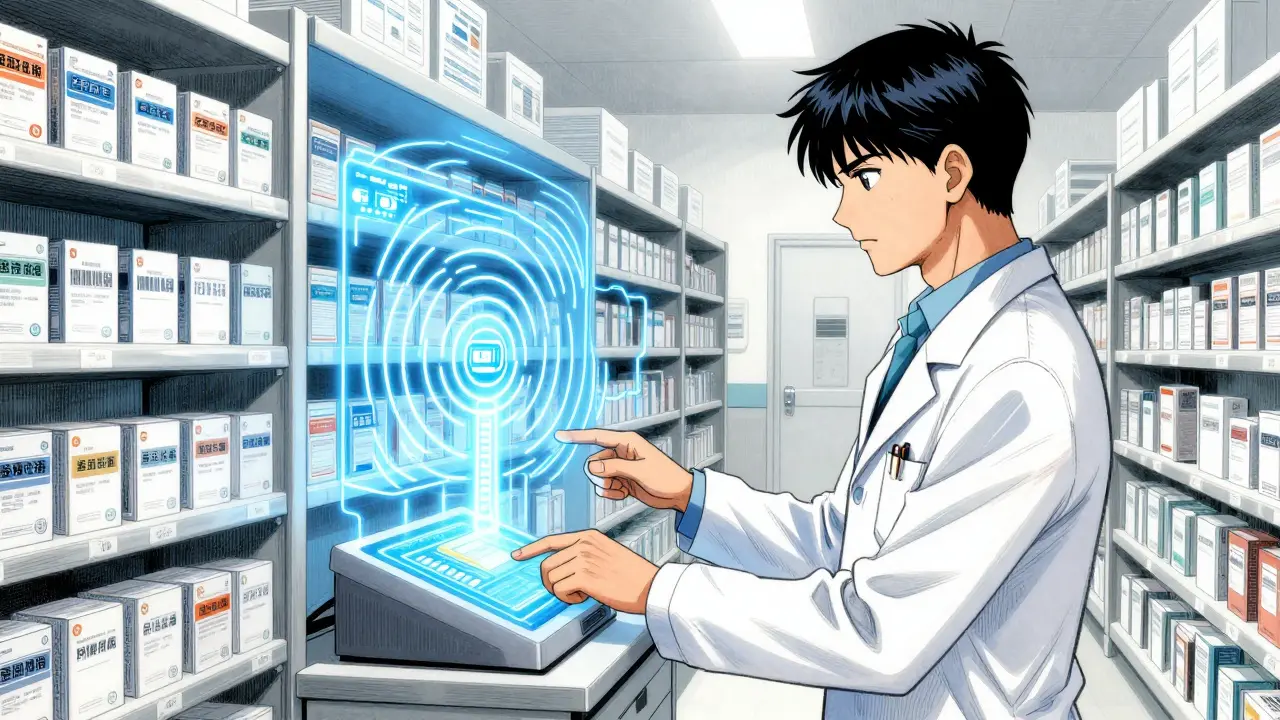
For closed-door pharmacies and hospital units, Automated Dispensing Cabinets (ADCs) act as intelligent vending machines for drugs. Brands like Intelliguard Health and TouchPoint Medical manufacture these units. An ADC doesn’t just store pills; it tracks them.
When a pharmacist loads a cabinet, they scan the items. The system records the lot number and expiration date internally. When a nurse removes a dose, the cabinet logs the transaction. If a medication is close to expiring, the ADC can lock that specific compartment or highlight it on the screen, forcing staff to use newer stock first (First-Expiry-First-Out logic).
This technology bridges the gap between inventory management and administration. It’s particularly useful for narcotics and high-cost injectables. The learning curve is moderate-about 4 to 8 weeks for staff to become proficient-but once mastered, it eliminates the risk of human error in selection.
Mobile Apps and Cloud Solutions for Smaller Operations
You don’t always need expensive hardware. For emergency medical services (EMS), small private practices, or home health aides, mobile-first solutions are gaining traction. Apps like LogRx run on existing iOS and Android devices.
LogRx specializes in narcotics tracking for EMS agencies. Instead of buying new scanners, paramedics use their smartphones to scan barcodes on drug boxes. The app updates the cloud database in real-time. Portland Fire & Rescue reported a massive decrease in administrative workload after switching to this model. It makes complying with DEA regulations easier and simplifies the process of replacing expired or recalled meds.
These cloud-based tools are ideal for organizations with limited IT infrastructure. They require minimal setup-just install the app and train staff. However, they rely heavily on consistent network connectivity and user discipline. If someone forgets to scan an item, the digital record falls out of sync with reality.
| Technology Type | Best For | Key Benefit | Main Limitation | Estimated Cost Range |
|---|---|---|---|---|
| RFID Systems | Large Hospitals, ERs | Real-time bulk scanning, 100% accuracy | High initial cost, hardware installation | $50,000 - $200,000+ |
| eMAR Platforms | Long-Term Care, IDD Agencies | Automated ordering, audit trails | No physical inventory visibility | $5,000 - $20,000/year |
| ADCs | Closed-Door Pharmacies, Units | Secure storage, FEFO enforcement | Bulky hardware, maintenance needs | $10,000 - $50,000 per unit |
| Mobile Apps | EMS, Small Clinics | Low cost, uses existing phones | Requires manual scanning, connectivity issues | $500 - $5,000/year |

Implementation Roadmap: Getting Started Without Chaos
Choosing the right tool is only half the battle. Implementing medication tracking technology often fails due to poor planning. Based on industry best practices, here is a realistic timeline and approach.
Weeks 1-4: Assessment and Selection
Don’t rush into a contract. Audit your current pain points. Are you losing money on waste? Are you struggling with DEA audits? Define your goals. Then, evaluate vendors. Ask for demos that show expiration alerts specifically. Check if their system integrates with your existing Pharmacy Information System (PIS) or Electronic Health Record (EHR). Data silos are a major cause of failure.
Weeks 5-8: Hardware Installation and Tagging
If you’re going with RFID or ADCs, this is the heavy lifting phase. Install readers in cabinets and refrigerators. For RFID, you’ll need to tag your inventory. This can take 40-80 staff hours for mid-sized facilities. Plan this during low-volume periods to minimize disruption.
Weeks 9-12: Training and Change Management
This is where most projects stumble. Staff resistance is real. 62% of hospitals report pushback when introducing new workflows. Combat this by involving key users early. Show them how the tech saves *them* time, not just how it helps compliance. Provide hands-on training. Ensure everyone knows how to interpret expiration alerts and override errors safely.
Weeks 13+: Integration Testing and Go-Live
Run parallel systems for a short period if possible. Verify that expiration dates match between the physical product and the digital record. Monitor for glitches. Have vendor support on standby. KitCheck, for example, offers 24/7 support with a 15-minute average response time, which is crucial during launch.
Facing the Challenges Head-On
It’s important to be honest about the hurdles. One common issue is legacy software incompatibility. If your hospital runs on outdated systems from the 2000s, integrating modern tracking tech might require costly middleware. Another challenge is the "tag fatigue"-staff getting tired of scanning every single item. To mitigate this, automate as much as possible. Use pre-tagged medications from manufacturers where available.
Also, consider the future. By 2027, Gartner forecasts that 45% of US hospitals will use RFID. AI-powered predictive analytics are already emerging, predicting expiration trends based on usage patterns. Investing in a scalable platform now protects you from obsolescence later.
Is RFID worth the cost for small pharmacies?
For small pharmacies, full-scale RFID is often overkill and too expensive. Instead, consider mobile barcode scanning apps or cloud-based inventory management software. These offer similar expiration tracking benefits at a fraction of the cost, usually under $5,000 annually.
How do I handle medications that expire while in transit?
Use systems with supply chain visibility like DrugXafe or advanced eMAR platforms. These track expiration dates from manufacturer to patient. Set your receiving protocols to reject any shipment where the remaining shelf life is below your facility's minimum threshold (e.g., 30 days).
Can these systems prevent the administration of expired drugs entirely?
They significantly reduce the risk but cannot eliminate it 100% without strict adherence. Systems like ADCs can physically lock expired compartments. RFID systems send alerts. However, if staff bypass warnings or fail to scan, errors can still occur. Human vigilance remains part of the equation.
What happens if the internet goes down during tracking?
Most robust systems like KitCheck and LogRx have offline modes. They store data locally on the device or cabinet and sync automatically once connectivity is restored. Always check this feature during vendor selection to ensure business continuity.
How long does it take to train staff on new tracking software?
Expect a 2 to 6-week ramp-up period for full proficiency. Initial training might take a few days, but true competency comes with daily use. Facilities report that 85% of staff become fully comfortable within 6 weeks, provided there is ongoing support and clear documentation.