

When you sign a contract-whether you’re buying software, hiring a contractor, or selling a business-you’re not just agreeing on price and delivery. You’re also agreeing on who pays if things go wrong. That’s where liability and indemnification come in. These aren’t just legal buzzwords. They’re the backbone of risk management in every kind of business deal.
What Does Indemnification Actually Mean?
Indemnification is a simple idea: one party promises to cover the other’s losses. If your vendor’s software gets hacked and customer data is stolen, and your contract says they’ll indemnify you, they’re on the hook for the cleanup costs-legal fees, notification letters, credit monitoring for affected people, even fines. It’s not about blame. It’s about who’s financially responsible when something bad happens because of their actions-or failure to act. This isn’t optional. Nearly every commercial contract includes an indemnification clause. It’s not a luxury; it’s standard. Without it, you’re leaving yourself exposed. A small business owner might think, “I’m just signing a simple service agreement.” But even then, if the service provider causes a data breach, a copyright infringement, or a workplace injury on your site, you could be sued. Indemnification shifts that risk back to the party who created it.The Three Words That Change Everything
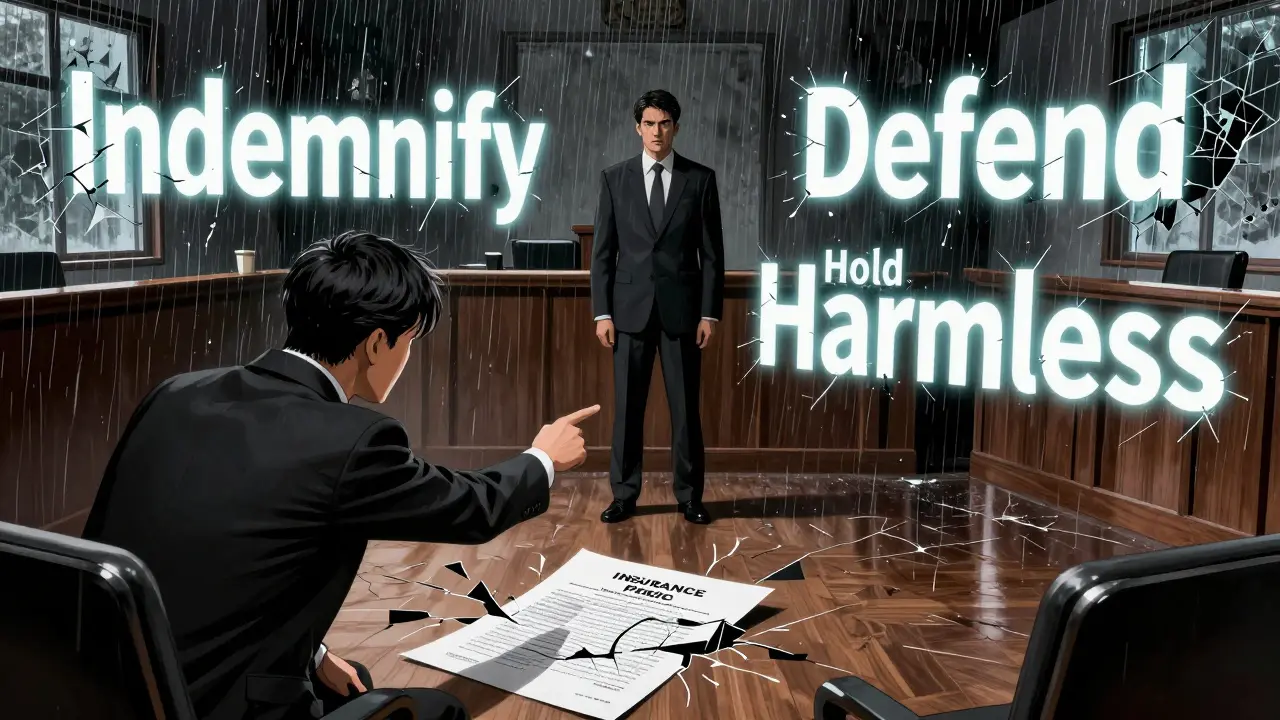
People often use “indemnify,” “defend,” and “hold harmless” interchangeably. But legally, they mean different things-and mixing them up can cost you.- Indemnify means: “I’ll pay you for losses you suffer.” This covers actual damages-money paid out to third parties, court judgments, settlements.
- Defend means: “I’ll pay for your lawyers and cover your legal costs if someone sues you.” This is critical. Even if you win, legal fees can run into tens of thousands. If the clause doesn’t say “defend,” you’re on your own.
- Hold harmless means: “You can’t sue me for anything related to this.” This protects the indemnifying party from being held liable by the other side-even if the other side caused the problem.
What Triggers Indemnification?
Not every problem triggers a payout. The contract has to say exactly what does. Common triggers include:- Breach of warranty: “We promised the product was safe. It wasn’t.”
- Intellectual property infringement: “Your software uses code that belongs to someone else.”
- Failure to comply with laws: “You didn’t get the right permits, and now we’re fined.”
- Negligence: “Your employee caused a fire on our premises.”
- Third-party claims: “A customer sues us because your product broke.”
Who Pays? Mutual vs. One-Sided
There are two main types of indemnity structures.- Unilateral: Only one party pays. This is common in vendor-customer deals. For example, a software company indemnifies the customer for IP infringement. The customer doesn’t owe the vendor anything. This makes sense-the vendor controls the product.
- Mutual: Both sides protect each other. This is typical in joint ventures, construction contracts, or M&A deals. If a subcontractor gets hurt on your site, you indemnify them. If their equipment damages your property, they indemnify you. It’s a balance of power.
Limitations Matter-Caps, Deductibles, and Survival Periods
No one wants unlimited liability. That’s why contracts include limits.- Cap on liability: The maximum amount the indemnifying party will pay. In an M&A deal, this might be 10% of the purchase price. In a software license, it might be the total fees paid over a year.
- Deductible (or basket): The amount of loss that must occur before indemnification kicks in. Think of it like an insurance deductible. If the basket is $50,000, the first $50,000 of losses are absorbed by the indemnitee. Only after that does the indemnifier pay.
- Survival period: How long the indemnity lasts after the contract ends. For basic warranties, it might be 12 months. For core issues like ownership of assets or tax liability, it could be 3-5 years-or even longer.
Insurance Isn’t Optional-It’s Required
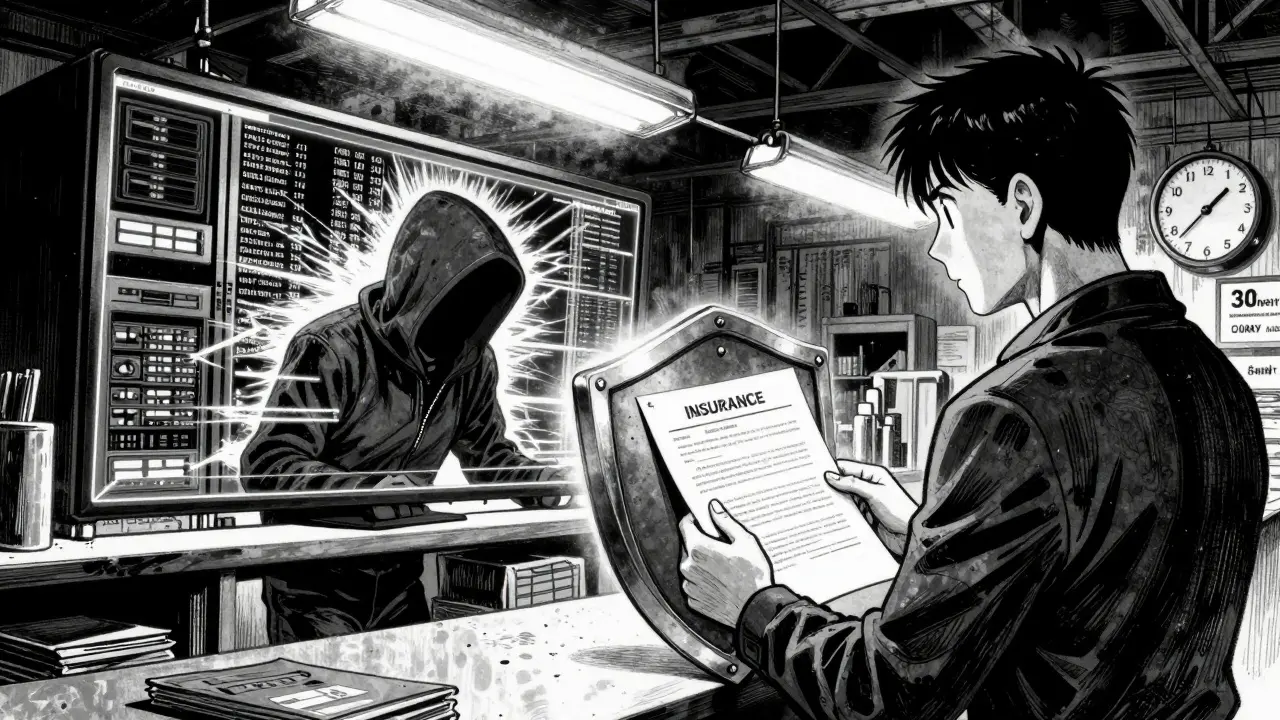
A promise to pay is only as good as the money behind it. That’s why most contracts include an insurance clause. The indemnifying party must carry coverage that matches their obligation. For example, if a vendor agrees to indemnify you for $2 million in IP claims, they must carry at least $2 million in errors and omissions (E&O) insurance. If they don’t, and they go out of business after a claim, you’re stuck. The contract should specify:- Type of insurance (E&O, general liability, cyber)
- Minimum coverage amount
- Whether you must be named as an additional insured
- How long the policy must remain active after contract termination
Claims Process: Don’t Skip the Steps
Indemnification doesn’t start with a lawsuit. It starts with notice. Most contracts require the indemnitee to:- Notify the indemnifier in writing within 30 days of learning about a claim
- Provide all relevant documents and evidence
- Allow the indemnifier to control the defense (if they choose to)
What Happens in Real Life?
Here’s a real scenario: A small UK retailer signs a contract with a third-party logistics provider to handle online orders. The contract includes a unilateral indemnity clause: the logistics provider will indemnify the retailer for any data breaches caused by their systems. Six months later, the provider’s warehouse management system is hacked. Customer payment details are exposed. The retailer faces a £150,000 fine from the ICO and spends £80,000 on customer notifications and credit monitoring. Because the indemnity clause was clear-covering data breaches, legal fees, and regulatory fines-the retailer submitted a claim. The provider’s insurer paid the full amount. No lawsuit. No delay. Just a contract working as intended. Now imagine the same situation, but the clause said only “indemnify for damages.” No mention of legal fees or fines. The provider might argue those weren’t covered. The retailer would have to sue. Months of delays. Thousands more in legal bills. That’s the difference between a good clause and a bad one.Why This Matters for Everyone
You don’t need to be a lawyer to understand this. But you do need to ask the right questions before signing anything:- Who is responsible if something goes wrong?
- What exactly are they promising to cover?
- Is there a cap? A deductible? How long does this last?
- Do they have insurance to back this up?
- What do I have to do if a problem arises?
Final Thought: Indemnification Is About Control
At its core, indemnification isn’t about blame. It’s about control. Who has the ability to prevent the risk? Who can fix it? Who has the resources to pay for it? If you’re the one with the product, the system, the expertise-you should bear the risk. If you’re the one buying, you’re paying for peace of mind. A well-drafted indemnity clause gives you that. A poorly written one gives you a false sense of security. Don’t treat it as boilerplate. Treat it like insurance. Because in many ways, it is.Is indemnification the same as insurance?
No. Insurance is a policy you buy from a company that pays out if a covered event happens. Indemnification is a promise in a contract between two parties. One party agrees to pay the other if something goes wrong. But many contracts require the indemnifying party to carry insurance to make sure they can actually pay. So while they’re different, they often work together.
Can I negotiate out of indemnification entirely?
It’s rare. Most parties expect some level of indemnity, especially in business deals. Sellers usually can’t eliminate it completely. But you can narrow it-limit the scope, set a cap, add a deductible, or shorten the survival period. The goal isn’t to remove it, but to make it fair and manageable.
What happens if the indemnifying party goes bankrupt?
Then you’re out of luck-unless they had insurance. That’s why insurance requirements are critical. If the contract says they must carry $1 million in coverage and they don’t, you can refuse to sign. If they go bankrupt after signing, your only recourse is to file a claim against their insurer (if they had one) or try to recover from their assets, which is often impossible.
Do I need a lawyer to draft or review an indemnity clause?
Yes, especially for anything beyond a simple service agreement. Indemnity clauses are among the most litigated parts of contracts. A poorly worded clause can leave you exposed-or give the other side too much power. A lawyer can help you balance protection with fairness and ensure the language is enforceable.
Are indemnity clauses enforceable in the UK?
Yes, as long as they’re clear, reasonable, and not against public policy. UK courts generally uphold indemnity clauses if they’re properly drafted. But clauses that try to cover gross negligence or intentional misconduct may be struck down. Also, if the clause is buried in fine print or wasn’t negotiated, a court might refuse to enforce it.
What’s the most common mistake people make with indemnity clauses?
Assuming it’s all covered. People think “indemnify” means everything. But without clear language on defense costs, third-party claims, or insurance, they’re left paying out of pocket. The biggest mistake? Not reading the clause at all-or trusting the other side’s version without checking the details.
Melissa Cogswell
January 29, 2026 AT 15:41Just wanted to say this is one of the clearest breakdowns of indemnification I’ve ever read. I’m a small SaaS founder and I used to skip these clauses like they were fine print. Now I always check for 'defend, indemnify, hold harmless' - and I make sure the vendor has E&O insurance. Saved my company twice already.
Also, the part about survival periods? Game changer. Had a vendor try to weasel out of a breach claim after 14 months - thank god our contract said 3 years for IP issues.
Diana Dougan
January 30, 2026 AT 12:35lol at people actually reading contracts. you know what’s funny? 99% of small biz owners just click ‘I agree’ on a 47-page PDF they got from ‘[email protected]’ and then cry when the vendor ghosted them after a data breach. also, ‘indemnify’ is not a magic word. it’s a trap if you don’t read the 12 footnotes.
Bobbi Van Riet
January 30, 2026 AT 12:57I’ve been on both sides of this - first as a contractor, then as a client. The biggest thing no one talks about? The notice requirement. I had a client get hit with a lawsuit, waited 45 days to tell me, then acted like I owed them everything. Courts don’t care how ‘fair’ it feels - if the contract says 30 days and you’re late, you’re out. So if you’re signing anything, even a simple service agreement, write down the notice window in your calendar. Seriously. Set a reminder.
Also, insurance requirements? Don’t just take their word for it. Ask for a certificate of insurance. Most companies will send it right away. If they hesitate? Red flag.
Holly Robin
January 31, 2026 AT 02:14THIS IS WHY WE CAN’T HAVE NICE THINGS.
Big corporations use these clauses to bury you alive. They’ll make you sign a mutual indemnity clause, then turn around and sue you for ‘negligence’ when your employee accidentally bumps into their server rack. And guess what? They’ve got lawyers on retainer and you’ve got a $12/hr freelancer who doesn’t even know what ‘hold harmless’ means.
They don’t care about fairness. They care about liability laundering. And if you think insurance saves you? HA. The insurer will find a loophole faster than you can say ‘breach of warranty.’
Stop signing anything without a lawyer. And if you can’t afford one? Don’t do the deal. Period.
Shubham Dixit
February 1, 2026 AT 01:46Indemnification is not just legal jargon - it is the backbone of civil commerce. In India, we have seen startups collapse because they signed vague contracts with foreign vendors who later refused to honor indemnity clauses. The Indian judiciary is now more proactive in enforcing clear contractual obligations, especially in IT and e-commerce. But the problem is not law - it is ignorance.
Every Indian SME must understand: if you are outsourcing, you are accepting risk. If you do not define indemnity clearly, you are handing your balance sheet to a foreign company on a silver platter. This article is not just helpful - it is essential reading for every Indian entrepreneur dealing with global partners.
KATHRYN JOHNSON
February 2, 2026 AT 07:45Indemnification clauses are not negotiable in good faith transactions. They are fundamental. Any party that attempts to remove them entirely is either dangerously naive or intentionally deceptive. The fact that this is even a topic of discussion suggests a systemic failure in business education. If you’re signing a contract without understanding indemnity, you’re not a businessperson - you’re a liability.
Blair Kelly
February 3, 2026 AT 15:04Wait - so if I’m the vendor, and my software gets hacked, I’m on the hook for the client’s legal fees, notification costs, fines, and credit monitoring? And I have to carry insurance for it? And if I don’t, they can sue me? And if I go bankrupt? They still come after me?
Oh. My. God.
I just realized I’ve been signing these clauses like they were birthday cards. I’m going to hire a lawyer tomorrow. And I’m going to make them explain it to me like I’m five. Because I’m not paying $200k in legal bills because I didn’t read the tiny print.
Lily Steele
February 4, 2026 AT 04:32Y’all are overcomplicating it. Just ask: if something breaks because of them, will they pay to fix it? If yes, good. If no, walk away. No need to memorize ‘defend vs indemnify vs hold harmless’ - just make sure they’re on the hook for the mess they make. Simple. Done.
And yes, always ask for proof of insurance. That’s non-negotiable.
Gaurav Meena
February 5, 2026 AT 03:43Great breakdown! 🙌 As someone mentoring young Indian tech founders, I tell them this every week: contracts are your safety net, not a formality. One of my mentees signed a contract without checking indemnity - their vendor’s API caused a data leak, and they got fined ₹8 lakhs. No insurance, no clear clause - they had to pay out of pocket.
But here’s the win: they learned. Now they always insist on: 1) clear triggers, 2) insurance proof, 3) survival period ≥2 years. Small steps, huge impact.
Don’t fear the contract. Master it. You’ve got this 💪
Jodi Olson
February 5, 2026 AT 07:40Indemnification is the contractual embodiment of moral responsibility. It is not merely a financial mechanism - it is the ethical architecture of trust in commercial relationships. To reduce it to a clause is to misunderstand the very nature of obligation. The law may enforce it, but the soul of the transaction lies in the willingness to bear consequence - not evade it.
When one party demands indemnity without offering reciprocity, the contract becomes a weapon, not a covenant.
Amy Insalaco
February 5, 2026 AT 16:02Let’s be real - the entire indemnification framework is a performative legal theater designed to extract asymmetrical risk transfer from small entities by large corporate actors with infinite legal bandwidth. The ‘mutual indemnity’ model is a myth - it only exists on paper to create the illusion of parity. In practice, the party with deeper pockets and more sophisticated counsel always redefines ‘negligence,’ ‘breach,’ and ‘third-party claim’ to their advantage.
And don’t get me started on survival periods - they’re deliberately opaque to enable future litigation arbitrage. The fact that you think ‘clear language matters’ is the most naive assumption in contract law. Language is always weaponized. The only real protection? Never sign anything unless you’re the one dictating the terms.
Katie and Nathan Milburn
February 6, 2026 AT 13:43Interesting read. I’m a co-founder of a small hardware startup. We had a vendor indemnify us for IP infringement - but they didn’t carry E&O insurance. When a patent troll sued us, they went quiet. We ended up paying $40k to settle because their insurer didn’t exist. Lesson learned: always verify the insurance, not just the clause. Now we require a copy of the policy before signing anything. It’s a pain, but it’s worth it.