
Linezolid Tyramine Calculator
Safe Eating Guide
Linezolid blocks your body's ability to break down tyramine, which can cause dangerous blood pressure spikes. This calculator helps you determine if your food choices are safe.
For safety, stay below 100mg of tyramine per serving. The average person should avoid foods with over 100mg tyramine while taking linezolid.
Your Selections
Total Tyramine
Note: This tool is for informational purposes only. Always consult your healthcare provider before making dietary changes while on medication.
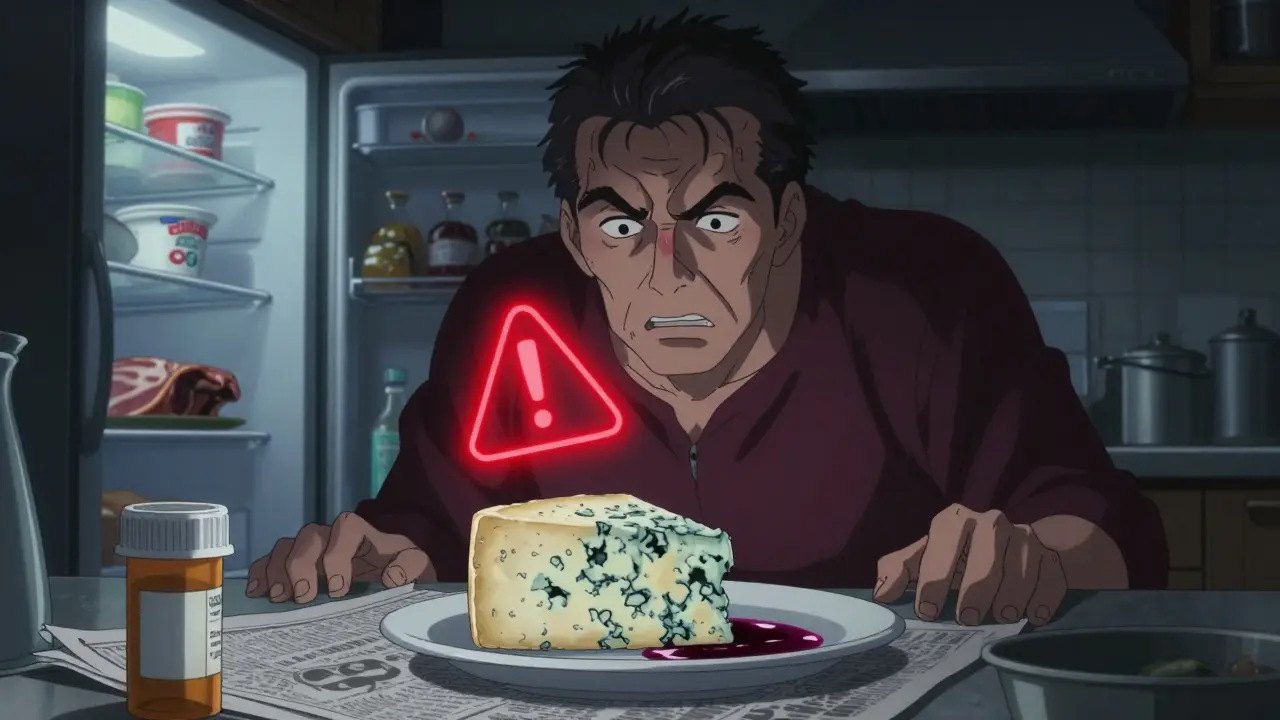
When you’re prescribed linezolid for a stubborn bacterial infection-like MRSA or a resistant staph infection-you’re probably focused on getting better. But there’s something else you need to know: linezolid can turn your dinner into a medical emergency. Eating certain foods while taking this antibiotic can cause your blood pressure to spike dangerously high, sometimes without warning. This isn’t a rare side effect. It’s a well-documented, potentially deadly interaction that happens because linezolid blocks an enzyme your body needs to break down tyramine, a natural compound found in aged, fermented, and spoiled foods.
Why Linezolid Is Different from Other Antibiotics
Linezolid isn’t just another antibiotic. It was designed to fight superbugs that other drugs can’t touch. Approved by the FDA in 2000, it works by stopping bacteria from making proteins they need to survive. But here’s the catch: in doing that, it accidentally also blocks your body’s monoamine oxidase (MAO) enzymes. These enzymes normally break down tyramine, a substance your body makes naturally and gets from food. When MAO is blocked, tyramine builds up in your bloodstream. That triggers a flood of norepinephrine, which forces your blood vessels to constrict and your heart to pump harder-resulting in a sudden, severe spike in blood pressure. This isn’t theoretical. Between 2018 and 2023, over 1,200 adverse events involving linezolid and high blood pressure were reported to the FDA. At least three deaths from hypertensive crises have been directly linked to this interaction since 2018. The risk isn’t just for people with existing high blood pressure. Even healthy individuals can develop systolic readings over 200 mmHg after eating just one serving of aged cheese while on linezolid.Which Foods Are Dangerous?
You don’t need to avoid every food with tyramine. The danger starts when you consume more than 100 milligrams in one sitting. Here’s what crosses that line:- Aged cheeses: Blue cheese, cheddar, Swiss, parmesan, gouda-especially if stored longer than recommended. One ounce of aged cheddar can contain 150mg of tyramine. A 2-ounce slice of blue cheese? That’s over 900mg.
- Fermented soy products: Soy sauce, miso, tempeh, and fermented bean curd. Even a tablespoon of soy sauce can hit 200mg.
- Tap beer and draft beer: These contain live yeast and can have 100-200mg per 100ml. Bottled beer is safer but still risky if it’s old or unpasteurized.
- Red wine: Especially Chianti, Burgundy, and other full-bodied varieties. A 5-ounce glass can contain up to 100mg.
- Air-dried or cured meats: Salami, pepperoni, summer sausage, and other fermented or smoked meats. A single slice can exceed the safe limit.
- Overripe or spoiled foods: Any fruit or vegetable left too long-bananas, avocados, tomatoes, and even leftovers stored past their prime-can develop high tyramine levels.
Here’s what’s generally safe: fresh meat and fish, fresh dairy (milk, cottage cheese, yogurt), most fruits and vegetables, fresh bread, and non-fermented cheeses like mozzarella or ricotta. But be careful: even safe foods become risky if they’re not stored properly. A week-old leftover lasagna? That’s not just old food-it’s a potential trigger.
How Long Do You Need to Worry?
Unlike older MAO inhibitors that require lifelong dietary changes, linezolid’s effect is temporary. The drug leaves your system in about 5 days, but your MAO enzymes take longer to recover. Most experts recommend avoiding high-tyramine foods for at least two weeks after your last dose. Some hospitals, like UCSF, extend the restriction to 14 days after treatment ends, even if you feel fine.Why wait? Because even after you stop taking the pill, your body is still rebuilding its ability to clear tyramine. One case report in the medical literature showed a patient’s blood pressure didn’t return to normal until 26 days after stopping linezolid. That’s not an outlier-it’s a warning.
What Happens If You Eat the Wrong Food?
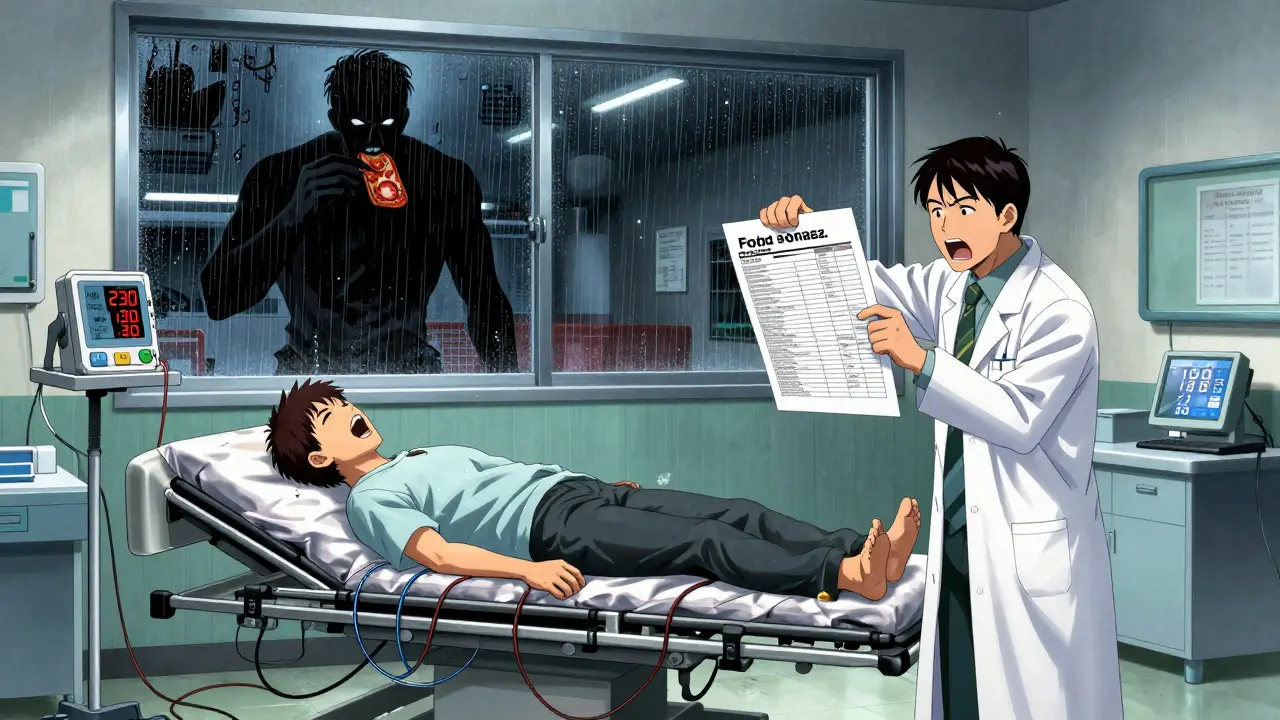
A hypertensive reaction from linezolid and tyramine doesn’t always come with warning signs. Some people feel a pounding headache, blurred vision, or chest tightness. Others just feel unusually anxious or flushed. Then, suddenly, their blood pressure spikes above 180/120 mmHg-the threshold for a hypertensive emergency.One pharmacist on Reddit described a patient who ate aged cheddar while on linezolid and ended up in the ICU with a blood pressure of 230/130. Another case, documented in the Journal of Antimicrobial Chemotherapy, involved a 68-year-old man who developed a systolic pressure of 248 mmHg after eating pepperoni and red wine. He needed IV medications and a 3-day ICU stay. These aren’t rare stories. In a 5-year review, 17 cases of linezolid-related hypertensive crises were found, and 65% of those patients required intensive care.
And here’s the scary part: some people don’t react at all. A few patients on forums like PatientsLikeMe say they ate blue cheese or red wine with no issues. But that doesn’t mean it’s safe. Individual sensitivity varies. Factors like body weight, liver function, and genetics all play a role. One study found that people with higher BMI had greater tyramine sensitivity. You can’t test your own tolerance-you’re playing Russian roulette with your blood pressure.
What About Other Medications?
Linezolid doesn’t just interact with food. It can also clash dangerously with common medications:- SSRIs and SNRIs: Antidepressants like fluoxetine or venlafaxine can cause serotonin syndrome-a life-threatening surge in serotonin levels.
- Pseudoephedrine and phenylephrine: Found in cold and allergy meds, these can spike blood pressure even without tyramine.
- Dopamine or epinephrine: Used in emergencies or for shock, these can cause extreme, uncontrollable hypertension when combined with linezolid.
- Migraine meds: Triptans like sumatriptan can also trigger serotonin syndrome.
Always tell every doctor, pharmacist, and emergency responder you’re on linezolid-even if you’re not taking it anymore. The interaction window lasts longer than most people realize.

How Do You Actually Follow the Diet?
The problem isn’t knowing what to avoid-it’s remembering it. A 2022 study found that only 43.7% of patients got written dietary instructions when prescribed linezolid. And even when they did, 61.3% couldn’t name even half the risky foods a week later.Here’s what works:
- Get a printed list: Ask your pharmacist for a simple handout with pictures of safe and unsafe foods. Visuals stick better than words.
- Check expiration dates: If it’s been in the fridge for more than a few days, toss it. Spoilage increases tyramine.
- Use the fridge, not the pantry: Store fresh meat and dairy in the coldest part. Don’t leave cheese on the counter.
- Ask before eating out: Don’t assume “fresh” means safe. Ask if the meat is cured, the cheese is aged, or the beer is draft.
- Use your EHR alerts: If your hospital uses electronic health records, make sure your provider has flagged your linezolid therapy. Many systems now auto-flag high-tyramine food orders.
Some hospitals now assign dietitians to patients on long-term linezolid therapy-especially those on treatment for more than 10 days. If you’re in the hospital, ask for one. If you’re at home, call your clinic. Nutrition support isn’t a luxury-it’s part of your treatment.
What’s Next for Linezolid?
Linezolid sales hit $1.27 billion in 2023, thanks to rising antibiotic resistance. But its future is uncertain. New drugs like contezolid (MRX-I), currently in Phase III trials, promise the same antibacterial power without the MAO inhibition. If approved in 2025, it could replace linezolid for many cases.In the meantime, the FDA and IDSA have tightened guidelines. Since 2024, they recommend checking your blood pressure before starting linezolid and monitoring it twice daily during treatment-especially if you already have high blood pressure. The message is clear: this isn’t a minor side effect. It’s a preventable medical emergency.
Bottom Line
Linezolid saves lives. But it can also end them-if you ignore the diet. You don’t need to become a nutritionist. You just need to avoid the big offenders: aged cheese, cured meats, tap beer, soy sauce, and anything fermented or old. Stick to fresh, unprocessed foods. When in doubt, skip it. Your blood pressure won’t thank you for taking risks.If you’re prescribed linezolid, don’t assume it’s safe just because you’ve eaten blue cheese before. Your body isn’t the same. Your enzymes aren’t the same. And this time, the consequences aren’t just a stomachache-they’re a trip to the ICU.
Can I have a glass of wine while on linezolid?
It’s not recommended. Red wine can contain up to 100mg of tyramine per 5-ounce glass, which is at the upper limit of safety. Even small amounts can trigger a reaction, especially if you’re sensitive or have high blood pressure. Stick to non-alcoholic drinks during treatment and for two weeks after.
Is it safe to eat mozzarella or cottage cheese?
Yes. Fresh cheeses like mozzarella, ricotta, cottage cheese, and cream cheese are low in tyramine and safe to eat. Avoid any cheese labeled as “aged,” “sharp,” or “blue.” If you’re unsure, check the label or ask your pharmacist.
How long after stopping linezolid can I eat aged cheese again?
Wait at least 14 days after your last dose. Although linezolid clears from your blood in about 5 days, your MAO enzymes take longer to fully recover. Some hospitals recommend 14 days to be safe. Don’t assume you’re fine just because you feel normal.
Can I take over-the-counter cold medicine with linezolid?
No. Many cold and allergy medicines contain pseudoephedrine or phenylephrine, which can cause dangerous spikes in blood pressure when combined with linezolid. Always check labels or ask your pharmacist before taking any OTC medication. Use acetaminophen for pain or fever instead.
What should I do if I accidentally eat high-tyramine food?
Monitor your symptoms closely. If you develop a severe headache, chest pain, blurred vision, nausea, or feel unusually anxious, check your blood pressure immediately. If it’s above 180/120, seek emergency care. Don’t wait. Even if you feel fine, call your doctor-some reactions are delayed.
Are there any alternatives to linezolid?
Yes. For some infections, antibiotics like daptomycin, vancomycin, or tedizolid may be used instead. Tedizolid is similar to linezolid but has much weaker MAO inhibition and doesn’t require dietary restrictions. Your doctor will choose based on the infection, your health, and local resistance patterns.
Stewart Smith
December 31, 2025 AT 06:31So let me get this straight-I can’t have my beloved blue cheese burger anymore? Guess I’ll just start calling it ‘the ICU special.’ Thanks, medicine. 😅
Aaron Bales
January 1, 2026 AT 21:55Stick to fresh mozzarella, plain yogurt, and grilled chicken. Avoid anything that’s been sitting around longer than your last relationship. Simple. No drama.
Sara Stinnett
January 2, 2026 AT 13:49How quaint-humans are now expected to become culinary forensic scientists just to survive a simple antibiotic course. We’ve reduced medical care to a game of ‘Guess If It’s Fermented Enough to Kill You.’ Bravo, pharmaceutical industry. You’ve turned dinner into a hostage situation.
linda permata sari
January 4, 2026 AT 02:15Oh my god, I just remembered my abuela used to say, ‘If it’s got a soul, don’t eat it after three days.’ She didn’t know about linezolid, but she knew about life. 🙏 I’m gonna eat rice and steamed veggies for two weeks like a monk. No cheese. No wine. No joy. 😭
Brandon Boyd
January 4, 2026 AT 06:19You got this! Fresh food = fresh energy. Think of this as your body’s reset button. No aged cheese? No problem. You’re not losing anything-you’re gaining your life back. Every bite of safe food is a victory. Keep going-you’re stronger than this antibiotic!
Branden Temew
January 5, 2026 AT 20:13If we’re going to ban food because it contains a molecule our ancestors ate for centuries, maybe the real problem isn’t the cheese-it’s the fact that we’ve engineered a drug that treats bacteria by turning our own bodies into ticking time bombs. Are we curing infections… or just making ourselves more fragile?
Paul Huppert
January 7, 2026 AT 03:35Wait, so even leftover lasagna is dangerous? I thought it was just gross. Guess I’ll start labeling everything with a ‘linezolid expiry date.’
Hanna Spittel
January 7, 2026 AT 07:24THEY’RE LYING. This is all Big Pharma’s plan to sell you ‘safe’ food subscriptions. 🤫🧀🍷 I ate blue cheese with linezolid and lived. They just want you scared. #FreeCheese #LinezolidIsABlueCheeseTrap