
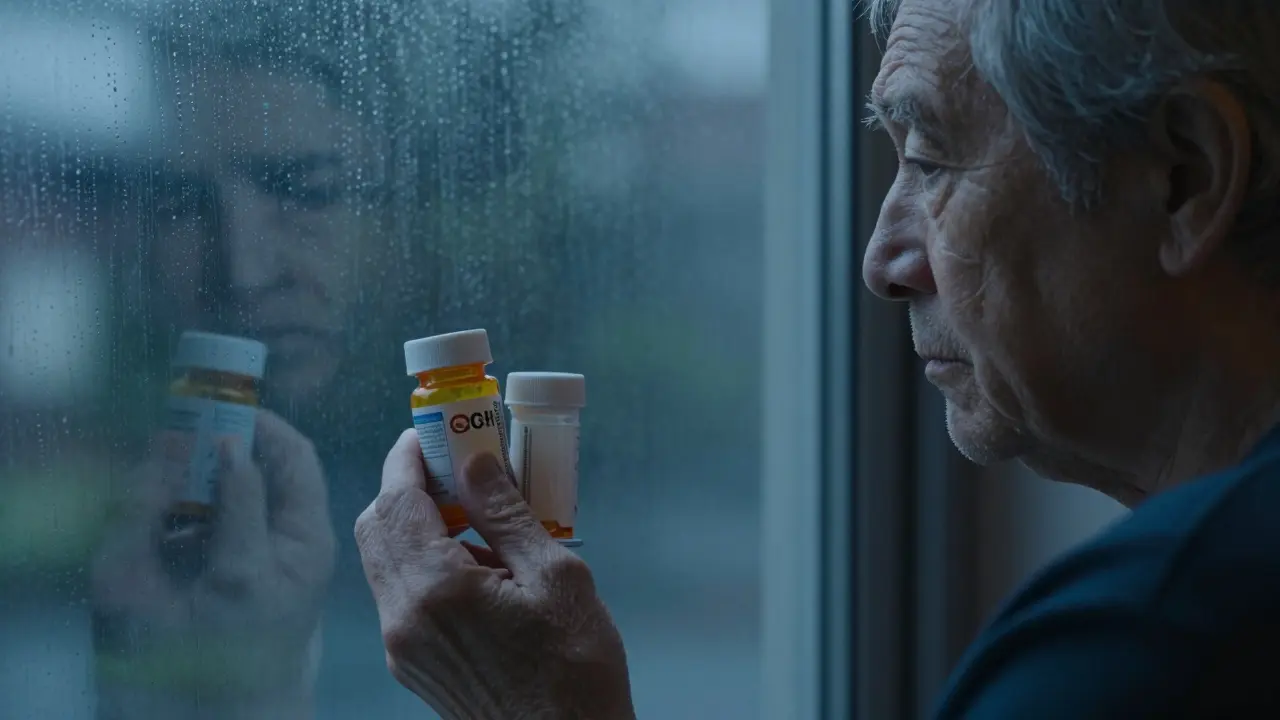
When you pick up a prescription, you might not think twice about whether it’s the brand name or the generic version. After all, the label says it’s the same medicine. But over time, does that really hold up? Are generic drugs just as safe as the brand names you’ve been using for years? The answer isn’t as simple as it sounds.
What does "the same medicine" actually mean?
Generic drugs are required to contain the same active ingredient, strength, and dosage form as the brand-name version. The FDA says they’re therapeutically equivalent. But that doesn’t mean every pill is identical. The inactive ingredients - fillers, dyes, coatings - can differ. And those small differences can matter, especially over months or years of daily use.The FDA’s bioequivalence standard requires that the generic drug’s absorption rate falls within 80% to 125% of the brand. That’s a 45% range. For most drugs, that’s fine. But for medications with a narrow therapeutic index - where even a tiny change in blood levels can cause harm or make the drug ineffective - that margin becomes risky. Think warfarin, levothyroxine, or seizure medications like lamotrigine. In these cases, a 10% difference in absorption might mean the difference between a seizure and control, or a thyroid crash and stable hormone levels.
Real-world data: generics can be safer
One of the largest long-term studies ever done on this topic came from Austria, tracking over 1.2 million people between 2007 and 2012. Researchers compared outcomes for patients taking brand-name versus generic versions of blood pressure drugs. The results were surprising.Patients on generic medications had fewer deaths and fewer major heart and stroke events. The death rate for brand users was 53.8 per 1,000 patient-years. For generic users, it was 30.2. That’s nearly half. Even after adjusting for age, sex, and other health conditions, the advantage for generics held strong. The five-year survival rate for generic users was 82.7%, compared to 79.8% for brand users.
Why? One theory is that generics are cheaper, so patients are more likely to stick with them. If you’re paying $5 instead of $50 a month, you’re less likely to skip doses or run out. Better adherence means better outcomes - and that’s not about the drug itself, but how it’s used.
When switching causes problems
But not everyone has a smooth experience. Case reports from hospitals and clinics show that some patients deteriorate after switching from brand to generic.One patient on generic ciprofloxacin kept getting infections. Their fever wouldn’t break. When they switched back to the brand version, symptoms vanished in days. Another person on generic levofloxacin saw their condition worsen - until they went back to the brand. These aren’t rare flukes. A 2013 review found that about 30% of patients who switch from brand to generic report a drop in effectiveness, side effects, or both.
It’s not that generics are broken. It’s that people react differently. Some are sensitive to the coating on a pill. Others react to the dye. A change in the release mechanism - even if it’s still within FDA limits - can alter how the drug hits the bloodstream. For someone with chronic kidney disease or a complex medication regimen, that small shift can cascade into real problems.
Manufacturing matters more than brand vs generic
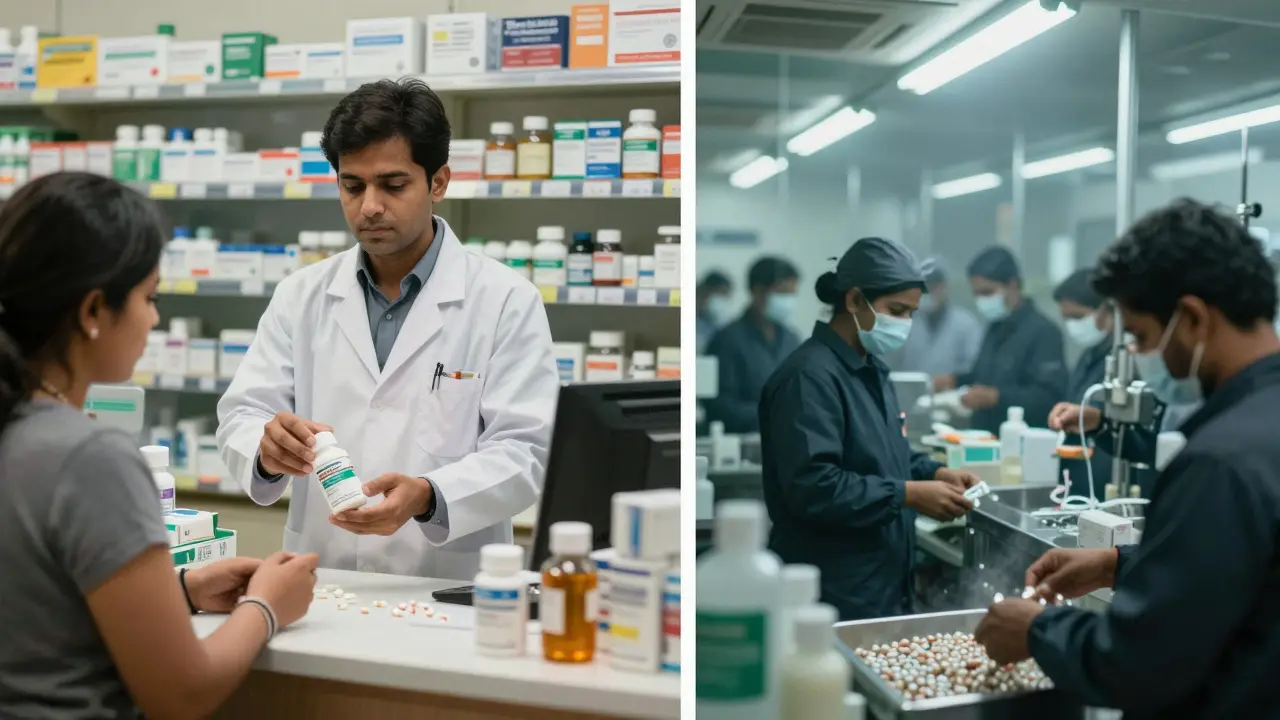
Here’s something most people don’t realize: not all generics are created equal. A 2018 study from Ohio State University looked at adverse events tied to where the drug was made. They found that generic drugs made in India had 54% more severe adverse events - including hospitalizations and deaths - than the same drugs made in the U.S.Take ciprofloxacin. The Indian-made version showed a 62% higher rate of hospitalizations due to serious side effects. The brand-name version? Made in the U.S. The generic version made in the U.S.? Much closer in safety profile.
This isn’t about the generic label. It’s about the manufacturer. Some companies use lower-quality ingredients or cut corners in production. The FDA inspects foreign factories, but not every batch gets checked. And when a drug is made overseas and shipped to the U.S., there’s little way for patients to know where it came from - unless they dig into the packaging or ask their pharmacist.
Authorized generics: the hidden middle ground
There’s another category most people don’t know about: authorized generics. These are the exact same drug as the brand, made by the same company, but sold under a generic label. They’re cheaper than the brand, but identical in every way - down to the filler and coating.When researchers compared adverse event reports for amlodipine, they found that brand versions had 29.5% of reports, authorized generics had 14.3%, and generic versions had 56.2%. The big spike in problems? It came from the generic versions - not the authorized ones. That suggests many of the safety concerns aren’t about brand vs generic. They’re about which company made it.

What about the most vulnerable?
Older adults, people with multiple chronic conditions, and those on complex drug regimens are most at risk. A 2021 Harvard study tracked over 136,000 seniors on blood pressure meds. When generics hit the market, hospitalizations didn’t spike. But the study only looked at serious events - not mild side effects like dizziness, fatigue, or rashes. Those might not send someone to the ER, but they can make life harder and lead to stopping the drug altogether.For patients on levothyroxine, a 2017 study found that switching to generic versions led to a 12.3% higher rate of thyroid hormone fluctuations. That’s not a huge number - but for someone with hypothyroidism, it means feeling tired, gaining weight, or having trouble concentrating. For someone with heart disease, it could mean an increased risk of arrhythmias.
What the data doesn’t tell you
The FDA’s Adverse Event Reporting System (FAERS) shows 1,247 reports of "generic drug ineffective" between 2018 and 2022. Only 289 for brand-name drugs. But here’s the catch: generics are prescribed 92% of the time in the U.S. So the number of reports doesn’t reflect risk - it reflects volume. A drug used 10 times more often will naturally have more reports. That doesn’t mean it’s 10 times riskier.Still, the pattern is worth paying attention to. When patients report that a generic doesn’t work - and then feel better after switching back - it’s not all in their head. It’s real. And it’s happening more often than we like to admit.
What should you do?
If you’re on a medication with a narrow therapeutic index - like warfarin, levothyroxine, phenytoin, or lamotrigine - ask your doctor if staying on the brand is right for you. Don’t assume the generic is automatically fine. If you’ve been stable on the brand, there’s no need to switch.If you’re on a common drug like lisinopril, atorvastatin, or metformin, generics are almost always safe and effective. The data supports it. But if you notice new side effects after switching - fatigue, dizziness, mood changes, worsening symptoms - talk to your pharmacist. Ask if the manufacturer changed. Sometimes, the same generic drug from a different company can make all the difference.
Don’t be afraid to ask for the authorized generic. It’s the same as the brand, just cheaper. And if you’re on a long-term medication, keep a simple log: note when you switch, what you’re feeling, and whether anything changes. That record can help your doctor make smarter choices.
For most people, generics are a win: safe, effective, and affordable. But for some, the difference between brands and generics isn’t just about cost - it’s about control, stability, and quality of life. Knowing when to stick with what works - and when to question a switch - is the real key to long-term safety.
Donna Macaranas
February 1, 2026 AT 06:57Interesting breakdown. I’ve been on generic levothyroxine for years and never had an issue, but I know people who swear they feel worse after switching. Maybe it’s not the generic itself - maybe it’s the batch.
My pharmacist always tells me to check the manufacturer code on the bottle. If it changes, they’ll warn me. Small thing, but it helps.
Melissa Melville
February 1, 2026 AT 13:46So let me get this straight - we’re paying $50 for a pill that’s literally the same as the $5 one, just because it has a fancy logo? 🤡
Deep Rank
February 2, 2026 AT 06:52OMG I KNEW IT!! I switched to generic cipro last year and my UTIs came back worse than ever - like, I was in the ER twice. My doctor said it was ‘just coincidence’ but I know better. Then I went back to the brand and boom - no more infections. I’m not crazy, people. The fillers are poison. And don’t even get me started on how Indian-made generics are basically made in a garage with a 1990s blender. My cousin works at a pharma lab in Hyderabad - he says they reuse the same containers for different drugs and don’t even clean them properly. It’s a horror show. And the FDA? They’re asleep at the wheel. Why do you think so many people are dying from ‘unknown causes’? It’s the pills. Always the pills.
Also I think this is part of a Big Pharma conspiracy to make us dependent on expensive meds so they can charge more. I saw a documentary about it. The guy had a beard and wore a hat. He knew things.
Also my cat got sick after I gave her the generic flea med. Coincidence? I think not.
Naomi Walsh
February 3, 2026 AT 08:04Let’s be clear - this isn’t about generics versus brand names. It’s about regulatory capture and the grotesque failure of the FDA to enforce meaningful quality control across global supply chains. The 80–125% bioequivalence window is a joke for narrow-therapeutic-index drugs. It’s not ‘science’ - it’s corporate lobbying masquerading as pharmacology.
The Austrian study you cite? Brilliant. But it’s not about adherence alone. It’s about systemic bias: brand-name drugs are often prescribed to wealthier, more medically engaged populations - yet even after adjustment, generics showed superior outcomes. That’s not a fluke. That’s a indictment of the entire profit-driven model.
And authorized generics? The only rational solution. Why does the same company producing the brand have to be punished by market forces when they produce an identical product? It’s absurd. The real villain isn’t the generic label - it’s the arbitrary distinction between ‘brand’ and ‘generic’ when the molecule is identical. The system is broken, not the medicine.
Also, the Ohio State data on Indian manufacturing? Shocking, but unsurprising. The FDA inspects less than 2% of foreign facilities annually. That’s not oversight - it’s negligence. We outsource safety like we outsource customer service. And then we wonder why people die.
Meanwhile, patients are left to gamble with their lives because pharmacies and insurers won’t let them choose. The real tragedy? We’re told to trust the system - but the system doesn’t trust us enough to give us transparency. Where’s the batch tracking? Where’s the country-of-origin labeling? Why is this considered proprietary information?
And yet - we’re supposed to be grateful for ‘affordable’ meds while being denied the right to know what we’re actually taking. That’s not healthcare. That’s pharmaceutical feudalism.
franklin hillary
February 5, 2026 AT 07:01Here’s the truth no one wants to admit - drugs aren’t magic. They’re chemistry. And chemistry doesn’t care about your insurance plan or your pharmacy’s bottom line.
But people? People care. A lot. And when you change the color of the pill or the shape or the filler that makes it dissolve slower - your brain notices. It’s not placebo. It’s psychopharmacology. Your body remembers what worked. Switch it out and suddenly your anxiety spikes, your sleep tanks, your pain returns - even if the active ingredient is identical.
It’s not the drug. It’s the ritual. The consistency. The trust you built over years with that one blue oval that always made you feel okay.
So yeah - generics are fine for most. But for the ones of us who live on the edge of stability? We don’t need data. We need continuity. And if the system won’t give us that - then the system is failing us.
And don’t even get me started on how we treat patients like numbers and not humans.
Wake up.
And if you’re on levothyroxine? Don’t switch unless you have to. And if you do? Track your TSH like your life depends on it. Because it does.
Bryan Coleman
February 6, 2026 AT 02:00My grandma switched from brand to generic warfarin and her INR went wild for weeks. Took her 3 months to stabilize. She’s fine now, but that was terrifying.
Now we always check the manufacturer name on the bottle. If it changes, we call the pharmacy and ask if they can stick with the same one. They don’t always say yes, but sometimes they do.
Also - authorized generics are a hidden gem. Ask for them. They’re the same as brand, cheaper, and no one talks about them.
Ed Di Cristofaro
February 8, 2026 AT 01:52People who say generics are fine are either rich or dumb. I’ve seen people die from bad generics. I’ve seen my cousin’s mom have a stroke because her blood thinner didn’t work right after the switch. And now you want me to believe the FDA’s got this under control? LOL.
Big Pharma doesn’t care. They’re making billions off brand names while pushing generics made in India by companies that pay workers $2 a day. And we’re supposed to be grateful?
It’s not about money. It’s about not dying. And if you’re okay with that trade-off, you’re part of the problem.
Chris & Kara Cutler
February 9, 2026 AT 11:07My mom’s on levothyroxine and she switched to generic - started feeling like a zombie. Went back to brand. Back to normal in 3 days. 💊✨
Don’t risk it if you’re sensitive. Your body knows.
vivian papadatu
February 9, 2026 AT 17:22Thank you for this thoughtful, nuanced piece. The data is clear: for most people, generics are safe, effective, and life-changing in terms of affordability. But for a subset - those on narrow-therapeutic-index drugs, the elderly, or those with complex regimens - the variability in inactive ingredients, manufacturing quality, and even psychological attachment to a specific formulation can have real consequences.
What’s missing from public discourse is the concept of ‘personalized pharmacology.’ We don’t treat antibiotics the same for everyone - why treat chronic medications like one-size-fits-all?
Patients deserve transparency: batch numbers, manufacturer names, country of origin. Pharmacists should be trained to flag high-risk switches. And insurers should allow exceptions for those who clinically need brand continuity.
It’s not anti-generic. It’s pro-patient.
Also - authorized generics are the unsung hero here. If your pharmacy doesn’t offer them, ask. They’re often just as affordable as regular generics - with none of the risk.
Sami Sahil
February 11, 2026 AT 08:53Bro this is so real. I was on generic lamotrigine and kept having seizures. Doctor said it was stress. I said no. Switched back to brand - no seizures in 11 months. My life changed.
Also - if you’re on any seizure med or thyroid med - DO NOT SWITCH unless you’re ready to risk your life. I almost died. Don’t be like me.
Nidhi Rajpara
February 13, 2026 AT 03:37While the anecdotal evidence presented is compelling, one must remain cautious in drawing broad conclusions from isolated case reports and non-randomized observational studies. The FDA’s bioequivalence standards, while imperfect, are grounded in decades of pharmacokinetic research and are continuously reviewed. Moreover, the higher adverse event reporting for generics may be confounded by increased utilization and heightened patient vigilance following media exposure. A more rigorous, prospective, double-blind study controlling for manufacturer variability and patient compliance would be necessary to validate the claims of differential safety. Until such evidence emerges, the current consensus - that generics are therapeutically equivalent for the vast majority of patients - remains scientifically sound and economically essential for public health.