

When one psychiatric medication isn’t enough, doctors often add another. This isn’t guesswork-it’s science. Combination therapy is used for treatment-resistant depression, severe anxiety, bipolar disorder, and other complex cases where a single drug fails to bring relief. But here’s the problem: when you switch from a brand-name drug to a generic version in a combination, things can go wrong-fast.
Why Combine Medications at All?
Most people start with one antidepressant-say, sertraline or escitalopram. But for 30% to 40% of patients, that’s not enough. The landmark STAR*D trial showed that after trying one medication, nearly half of people still weren’t feeling better. That’s where combinations come in. Common pairings include:- SSRI or SNRI + low-dose aripiprazole (Abilify) for depression that won’t budge
- Fluoxetine + olanzapine (Symbyax), a fixed-dose combo approved for treatment-resistant depression
- SSRI + buspirone to tackle lingering anxiety without the risk of addiction
- Bupropion + SSRI to fix sexual side effects caused by antidepressants
Generic Substitution: The Hidden Risk
Generic drugs are cheaper. That’s why pharmacies switch them automatically unless the doctor says no. But in psychiatry, small changes can have big consequences. The FDA says generics must be 80% to 125% as effective as the brand name. Sounds fine-until you realize that for some drugs, even a 10% drop in blood levels can trigger a relapse. Take lithium. It’s used for bipolar disorder, and the safe range is razor-thin: 0.6 to 1.2 mmol/L. A 2018 case series from the University of British Columbia found three patients who went from stable to manic within two weeks after switching from brand-name Eskalith to a generic. Their lithium levels dropped from 0.85 to 0.55-even though the dose didn’t change. Same thing happened with bupropion XL. In 2012, the FDA issued a warning after 137 reports of mood crashes, anxiety spikes, and even suicidal thoughts after switching to certain generic versions. The issue? Inconsistent drug release. Some generics release the medication too fast. Others too slow. Both can ruin a carefully balanced treatment plan.Combination Therapy Makes It Worse
The risk isn’t just about one drug. It’s about how they interact. Venlafaxine XR (Effexor XR) works because of its 2:1 ratio of serotonin to norepinephrine reuptake inhibition. Different generic manufacturers use different bead technologies. One might release 60% of the drug in the first hour. Another might release 40%. That small difference changes how the brain responds-and can throw off the whole combination. A 2019 study of nearly 28,500 patients found that switching from brand-name SSRIs to generics led to a 22.3% higher chance of treatment failure. For people on two or more psych meds, the risk was even higher. And it’s not just depression. Mood stabilizers like lamotrigine (Lamictal) and carbamazepine are notorious for this. One patient on Reddit reported that after switching from brand Lamictal to Apotex generic, her Zoloft stopped working. Another said her obsessive thoughts returned after switching Abilify generics-same dose, same doctor, same pharmacy. Just a different manufacturer.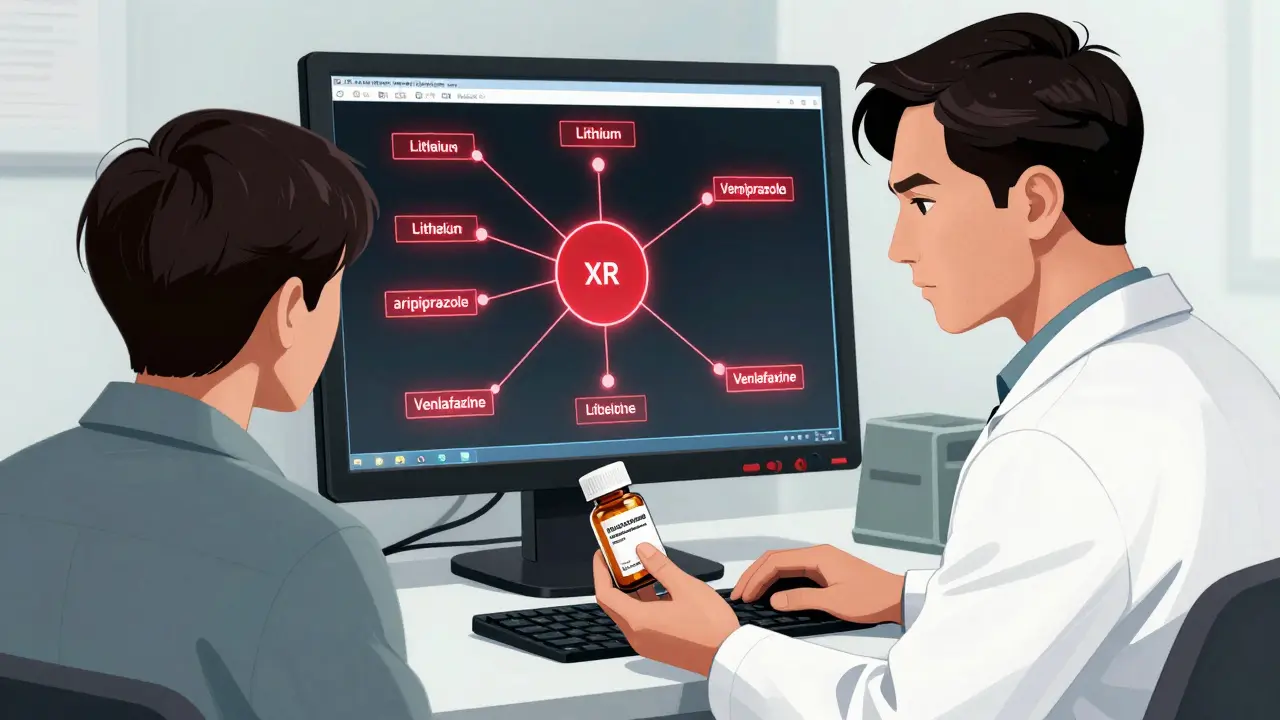
Who’s at Highest Risk?
Not everyone has problems. But some people are far more vulnerable:- Those on lithium, valproate, or clozapine-narrow therapeutic index drugs
- Patients on three or more psych meds
- People who’ve had previous bad reactions to generics
- Those with complex symptom profiles like mixed anxiety-depression with insomnia
What Doctors Are Doing About It
Some clinics have started using tools to prevent bad switches. The University of Toronto created a risk assessment tool that gives points for:- Narrow therapeutic index (3 points)
- Multiple interacting drugs (2 points)
- History of bad generic reaction (4 points)
- Measure symptoms with a scale like MADRS before any switch
- Only switch when you’re stable-not during a crisis
- Check back in 7 to 10 days
The Cost vs. Safety Debate
Generics save money. In 2022, they made up 89% of psychiatric prescriptions by volume but only 26% of the cost. That’s a huge savings for insurers and patients. But here’s the catch: avoidable hospitalizations cost far more. A 2023 Congressional Budget Office report estimated that without changes, generic-related psychiatric hospitalizations will cost the system $2.4 billion annually by 2027. Some experts, like Dr. G. Caleb Alexander from Johns Hopkins, say most generics are safe. He points to studies showing no rise in ER visits for most antidepressants after switching. But even he admits: “High-risk combinations-like lithium with antipsychotics-need extra caution.”
What You Can Do
If you’re on a combination:- Ask your doctor: “Is this a high-risk combo?”
- Ask your pharmacist: “Which manufacturer is this?”
- Keep a symptom journal. Note mood, sleep, energy, side effects-before and after any switch.
- Don’t let a pharmacy switch your meds without telling you. You have the right to refuse a generic substitution.
- If you feel worse after a switch-don’t wait. Call your doctor. It might not be “just in your head.”
What’s Changing?
The FDA is starting to listen. In May 2023, they proposed tighter bioequivalence standards (90-111%) for extended-release psych drugs used in combinations. That’s a big deal. The Department of Veterans Affairs now requires patients on high-risk combos to stay on the same generic manufacturer for at least 12 months. Result? Hospitalizations dropped 18.7%. California passed a law in 2023 requiring pharmacists to notify prescribers before switching psych meds in patients on multiple drugs. Michigan saw a 22% drop in ER visits after doing the same. The future? Personalized medicine. Experts predict pharmacogenetic testing-analyzing how your genes process drugs-will guide generic selection by 2030. That could cut adverse reactions by 60%.Bottom Line
Generic drugs are not inherently bad. But in psychiatric combinations, they’re not always interchangeable. Small differences in how the drug is made can break a treatment that took months to build. If you’re on two or more psychiatric meds, don’t assume a generic switch is safe. Talk to your doctor. Track your symptoms. Know your manufacturer. Your mental health isn’t a cost-saving experiment.Can I ask my pharmacist not to substitute my psychiatric meds with generics?
Yes. You have the legal right to request the brand-name medication. Ask your doctor to write “Dispense as Written” or “Do Not Substitute” on the prescription. Pharmacists must honor this unless your insurance blocks it-then you may need to pay the difference out of pocket.
Why do some people do fine with generics while others crash?
It depends on your body’s sensitivity to small changes in drug levels. People with complex conditions, multiple meds, or narrow therapeutic index drugs (like lithium) are more vulnerable. Genetics, metabolism speed, and prior reactions all play a role. There’s no way to predict it perfectly-so if you’ve had a bad reaction before, assume you’re at higher risk.
What should I do if I think a generic switch made me worse?
Don’t ignore it. Contact your prescriber immediately. Bring your symptom journal and note the exact date you switched. Ask if you can go back to the original formulation. In many cases, symptoms improve within days of switching back. Document everything-this helps your doctor and may prevent others from having the same issue.
Are authorized generics safer than regular generics?
Yes. Authorized generics are made by the original brand-name company under a different label. They use the exact same ingredients, manufacturing process, and quality controls. If your medication has an authorized generic option, it’s often the safest generic choice-especially in combination therapy.
Is there a list of high-risk generic psych meds I should avoid?
No official list exists, but based on FDA warnings and clinical reports, the highest-risk generics include: bupropion XL, venlafaxine XR, lamotrigine, lithium carbonate, and carbamazepine. If you’re taking any of these in combination with another psych med, proceed with caution. Always ask your doctor and pharmacist about the manufacturer.
vivian papadatu
February 1, 2026 AT 00:00My sister switched from brand Abilify to a generic and went from stable to cycling mania in 10 days. No one took it seriously until she ended up in the ER. Now we always check the manufacturer and keep a printed list of what she’s on. It’s not paranoia-it’s survival.
Naresh L
February 1, 2026 AT 01:41It’s fascinating how medicine treats the brain like a machine that can be swapped out with interchangeable parts. But the mind isn’t a circuit board-it’s a living ecosystem. A 5% variance in drug release might seem negligible to a pharmacist, but to someone whose serotonin balance is held by a thread, it’s a landslide.
I wonder if we’ll ever stop reducing human experience to dosage charts and bioequivalence percentages. There’s something deeply dehumanizing about treating psychiatric stability as a cost optimization problem.
June Richards
February 2, 2026 AT 17:27Ugh. I’m so tired of people acting like generics are poison. My anxiety meds are generic and I’m fine. Stop scaring people for no reason. Also, if you can’t afford brand name, stop being dramatic and take the pill.
Lu Gao
February 2, 2026 AT 23:22Actually, I switched to generic lamotrigine and my OCD went full Hollywood. Then I switched back and boom-quiet mind again. So yeah, I’m team ‘don’t mess with my brain meds.’ Also, authorized generics? YES PLEASE. Why pay more for the same thing with a fancy label? 🙄
Jamie Allan Brown
February 3, 2026 AT 05:45As someone who’s been on a cocktail of meds for over a decade, I’ve learned to treat my prescriptions like sacred texts. I write down the manufacturer, the lot number, even the color of the pill. I’ve seen good people lose years of progress because someone thought ‘it’s just a generic.’ It’s not. It’s their stability. Their peace. Their life.
And yes-I’ve had pharmacists roll their eyes when I asked for the same brand. But I’m not asking. I’m insisting. Because if you’ve ever been on the edge of a cliff, you don’t gamble with the rope.
Lisa Rodriguez
February 4, 2026 AT 18:15Just had a patient yesterday who switched generics and started hallucinating. Not joking. She thought her cat was talking to her. Turned out the new bupropion XL was releasing too fast-she was getting a spike every 3 hours. We switched back and she cried saying she felt like herself again. This isn’t anecdotal. It’s clinical. And we’re not talking about placebos here.
Doctors need to stop assuming patients can’t tell the difference. They can. And they’re scared. Listen to them.
Ed Di Cristofaro
February 5, 2026 AT 10:37People are so dramatic. If you can’t afford your meds, you’re not sick-you’re broke. Take the generic. Stop whining. I’ve been on 5 psych meds for 15 years and I’ve never had an issue. You’re just lazy.
Lilliana Lowe
February 6, 2026 AT 02:58Let’s be clear: the FDA’s 80–125% bioequivalence range is a joke. It’s designed for aspirin, not lithium. The fact that we allow this for CNS drugs is a regulatory failure of epic proportions. Anyone who defends this as ‘safe’ hasn’t read the 2019 JAMA Psychiatry paper on SSRI generic failure rates-or the VA’s own data showing 18.7% fewer hospitalizations when manufacturers are locked in. This isn’t opinion. It’s data. And the system is failing us.