
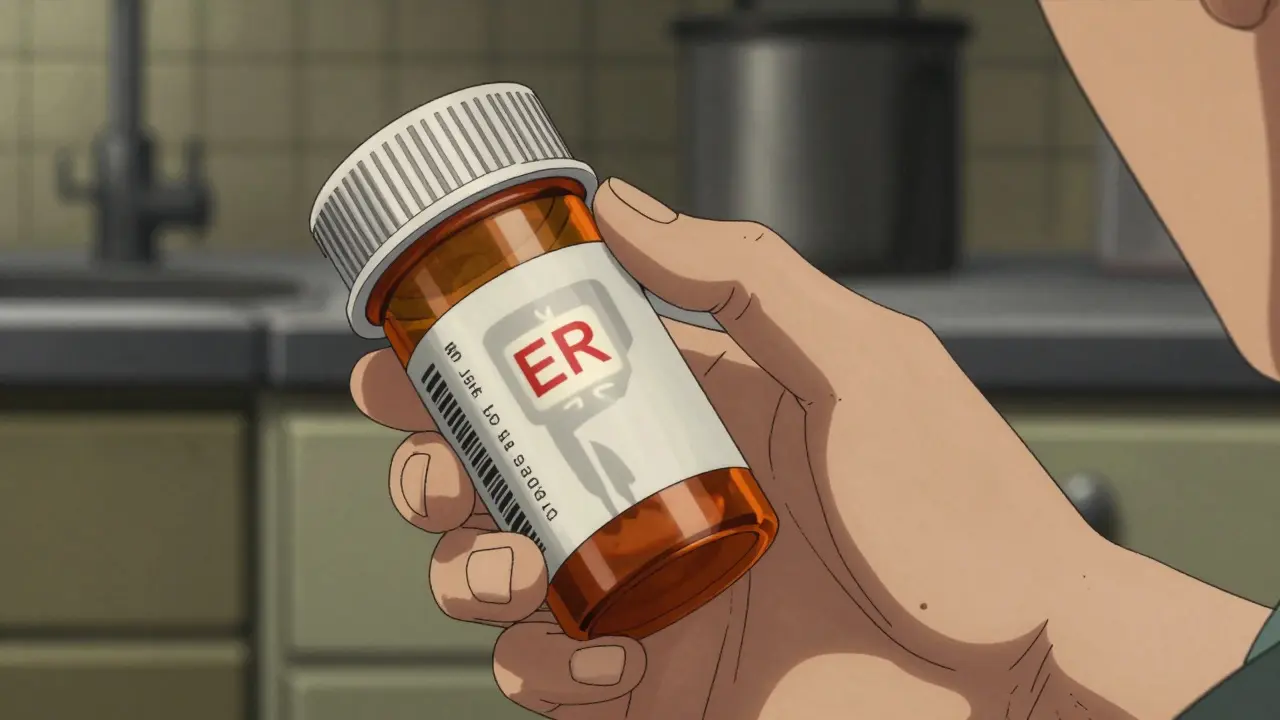
When a patient has a bad reaction to a generic drug, the system is supposed to catch it. But too often, it doesn’t. Even though generic drugs make up 90% of all prescriptions filled in the U.S., they account for less than a third of serious adverse event reports. That’s not because generics are safer. It’s because the reporting process is broken.
What Counts as a Serious Adverse Event?
A serious adverse event (SAE) isn’t just a rash or a headache. The FDA defines it as any reaction that’s life-threatening, causes hospitalization, leads to permanent disability, results in birth defects, or requires medical intervention to prevent lasting harm. This applies equally to brand-name and generic drugs. If someone goes to the ER after taking a generic version of losartan because their blood pressure spiked dangerously, that’s an SAE. If a patient develops liver failure after switching to a generic simvastatin, that’s an SAE too.The law doesn’t care if the drug is made by Pfizer or a small lab in India. Under 21 CFR 312.64(b), every manufacturer - brand or generic - must report serious, unexpected reactions to the FDA within 15 days of learning about them. The same rule applies in Europe under EMA guidelines. But in practice, the system treats them very differently.
Why Generic Drug Reports Are Missing
Here’s the problem: most people don’t know which company made their generic drug. Pharmacies switch suppliers constantly. One month, you get levothyroxine from Teva. The next, it’s Mylan. The label might say “Levothyroxine Sodium 100 mcg,” but the manufacturer’s name is printed in tiny font, often on the side of the bottle. Most patients don’t look. Many don’t even know to look.Healthcare providers face the same confusion. A 2020 survey by the Institute for Safe Medication Practices found that 68% of doctors and pharmacists had trouble identifying the manufacturer when reporting a reaction to a generic drug. Only 12% had that trouble with brand-name drugs. That’s not a small gap - it’s a chasm.
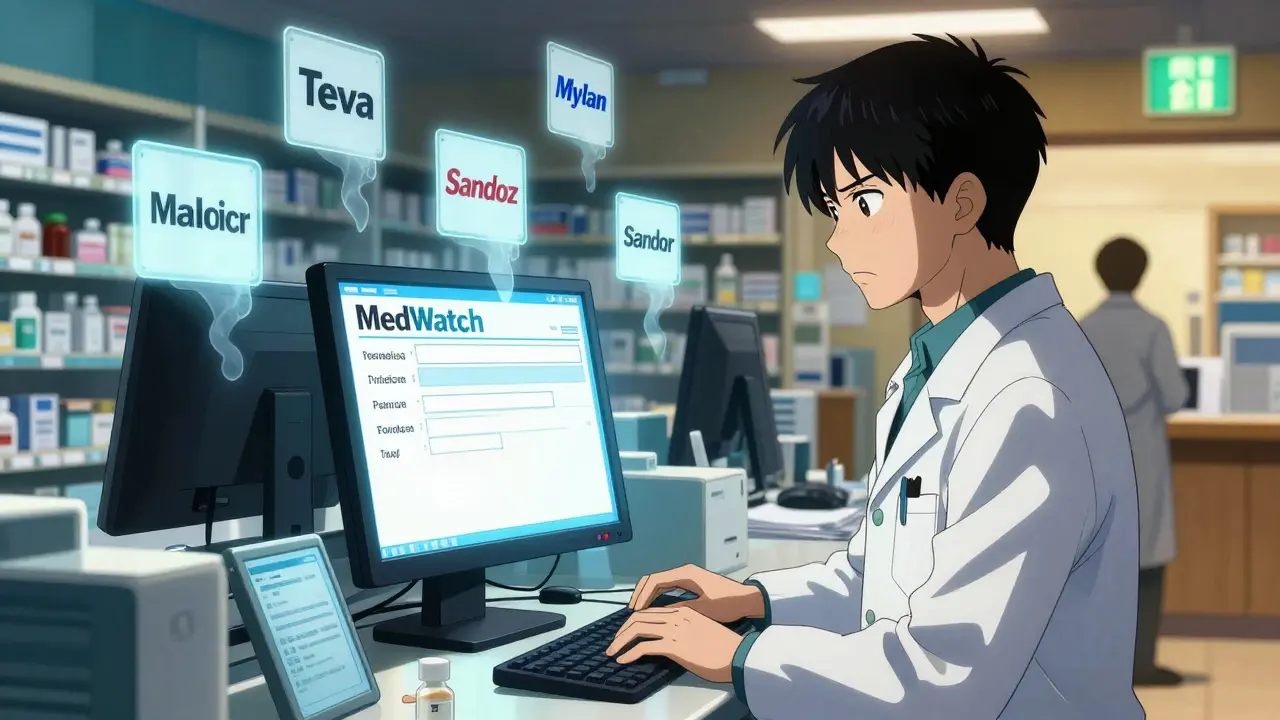
And it gets worse. The FDA’s MedWatch form requires you to pick the brand name or generic name and then enter the manufacturer. If you don’t know the manufacturer, you’re stuck. A 2019 FDA usability study showed that 42% of providers gave up on filing a report for a generic drug because they couldn’t find the right manufacturer. For brand-name drugs? Only 9% quit.
Smaller generic manufacturers are especially underrepresented. They make up about a third of all generic prescriptions but submitted only 4.7% of all SAE reports. Why? Many don’t have dedicated safety teams. Big pharma companies have pharmacovigilance departments with teams of specialists. Smaller generics often outsource to third parties - or do nothing at all.
How to Report a Serious Adverse Event for a Generic Drug
You can report an SAE whether you’re a doctor, pharmacist, nurse, or even a patient. Here’s how to do it right:- Check the medication bottle. Look for the manufacturer name - it’s usually on the side or bottom of the bottle, near the NDC code. Write it down. If you can’t find it, take a photo.
- Use the correct form. File a report using MedWatch Form 3500 (paper) or the online MedWatch portal. Select “Generic Drug” as the product type.
- Enter the active ingredient. Type the exact name of the drug - for example, “amlodipine besylate,” not “blood pressure pill.”
- Include the manufacturer. This is critical. If you don’t know it, use the DailyMed database (dailymed.nlm.nih.gov) to search by NDC code. You can find the NDC on the bottle or receipt.
- Describe the event fully. Include onset date, symptoms, duration, treatment, and outcome. Don’t say “felt weird.” Say “chest pain began 2 hours after taking pill, lasted 45 minutes, resolved after nitroglycerin.”
- Submit within 15 days. The clock starts when you first become aware of the reaction.
If you’re a pharmacist or hospital staff, use barcode scanners at the point of dispensing. A 2022 ASHP study showed this boosts accurate reporting by 63%. Many hospitals now require it.
What’s Being Done to Fix This?
The FDA knows the system is flawed. In 2023, they launched FAERS 2.0 - a new system that automatically links adverse events to specific manufacturers using NDC codes. That’s a big step. They also released draft guidance in June 2023 asking pharmacies to print the manufacturer’s name more clearly on all prescription labels.The GDUFA III program (2023-2027) is spending $15 million to improve post-market safety monitoring for generics. The EMA has made it a priority too. And in 2024, the FDA is piloting a program with CVS, Walgreens, and other major chains to automatically capture manufacturer data when a prescription is filled - no patient or provider input needed.
Industry spending on pharmacovigilance for generics is rising fast - from $185 million in 2023 to an expected $320 million by 2027. But progress is slow. Until every bottle clearly shows the maker, and until every provider knows how to find that info, the reporting gap will stay wide.
Why This Matters
You might think, “So what? It’s just a report.” But missing reports mean missing signals. A small group of patients might be having the same reaction to one generic version of metoprolol - but if no one reports it, the FDA never sees the pattern. That’s how dangerous side effects go unnoticed for years.Studies have shown that even tiny differences in inactive ingredients - like fillers or coatings - can affect how a generic drug is absorbed. That’s why some patients report feeling worse after switching from one generic to another, even though the active ingredient is the same. Without good data, regulators can’t tell if it’s coincidence or a real safety issue.
Dr. Daniel Korn of the FDA said it plainly: “The underreporting of adverse events for generic drugs creates a significant gap in our post-marketing surveillance system.” Dr. Jerry Avorn from Harvard added, “The current system fails to capture the complete safety profile of generic drugs, potentially putting patients at risk.”
This isn’t about blaming manufacturers. It’s about fixing a broken process. If you’re the one holding the bottle, writing the prescription, or filling the order - you’re part of the solution.
What You Can Do Today
- Always check the manufacturer name on your prescription bottle. Keep a note of it. - Report any serious reaction - even if you’re not sure. The FDA would rather get a false report than miss a real one. - Ask your pharmacist if they can tell you who made your generic drug. If they can’t, ask them to find out. - Use DailyMed to look up NDC codes if you’re unsure. It’s free and public. - Encourage your clinic or hospital to use barcode scanning for all generic medications.Generic drugs save billions of dollars every year. They’re essential. But safety can’t be an afterthought. The next time you or someone you know has a bad reaction to a generic drug - don’t assume it’s “just the way it is.” Report it. Someone’s life might depend on it.
Jody Fahrenkrug
January 17, 2026 AT 12:19I had no idea generic drug manufacturers weren't required to put their names in big letters. I just assumed the pharmacy picked the cheapest one and that was it. My mom had a crazy reaction to her thyroid med last year - turned out it was a different batch. Took us weeks to track down who made it. Seriously, this needs to change.
Also, why is the FDA still making us fill out paper forms? My doctor’s office still uses fax machines. We’re in 2024.
kanchan tiwari
January 19, 2026 AT 04:21THEY’RE DOING THIS ON PURPOSE. Big Pharma owns the FDA. They want you to think generics are ‘just as good’ so you don’t ask questions. But the fillers? The coatings? The shipping from some factory in Punjab with no quality control? It’s a death trap. My cousin died after switching to a $3 generic. The death certificate said ‘heart failure.’ But the bottle? No manufacturer. No trace. This is corporate murder disguised as savings.
They’re lying to you. And they’re killing people to save a dime.
Bobbi-Marie Nova
January 20, 2026 AT 01:53Okay but can we talk about how wild it is that we’re still manually hunting down NDC codes like it’s 2005? I love that the FDA’s rolling out FAERS 2.0 - finally. But why not just auto-populate the manufacturer when the pharmacy scans the script? It’s not magic, it’s barcode tech. We do this for groceries.
Also, if you’re a patient and you get weird after a switch? Report it. Even if you think you’re ‘overreacting.’ The FDA would rather hear from 100 people who felt ‘off’ than miss one person who actually had liver failure. Seriously. Just do it. It’s 5 minutes. You’re not a nuisance - you’re a hero.
Allen Davidson
January 21, 2026 AT 11:08This is exactly why we need standardized labeling across all pharmacies. No more tiny print. No more ‘check the side’ nonsense. The manufacturer name should be front and center - same size as the drug name. Period.
And pharmacists? You’re the frontline. If a patient asks who made their generic, you better know. If you don’t, you’re not doing your job. This isn’t optional safety info - it’s critical. We’re talking about people’s lives here. Stop treating it like an afterthought.
Bianca Leonhardt
January 22, 2026 AT 07:57Wow. Another ‘generic drugs are dangerous’ sob story. Let me guess - you’re one of those people who thinks every side effect is the drug’s fault and not your body being weird? I’ve been on generics for 12 years. Never had an issue. You’re just scared of saving money.
Also, if you can’t read a bottle, maybe don’t take pills? Just a thought.
Travis Craw
January 23, 2026 AT 08:43so like… i just took my generic metoprolol and i felt kinda dizzy. i didnt think anything of it. but now im wondering if its the manufacturer? i dont even know how to find that info. like… is it on the receipt? the bottle? do i call the pharmacy? i just want to know if im gonna die or not. help.
ps i dont have time to read all this. just tell me what to do.
vivek kumar
January 23, 2026 AT 18:51The data is irrefutable. The FDA’s own studies confirm that underreporting for generics is systemic, not anecdotal. The root cause is not patient negligence - it’s institutional design failure. Pharmacies are not incentivized to label clearly. Manufacturers are not required to embed traceable identifiers. The MedWatch form is antiquated. These are policy failures, not user failures.
What’s needed: mandatory NDC-linked electronic reporting at point-of-dispense, standardized font size for manufacturer names, and automated alerts for duplicate SAEs across identical NDCs. Until then, the system is broken by design.
Henry Ip
January 24, 2026 AT 00:15My nurse taught me to always snap a pic of the bottle when I get a new generic. Just in case. Been doing it for 5 years. Saved me when I had that weird rash last winter. Turned out it was the filler in the Mylan version. I reported it. Two weeks later, the FDA issued a warning. I didn’t even know I could do that.
Do it. It’s easy. Take a pic. Go to medwatch.fda.gov. Done. You’re helping people you’ll never meet.
Isabella Reid
January 24, 2026 AT 17:39I’m from India and I work in pharma logistics. Let me tell you - the same generic drug made in two different factories in Gujarat can have different dissolution rates. It’s not conspiracy. It’s chemistry. And the U.S. system doesn’t track that. We need batch-level tracking. Not just manufacturer. Batch. Date. Lab ID.
That’s the real fix. Right now, if a batch causes a reaction, they recall the whole ‘generic’ - not the actual bad batch. That’s like recalling all bread because one bakery used bad flour.
Samyak Shertok
January 25, 2026 AT 21:45Oh so now we’re blaming the patient for not being a detective? How about we stop pretending generics are ‘equivalent’? They’re not. The FDA allows up to 20% variance in absorption. That’s not ‘same drug.’ That’s ‘kinda similar.’
And don’t get me started on the ‘cost savings’ myth. The real savings go to insurance companies and middlemen. The manufacturers? They’re making 10x profit on generics while paying their QA teams in pennies.
Stop being complicit. Demand brand-name if you’re sensitive. It’s your body. Not a spreadsheet.
Stephen Tulloch
January 26, 2026 AT 13:32bro. i just took a pic of my bottle with my phone and used Google Lens to scan the NDC. it pulled up the manufacturer in 3 seconds. i reported it. 🤙
also why is everyone still using paper forms? we live in a world where your toaster connects to wifi. but your blood pressure med? still a scavenger hunt. 🤡
Melodie Lesesne
January 28, 2026 AT 07:14I’m a nurse and I’ve been pushing my clinic to use barcode scanners for generics since last year. It’s been a nightmare getting admin to approve it. But last month we finally did. Now we auto-log the manufacturer when we dispense. The number of incomplete reports dropped by 70%.
It’s not expensive. It’s not hard. It’s just… been ignored. If your hospital hasn’t done this yet - ask them why. You’re not being annoying. You’re being smart.
Corey Sawchuk
January 29, 2026 AT 02:21My grandma switched to a generic statin and started having muscle pain. We thought it was aging. Turned out it was the same batch that caused a cluster of rhabdomyolysis cases in Ohio. No one reported it because no one knew who made it.
She’s fine now. But we almost lost her because the system failed. This isn’t about blame. It’s about making sure no one else gets caught like that.
Rob Deneke
January 29, 2026 AT 21:48Just report it. Even if you’re not sure. Even if you think it’s nothing. The FDA doesn’t punish you for reporting. They reward you for caring. It’s that simple.
Take a picture. Go to the website. Hit submit. Done. You just helped someone you’ll never meet.
evelyn wellding
January 29, 2026 AT 22:22YESSSS! This is so important!! I reported my rash after switching generics and got a call from the FDA two weeks later asking for more details. I was like WAIT YOU GUYS ACTUALLY READ THIS??
Turns out they were investigating a pattern with that exact batch. So yeah. DO IT. You’re literally saving lives. 💪❤️