
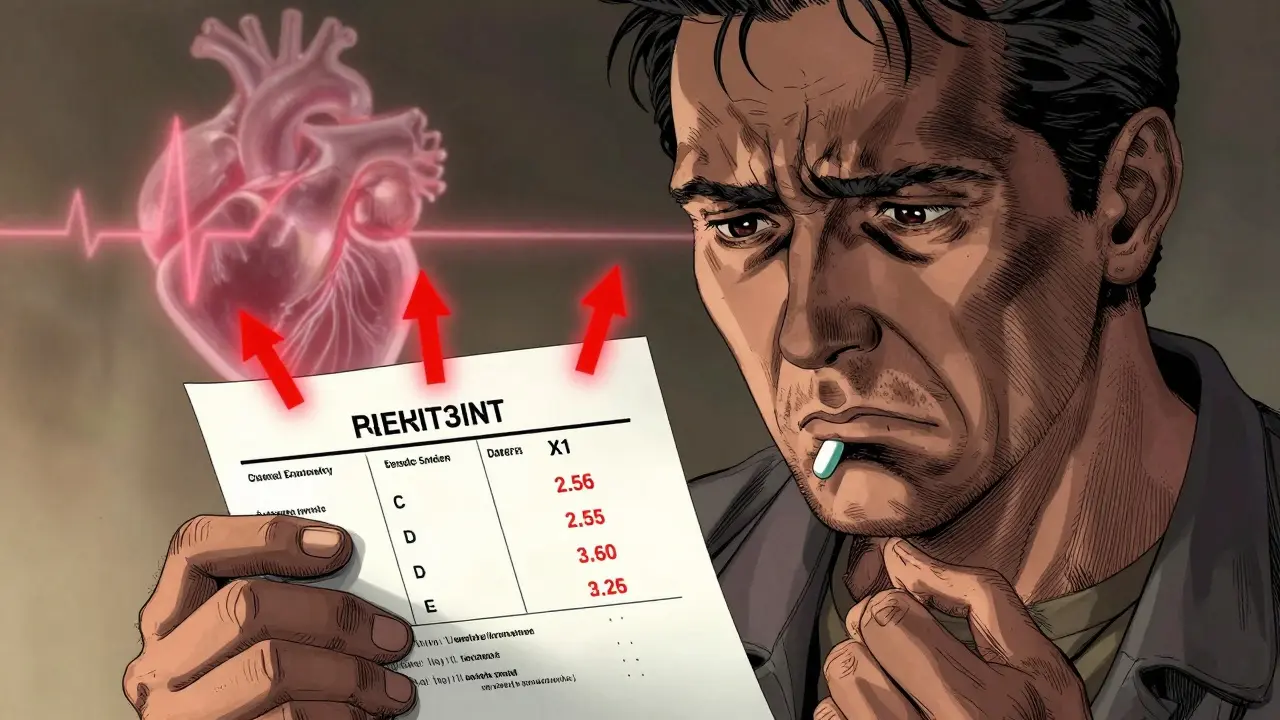
Statin Liver Enzyme Action Calculator
What to Do with Elevated Liver Enzymes
Based on FDA guidelines, this tool helps determine if you should continue, pause, or switch statins based on your liver enzyme test results.
Recommendation:
When you start taking a statin to lower your cholesterol, the last thing you want to hear is that it might be hurting your liver. But if your blood test shows elevated liver enzymes, it’s easy to panic. You might even stop taking your statin altogether. The truth? Statin-related liver enzyme elevations are almost never dangerous - and stopping your statin could be riskier than keeping it.
What Does It Mean When Liver Enzymes Go Up?
Your liver makes enzymes like ALT (alanine aminotransferase) and AST (aspartate aminotransferase). These help with digestion and detox. When liver cells get stressed - from alcohol, fat buildup, or even a virus - they leak a bit of these enzymes into your blood. That’s what shows up on a blood test.
For most people, a small rise in ALT or AST doesn’t mean liver damage. It just means your liver is working harder. With statins, this happens in about 0.5% to 2% of users. That’s less than 1 in 50 people. And in most cases, the numbers go back to normal on their own - even if you keep taking the statin.
The FDA’s Clear Message: Don’t Panic
In 2012, the U.S. Food and Drug Administration changed its guidelines after reviewing data from over 20 million patient-years. The conclusion? Routine liver tests while on statins don’t help catch serious problems - because serious problems are almost unheard of.
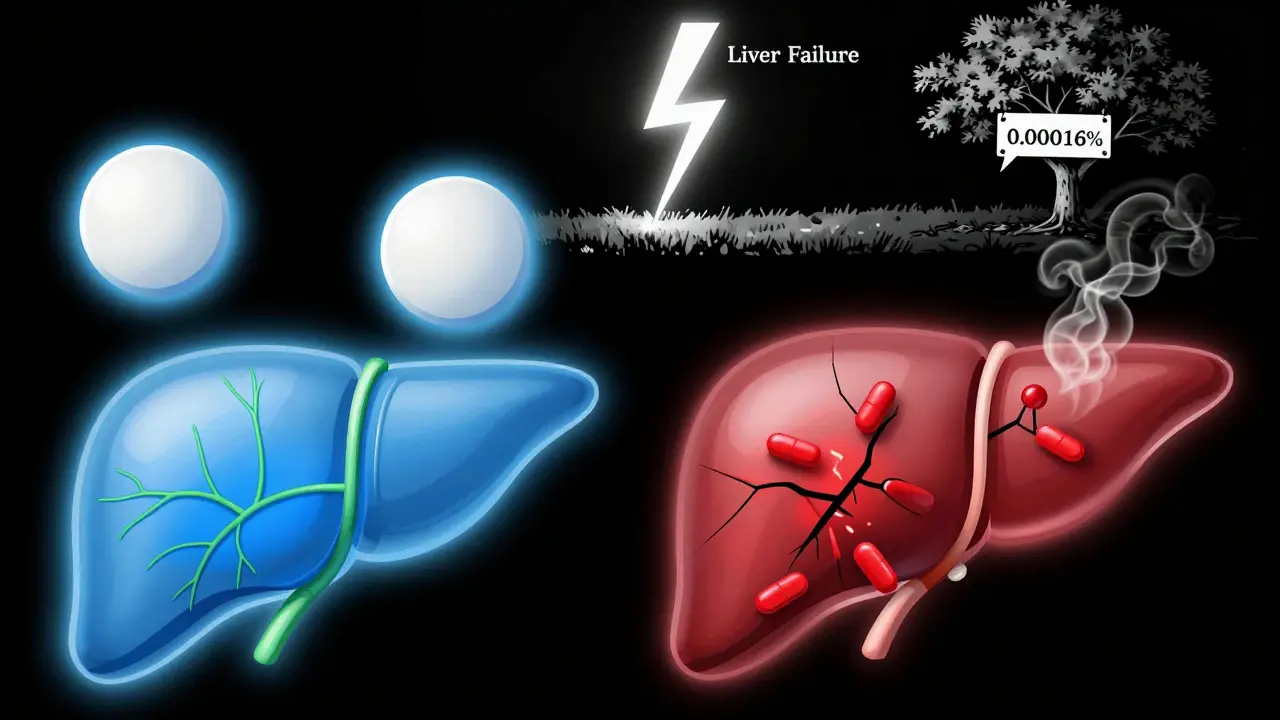
Between 1990 and 2020, there were only 32 confirmed cases of statin-induced acute liver failure in the entire U.S. That’s 0.00016 cases per 1,000 people per year. For comparison, you’re more likely to be struck by lightning than to have a dangerous liver reaction from a statin.
The FDA now says: Don’t check liver enzymes every six months unless you have symptoms. Baseline testing before starting statins is still a good idea. After that? Only retest if you feel unwell - nausea, dark urine, yellow skin, or constant fatigue.
When Should You Actually Worry?
Not every rise in enzymes is the same. Here’s what matters:
- Less than 3x the upper limit of normal (ULN): Keep taking your statin. Recheck in 4-6 weeks. Most of the time, it drops back down.
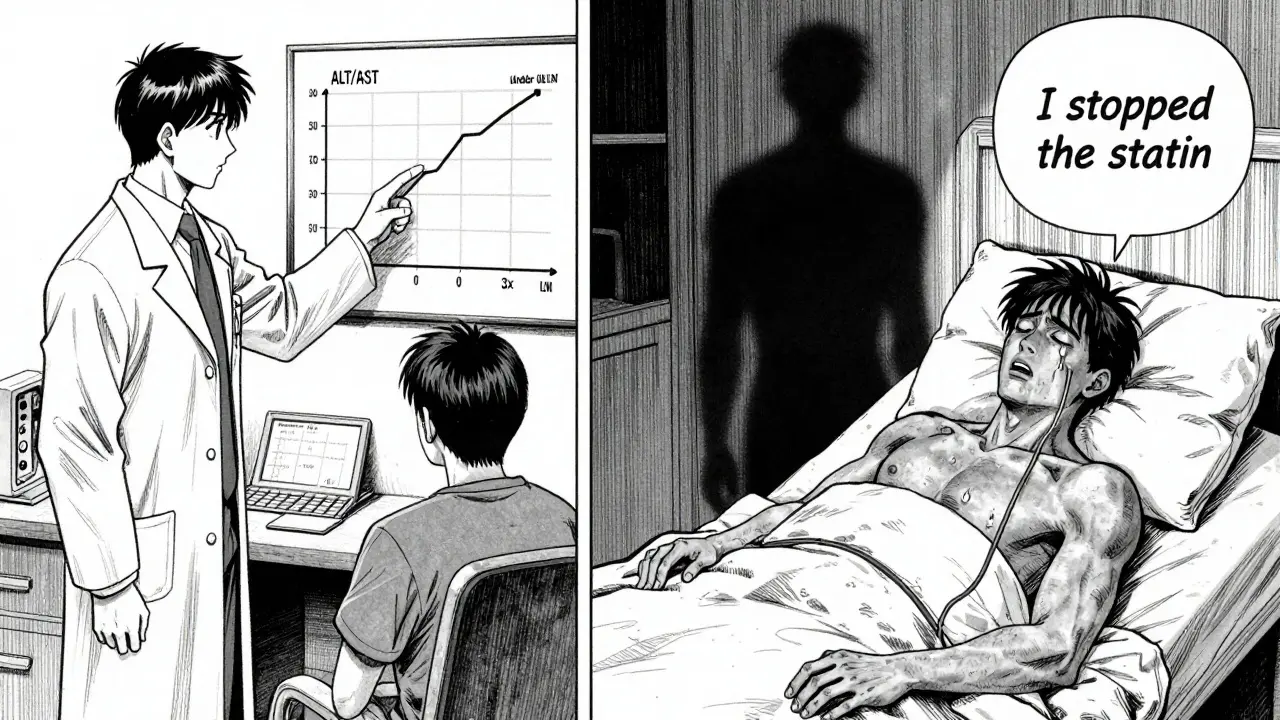
- 3x ULN or higher: Pause the statin, check for other causes (like hepatitis or alcohol use), and retest in 4-6 weeks. If levels drop, you can usually restart the same statin safely.
- Symptoms + high enzymes: If you’re tired, itchy, have dark urine, or your skin looks yellow - see your doctor right away. This is rare, but needs attention.
Most people with mild elevations - even up to 2.5x ULN - have no symptoms and no liver damage. Yet, studies show nearly 19% of people stop statins because of these numbers alone. That’s dangerous. Stopping statins increases heart attack and stroke risk.
Some Statins Are Safer Than Others
Not all statins affect the liver the same way. The liver processes them differently, and some are more likely to cause enzyme spikes.
Here’s the reality:
- Lower risk: Pravastatin and rosuvastatin. These are water-soluble and don’t pile up in liver cells. Pravastatin has the lowest rate of enzyme elevation - just 0.3%.
- Higher risk: Simvastatin, lovastatin, atorvastatin. These are fat-soluble and get absorbed more into liver tissue. They’re more likely to cause mild enzyme increases - especially at high doses.
- Withdrawn: Cerivastatin. It was pulled in 2001 because of too many liver and muscle problems. It’s not on the market anymore.
If your enzymes rise and you’re on simvastatin or atorvastatin, switching to pravastatin or rosuvastatin often fixes the issue - without losing the heart protection.
Why Do Some People Have Higher Risk?
It’s not just about the drug. Genetics and health play a role.
- SLCO1B1 gene variant: About 1 in 5 people carry a gene change that makes it harder for the liver to clear statins. This raises enzyme elevation risk by over 3 times. A new test called StatinSafety Plus can check for this - but it’s only recommended if you’re on high-dose statins and already have liver issues.
- CYP3A4 interactions: If you take statins like simvastatin or atorvastatin with certain antibiotics (clarithromycin), antifungals, or grapefruit juice, your liver gets overloaded. This can spike enzyme levels. Talk to your pharmacist before mixing meds.
- Age and kidney function: People over 75 with poor kidney function have nearly 5 times higher risk. Dose adjustments matter here.
- NAFLD (fatty liver): Surprisingly, people with fatty liver have lower rates of statin-related enzyme spikes. The liver may adapt to the statin’s effect. Statins are actually safe - and sometimes helpful - for fatty liver.
What You Shouldn’t Do
Don’t stop your statin because of a mild enzyme rise. Don’t assume every elevation means damage. Don’t let fear override your heart health.
Here’s what the data says:
- A Mayo Clinic study found 17 patients stopped statins due to mild enzyme elevations. Five of them had heart attacks or strokes within 18 months.
- One Reddit user saw his ALT jump from 28 to 142 after starting atorvastatin. He switched to pravastatin - and his levels went back to normal. No damage done.
- A 2023 study showed that patients who restarted statins after a temporary pause had the same heart protection as those who never stopped.
The real danger isn’t the statin. It’s stopping it.
What Your Doctor Should Do
A good doctor won’t panic over a slightly high ALT. They’ll:
- Check if you have symptoms - nausea, itching, yellow skin.
- Rule out other causes: viral hepatitis, alcohol use, fatty liver, or other meds.
- Recheck enzymes in 4-6 weeks - not 2 weeks.
- Consider switching statins if levels stay high - not stopping.
- Never use routine monthly or quarterly liver tests unless you’re high-risk.
Yet, 35% of U.S. doctors still order routine liver tests every 6 months - even though the FDA says it’s unnecessary. That’s over $1 billion a year spent on tests that don’t prevent harm.
What You Can Do Right Now
If you’re on a statin and your last blood test showed a mild enzyme rise:
- Don’t panic. Don’t stop.
- Ask your doctor: “Is this over 3x the normal limit? Do I have symptoms?”
- If not - ask for a repeat test in 6 weeks.
- If you’re on simvastatin or high-dose atorvastatin, ask: “Would switching to pravastatin or rosuvastatin help?”
- If you’ve stopped statins before because of liver concerns - talk to your doctor about restarting. Your heart still needs protection.
Statins save lives. For every 1,000 people taking statins for primary prevention, about 25 heart attacks or strokes are prevented over 5 years. Meanwhile, fewer than 1 person has a serious liver reaction.
The numbers don’t lie. The fear does.
Can statins cause permanent liver damage?
No. Statins do not cause permanent liver damage in the vast majority of cases. Even when liver enzymes rise significantly, they almost always return to normal once the statin is stopped or switched. There are no confirmed cases of lasting liver injury from statins in healthy individuals. The few cases of severe liver injury reported are extremely rare - less than 1 in 10,000 users - and often involve other risk factors like alcohol use, pre-existing liver disease, or drug interactions.
Should I get my liver enzymes checked every 6 months while on statins?
No. The FDA and major medical groups (including the American College of Cardiology and the American Gastroenterological Association) no longer recommend routine liver enzyme testing for people on statins. A baseline test before starting is enough. Repeat testing is only needed if you develop symptoms like fatigue, nausea, dark urine, or yellowing of the skin. Routine testing leads to unnecessary anxiety, false alarms, and even dangerous statin discontinuations.
I have fatty liver. Can I still take statins?
Yes - and you should. People with nonalcoholic fatty liver disease (NAFLD) actually have a lower rate of statin-related enzyme elevations than those without fatty liver. Statins may even help reduce liver fat and inflammation over time. Major guidelines now say NAFLD is not a reason to avoid statins. In fact, people with fatty liver and high cholesterol are at higher risk for heart disease - making statins even more important.
Can I take coenzyme Q10 to prevent liver enzyme elevations?
Some small studies suggest coenzyme Q10 (CoQ10) may reduce statin-related ALT elevations by about 40%, but the evidence isn’t strong enough to recommend it for everyone. CoQ10 doesn’t prevent heart attacks or improve cholesterol. It’s not a substitute for statins. If you’re considering it, talk to your doctor - but don’t stop your statin to take it. The heart benefits of statins far outweigh any potential liver benefit from CoQ10.
I had a high enzyme reading. Should I switch statins or stop?
Switch, don’t stop. If your ALT or AST is under 3x the upper limit of normal and you feel fine, keep taking your statin and retest in 4-6 weeks. If it’s over 3x or stays high, switch to a different statin - like pravastatin or rosuvastatin - which are less likely to cause liver enzyme spikes. Studies show that over 90% of people who switch can safely resume statin therapy with no further issues. Stopping completely increases your risk of heart attack or stroke.
Spenser Bickett
February 26, 2026 AT 16:44so like... statins dont hurt your liver but people panic and stop takin em?? wow. who couldve guessed that corporate medicine is just tryna sell more pills lmao. i mean, if your liver enzymes go up, its cuz your body is sayin "hey, this ain't natural". but sure, keep chuggin' that synthetic junk. also, "less than 1 in 50"? sounds like a marketing stat. what about the 49 who got weird fatigue and never told their doc? nah, they dont count. classic.
Christopher Wiedenhaupt
February 26, 2026 AT 20:36It is important to note that the data presented in this article is consistent with current clinical guidelines from the American College of Cardiology and the FDA. Elevated liver enzymes in the context of statin therapy are transient and rarely indicative of true hepatotoxicity. Routine monitoring is not only unnecessary but may lead to unwarranted discontinuation of life-saving therapy. The risk-benefit profile strongly favors continued statin use in the absence of symptoms or levels exceeding three times the upper limit of normal.
John Smith
February 27, 2026 AT 02:40Oh wow statins dont kill your liver. Shocking. Next youll tell me breathing air doesnt give you cancer. I mean sure the numbers say one thing but have you met people? People dont care about numbers. They care about feeling weird after a pill. And if your doctor says "retest in 6 weeks" but you feel like your insides are melting? Thats not science thats gaslighting.
Shalini Gautam
February 27, 2026 AT 09:46As an Indian woman who has seen family members survive heart attacks thanks to statins, I find this article so refreshing. In our culture, people avoid meds like poison unless absolutely forced. But here? The fear is worse than the disease. My uncle was on simvastatin, enzymes jumped, he quit. Had a stroke at 68. Switched to rosuvastatin? Back to golfing. No drama. Just science.
Natanya Green
February 28, 2026 AT 02:35OMG I CRIED WHEN I READ THIS!!! I WAS SO SCARED WHEN MY ALT WENT TO 112!! I THOUGHT I WAS GONNA DIE OR NEED A LIVER TRANSPLANT!! I STOPPED MY STATIN FOR 3 WEEKS AND FELT LIKE A WRECK!! THEN I CAME BACK AND SWITCHED TO PRAVASTATIN AND NOW MY ENZYMES ARE NORMAL AND I FEEL LIKE A NEW PERSON!! THANK YOU FOR THIS ARTICLE I WASNT ALONE!!! I TOLD MY SISTER AND SHE JUST STARTED A STATIN AND SHE'S NOT AFRAID ANYMORE!!! LOVE YOU SO MUCH!!!
Steven Pam
February 28, 2026 AT 11:59Biggest takeaway? Fear is the real enemy here. Not statins. Not enzymes. Fear. And it's everywhere. You get a blood test, see a number that looks scary, and your brain goes full apocalyptic. But here's the thing - your body is way smarter than your anxiety. It's not screaming "DANGER" when your ALT goes up 2x. It's just saying "hey, I'm doing extra work today." And guess what? You don't need to shut everything down. You just need to pause, check in, maybe switch statins, and keep going. The heart doesn't care about your fear. It just wants you alive. Stay the course. You got this.
Timothy Haroutunian
March 1, 2026 AT 19:48Let me just say this - I’ve been on statins for 12 years. I had my first ALT spike at 2.8x ULN. My doctor told me to stop. I did. I got a heart scan six months later - 47% plaque buildup. I restarted on rosuvastatin. Two years later, plaque went down 11%. So yes, the liver thing is a red herring. But here’s the real problem: doctors still panic. They don’t read the guidelines. They don’t know the difference between transient elevation and true toxicity. They see a number, they freak out, they tell you to quit. And then you get the next appointment where they say "why did you stop?" Like you’re the dumb one. It’s not the drug. It’s the system. And the system is broken.
Erin Pinheiro
March 3, 2026 AT 04:47Okay but what about the 2024 study in JAMA that showed 12% of patients with mild enzyme elevations had subclinical inflammation on MRI? And what about the fact that CoQ10 actually helps with mitochondrial function? And why arent we talking about the fact that simvastatin is metabolized by CYP3A4 which is inhibited by common antibiotics? Oh right because this article is written by a pharma shill. Also I read a blog post once that said liver enzymes are like a canary in a coal mine and if you ignore it you're basically asking for cirrhosis. Also my cousin's neighbor's dog got liver failure from a statin. So yeah. I'm not taking it.