
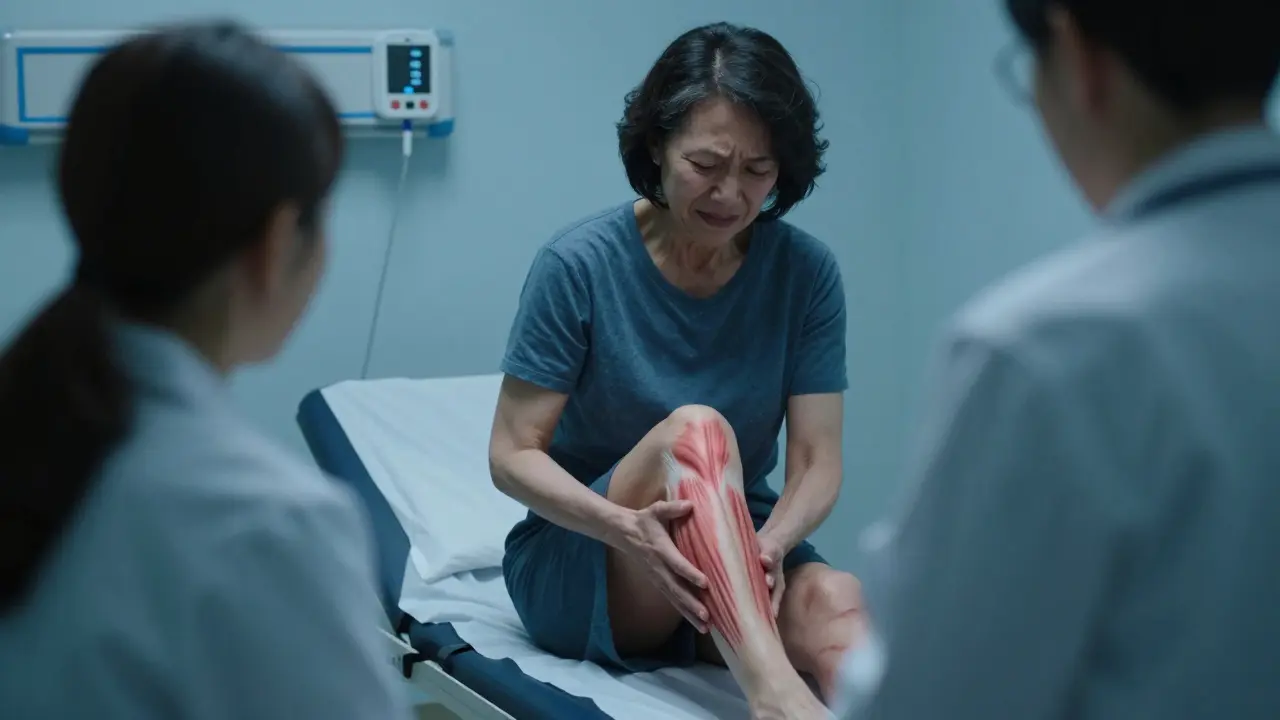
Statins are one of the most prescribed drugs in the world. They lower cholesterol, reduce plaque in arteries, and cut the risk of heart attacks and strokes. For decades, doctors assumed these benefits applied equally to men and women. But the truth is more complicated. Statins don’t affect women the same way they affect men-and the differences aren’t minor. Women are more likely to stop taking them because of side effects, less likely to be offered alternatives, and often not told the full picture about risks. This isn’t about fear-it’s about facts.
Women Get Muscle Pain More Often-and It’s Not Just in Their Heads
The most common reason women quit statins? Muscle pain. Not just a little soreness after a workout. Real, persistent aches, weakness, or cramps that make daily life harder. The USAGE survey, which tracked over 5,000 statin users, found that 31% of women reported new or worsening muscle symptoms compared to 26% of men. That difference might sound small, but it’s statistically significant-and it adds up.Why does this happen? It’s biology. Women generally have lower kidney function after adjusting for body size-about 15-20% lower glomerular filtration rates than men. That means statins stick around longer in the bloodstream. Women also tend to have higher body fat percentages (25-30% on average versus 15-20% in men), which changes how the drug is stored and released. These factors combine to increase exposure to the medication, making side effects more likely.
The risk climbs even higher after age 65. Elderly women are 1.5 to 2 times more likely than men their age to develop statin-induced myopathy. This isn’t just about aging-it’s about polypharmacy. Many older women take multiple medications for blood pressure, arthritis, or thyroid issues. Some of those, like calcium channel blockers, can interact with statins and spike toxicity levels. One study showed simvastatin toxicity jumped by 300% when taken with certain blood pressure pills.
Statins Can Raise Diabetes Risk-Especially After Menopause
The FDA added a warning to statin labels back in 2012: these drugs can increase the chance of developing type 2 diabetes. The numbers vary. Some studies show a 9% increase over four years. Others, like the JUPITER trial with rosuvastatin, found a 27% rise over two years.What’s worse? This risk hits women harder after menopause. A 2013 study in the Journal of the American College of Cardiology found that post-menopausal women had a higher diabetes risk from statins than men-even at low doses. It wasn’t about how much they took. It was about being a woman past menopause. Estrogen drops, insulin sensitivity changes, and fat distribution shifts-all of that makes the body more vulnerable.
Does that mean women shouldn’t take statins? No. The cardiovascular benefits still outweigh the diabetes risk for most women with high cholesterol or a history of heart disease. But it does mean you need to be monitored. If you’re on a statin, get your fasting blood sugar checked every 3 to 6 months, especially after age 55. Catching prediabetes early can stop it from becoming full-blown diabetes.
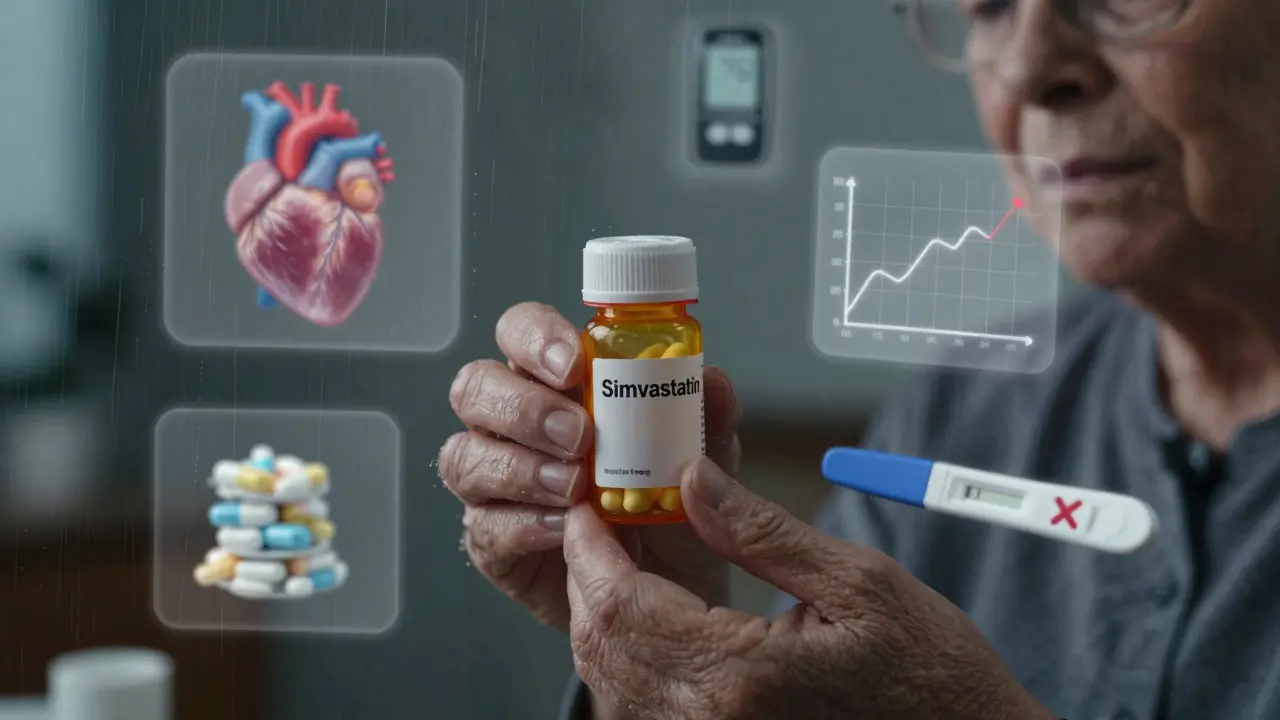
Doctors Don’t Always Listen-And It’s Costing Women Their Health
Here’s a hard truth: when women report side effects, they’re often told it’s "all in their head." A 2019 study in Circulation: Cardiovascular Quality and Outcomes found that 42% of women said their doctor never explained how high cholesterol leads to heart disease. Meanwhile, 31% of men got that explanation. That gap isn’t random. It’s bias.Women are 2.3 times more likely than men to try three or more different statins before finding one they can tolerate. Yet, they’re 37% less likely to be offered alternatives like ezetimibe or PCSK9 inhibitors when statins fail. Why? Because providers assume women are overreacting-or that their symptoms aren’t real. But the data doesn’t lie. Women stop statins at higher rates because the side effects are real, measurable, and biologically rooted.
And it’s not just about trust. Cost plays a role too. A 2020 study found that 29% of women cited cost as a reason for skipping doses, compared to 19% of men. Many women prioritize their family’s health over their own-paying for their kids’ prescriptions, their partner’s meds, or their elderly parents’ care before their own.
Statins and Pregnancy: A Hard No
If you’re pregnant-or could get pregnant-statins are not an option. The FDA classifies all statins as Pregnancy Category X. That means animal studies show they cause birth defects. Even if you’re not planning to get pregnant, if you’re a woman of childbearing age (18-45), your doctor should talk to you about contraception before prescribing a statin.Shockingly, a 2022 American College of Cardiology review found that 15% of statin prescriptions to women in this age group had no documented discussion about pregnancy prevention. That’s unacceptable. Statins aren’t just risky during pregnancy-they’re dangerous. Always ask: "Is this safe if I become pregnant?" And if your doctor doesn’t bring it up, ask anyway.

What Can You Do? Practical Steps for Women on Statins
You don’t have to accept muscle pain, diabetes risk, or being ignored by your doctor. Here’s what works:- Start low, go slow. Instead of jumping to 20mg of atorvastatin, start with 10mg. The Dutch STATINWISE trial showed this approach improved adherence by 32% in women.
- Ask for a glucose test. Get your fasting blood sugar checked every 3-6 months, especially if you’re over 50 or post-menopausal.
- Request alternatives. If statins cause muscle pain, ask about ezetimibe, bempedoic acid, or PCSK9 inhibitors. These lower LDL without the same muscle risks.
- Check your meds. Bring your full list of prescriptions to every appointment. Some blood pressure drugs and antibiotics can dangerously interact with statins.
- Ask about genetic testing. A gene called SLCO1B1 affects how your body processes statins. About 23% of women have a variant that increases muscle damage risk. Testing isn’t routine yet-but it’s available, and it can help you pick the right statin.
It’s Not Just About the Pill-It’s About Being Heard
The biggest problem isn’t the statin itself. It’s that women’s experiences have been ignored for too long. Clinical trials for decades mostly used men. Guidelines were built on male data. Side effects in women were dismissed as "atypical." But science has caught up. We now know women metabolize statins differently. We know their risks are higher. We know their voices matter.Being on a statin doesn’t mean you have to suffer. You have the right to ask questions, request alternatives, and demand monitoring. You have the right to be taken seriously. If your doctor brushes off your muscle pain as "just aging," find another one. Your heart health matters. Your body matters. And you deserve care that sees you-not just your cholesterol numbers.
Why do women have more side effects from statins than men?
Women have lower kidney function and higher body fat percentages than men, which slows down how quickly statins are cleared from the body. This leads to higher drug exposure and increased risk of side effects like muscle pain. Hormonal changes, especially after menopause, and interactions with other medications also play a role.
Can statins cause diabetes in women?
Yes. Statins slightly increase the risk of developing type 2 diabetes-by about 9% to 27% depending on the drug and duration. This risk is higher in post-menopausal women, even at low doses. The mechanism isn’t fully understood, but it’s linked to changes in insulin sensitivity after estrogen drops. Regular blood sugar checks are recommended for women on long-term statin therapy.
Should I stop taking statins if I have muscle pain?
Don’t stop without talking to your doctor. Muscle pain from statins is common, but it’s not always dangerous. Your doctor can check your creatine kinase (CK) levels to rule out serious muscle damage. Often, switching to a different statin, lowering the dose, or trying a non-statin option like ezetimibe can solve the problem without losing heart protection.
Are there statins that are safer for women?
Some statins have lower muscle risk than others. Pravastatin and fluvastatin are generally better tolerated in women because they’re less dependent on liver enzymes that can cause interactions. Rosuvastatin and simvastatin carry higher risks, especially when combined with other medications. Genetic testing for the SLCO1B1 gene can help identify who’s at higher risk for muscle side effects.
What should I do if my doctor won’t listen to my side effects?
Bring printed research or a summary of your symptoms and ask for a referral to a preventive cardiologist or lipid specialist. Women’s side effects are well-documented in medical literature. If your doctor dismisses them, you have the right to seek a second opinion. Your health isn’t negotiable.
Statins save lives. But they’re not one-size-fits-all. For women, the path to heart health requires more than just a prescription-it requires understanding, communication, and care that sees the whole person.
Husain Atther
January 23, 2026 AT 05:03Interesting read. I’ve seen this play out in my family - my mom stopped her statin because of muscle pain, and no one took it seriously until she got a second opinion. Glad the science is finally catching up to real experiences.
Dolores Rider
January 23, 2026 AT 18:30EVERYTHING is a conspiracy. Statins are just Big Pharma’s way of turning women into diabetic zombies so they can sell more metformin. I’ve been off them for 3 years and my energy is back 😈💊
Don Foster
January 24, 2026 AT 23:34Women have higher body fat so statins accumulate that’s basic pharmacokinetics not some gender war thing. Also the diabetes risk is tiny compared to the cardiac benefit stop being dramatic
Luke Davidson
January 25, 2026 AT 16:21Man I wish I’d known this five years ago. My sister was on simvastatin for two years and got so weak she couldn’t carry her groceries. Doc said ‘you’re just getting old’ - like that’s an excuse. Then she switched to pravastatin and boom - muscle pain gone. She’s hiking again. This stuff matters. Don’t let anyone gaslight you into suffering. There’s always another option. You’re not broken - your meds might just be mismatched.
Viola Li
January 26, 2026 AT 20:04So now we’re supposed to believe women are biologically fragile and need special treatment? Next they’ll say we can’t lift heavy things or drive cars. This is just medical feminism gone wild.
John McGuirk
January 27, 2026 AT 12:55Statins are a scam. I read a guy on YouTube who said the FDA hides the real side effects because they get paid by pharma. My cousin’s aunt died after taking one. They never told her about the liver damage. They just want to keep you hooked on pills.
venkatesh karumanchi
January 28, 2026 AT 08:17My mother in India was prescribed a statin after a mild heart event. She had terrible cramps but didn’t say anything because she didn’t want to bother the doctor. After six months she switched to a lower dose and added CoQ10 - no more pain. Small changes make a big difference. Don’t rush. Listen to your body.
Kevin Waters
January 29, 2026 AT 04:24Good summary. One thing missing - if you’re on a statin and have muscle pain, get your CK levels checked. Normal CK doesn’t mean it’s not the statin, but elevated CK confirms muscle stress. Also, vitamin D deficiency makes statin side effects worse. Check your levels. Simple fix sometimes.
Darren Links
January 29, 2026 AT 19:03Women are 2.3x more likely to try three statins? That’s not a flaw in the drug - that’s a flaw in how we prescribe. One-size-fits-all medicine is outdated. We need personalized lipid therapy. Why aren’t we doing genetic testing as standard? We test for breast cancer genes - why not SLCO1B1?
Marlon Mentolaroc
January 30, 2026 AT 11:53Stop crying about muscle pain. I’ve been on statins for 15 years. My LDL is 78. My heart is fine. Women just whine more. Also, diabetes risk? You’re more likely to get it from eating donuts than from a statin. Grow up.