
When you take a medication, you’re not just getting the benefit—you’re also accepting drug risks, the potential for harmful effects that can range from mild discomfort to life-threatening reactions. Also known as adverse drug events, these risks don’t always show up on the label, and they’re often worse when multiple drugs are mixed. It’s not just about the pill you’re taking—it’s about how it behaves with your body, your other meds, your age, and even your diet.
One major hidden danger is drug interactions, when two or more medications react in a way that changes their effect, often dangerously. For example, mixing an antipsychotic with another QT-prolonging drug can stretch your heart’s electrical cycle and trigger a fatal arrhythmia. Or taking sedating antihistamines like Benadryl as an older adult? That’s a known fall risk, not just a sleepy side effect. Even something as common as aspirin, once thought safe for everyone, now carries serious bleeding risks for many healthy people. These aren’t rare cases—they’re documented, preventable events that show up in real hospital data. Then there’s the issue of medication safety, how drugs are stored, tracked, and delivered. In military zones, heat can ruin vaccines. Counterfeit pills with fake lot numbers slip through online pharmacies. And if you’re on a complex mix of drugs—common in older adults—polypharmacy can turn your medicine cabinet into a minefield. These aren’t abstract concerns. They’re why people end up in the ER, why some lose mobility, why others suffer organ damage from unnoticed side effects.
What you’ll find here isn’t just a list of warnings. It’s a practical look at how drug risks show up in real life: in pregnancy, in the elderly, in soldiers on deployment, in people buying generics online, or in those managing chronic conditions like heart disease or ADHD. Some posts show you how to spot a fake pill using lot numbers. Others tell you exactly which meds to avoid with high cholesterol or how to reduce dangerous combinations without quitting treatment. You’ll see what works, what doesn’t, and what’s often overlooked by doctors who are pressed for time. This isn’t fear-mongering—it’s awareness. And awareness is the first step to staying safe.
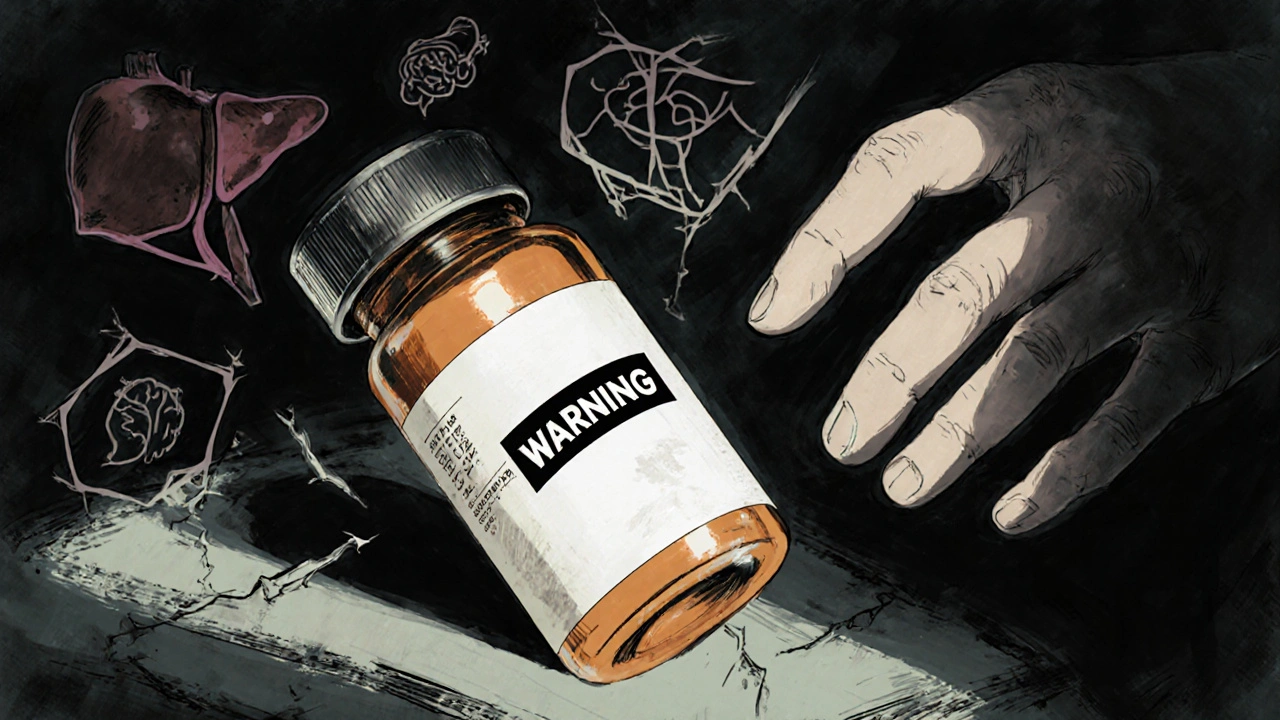
Black box warnings on prescription drugs signal serious, potentially life-threatening risks. They don't mean stop taking the medicine-they mean understand the risks, talk to your doctor, and monitor for danger signs.
Read More >>