
When a drug comes with a FDA boxed warning, the strongest safety alert the U.S. Food and Drug Administration can issue for prescription medications. Also known as a black box warning, it’s printed in a bold, bordered box on the drug’s label to grab attention—because something about this medicine can seriously hurt or even kill you if used wrong. This isn’t just a footnote. It’s the FDA’s way of saying, ‘We’ve seen real cases of death, organ failure, or life-threatening reactions—and you need to know this before you take it.’
These warnings don’t appear for every side effect. They’re reserved for risks that are severe, well-documented, and often preventable. For example, some antidepressants carry a boxed warning for increased suicide risk in young adults. Others, like certain antibiotics or heart drugs, warn about sudden cardiac arrest or liver damage. You’ll find them on meds like clozapine, an antipsychotic that can cause life-threatening drops in white blood cells, or isotretinoin, a severe acne drug that causes birth defects if taken during pregnancy. The warning isn’t there to scare you off—it’s there to make sure you and your doctor weigh the real dangers against the benefits.
What’s interesting is how these warnings show up in real life. The posts below cover cases where boxed warnings matter—like how antipsychotics can dangerously stretch the heart’s rhythm when mixed with other drugs, or why sedating antihistamines are risky for older adults. These aren’t abstract concerns. They’re daily decisions. A pharmacist might skip checking for interactions because they’re busy. A patient might ignore a warning because they’ve taken the drug for years. The FDA doesn’t just slap on these labels and walk away—they track outcomes, update labels, and sometimes pull drugs off the market. And now, with tighter drug traceability and better reporting systems, these warnings are becoming more accurate and timely.
You won’t find a boxed warning on over-the-counter painkillers or vitamin supplements. That’s by design. The FDA focuses its strongest alerts on prescription drugs where the risk-benefit balance is tight, and where mistakes can be deadly. But here’s the catch: not every doctor explains it clearly. Some patients never even see the label. That’s why knowing what a boxed warning means—and asking the right questions—can make all the difference. Below, you’ll find real-world examples of how these warnings affect treatment choices, insurance coverage, military deployment, pregnancy planning, and even how people manage chronic conditions safely. These aren’t theory pieces. They’re stories from people who’ve had to navigate these alerts—and survived because they knew what to look for.
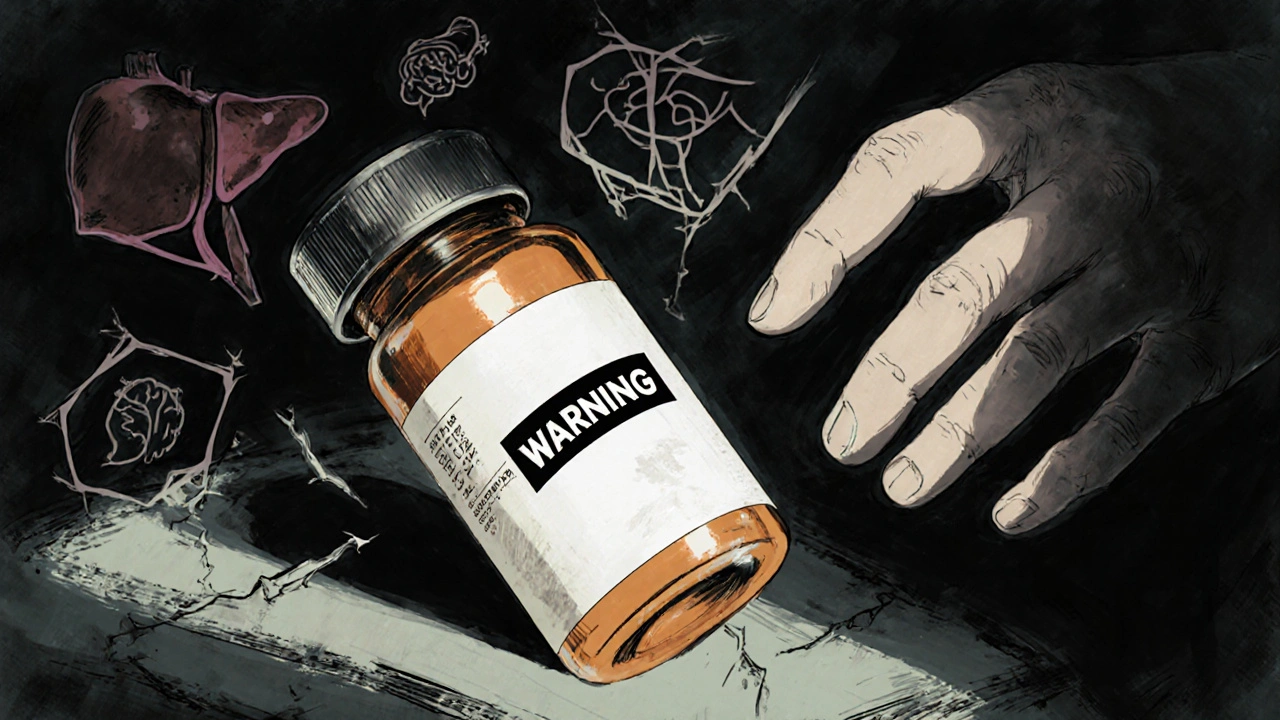
Black box warnings on prescription drugs signal serious, potentially life-threatening risks. They don't mean stop taking the medicine-they mean understand the risks, talk to your doctor, and monitor for danger signs.
Read More >>