
When your child keeps scratching their skin, has a red patch that won’t go away, or develops white flakes in their mouth, it might not be a virus or allergy—it could be a fungal infection, a common skin or mucous membrane condition caused by yeasts or molds that thrive in warm, moist areas. Also known as yeast infection, these aren’t dangerous but they’re annoying, persistent, and often mistaken for something else. Fungal infections in kids aren’t rare—they’re one of the top reasons parents bring their child to the pediatrician after a diaper rash doesn’t clear up.
Most fungal infections in children show up in three places: the diaper area, the scalp, and between the toes. A diaper rash fungal, a type of yeast overgrowth that turns a regular red rash into a bright, raised, spotty irritation with satellite lesions is the most common. It doesn’t respond to zinc oxide or regular creams. Then there’s athlete’s foot children, a scaly, itchy infection between the toes or on the soles, often picked up from pool decks or shared towels. And don’t ignore white patches inside the mouth—that’s oral thrush, a yeast infection caused by Candida, especially common in babies or kids on antibiotics.
These infections spread easily. A sibling with athlete’s foot can pass it to a child who shares a bathmat. A parent with a fungal nail infection can unknowingly transfer spores during diaper changes. Moisture is the enemy—whether it’s sweaty socks, wet swimsuits, or a diaper left on too long. Antibiotics can trigger it too, because they wipe out good bacteria that normally keep fungi in check. It’s not about cleanliness; it’s about environment.
What works? Over-the-counter antifungal creams like clotrimazole or miconazole are usually enough for skin rashes. For oral thrush, a doctor might prescribe nystatin drops. But here’s the catch: you have to keep using the treatment for a full week—even if the rash looks gone. Stopping early invites it back. And you can’t just treat the child. Wash all towels, bedding, and toys in hot water. Change diapers frequently. Let the diaper area air out. Avoid tight synthetic fabrics. These aren’t just tips—they’re part of the cure.
Some parents try home remedies like coconut oil or apple cider vinegar. They might help a little, but they don’t replace proven antifungals. And never use steroid creams unless a doctor says so—they can make fungal infections worse. If the rash spreads, bleeds, or doesn’t improve in 7–10 days, see a provider. It could be something else—eczema, psoriasis, or even a bacterial infection.
Prevention is easier than treatment. Keep skin dry, change wet clothes fast, and avoid sharing hairbrushes or shoes. For babies, let them go diaper-free for 10 minutes a few times a day. For older kids, teach them to dry between their toes after swimming. These small habits cut down on recurring infections.
Below, you’ll find real, practical advice from parents and doctors who’ve dealt with this exact problem. No fluff. No guesswork. Just what works when your child’s skin won’t quit itching.
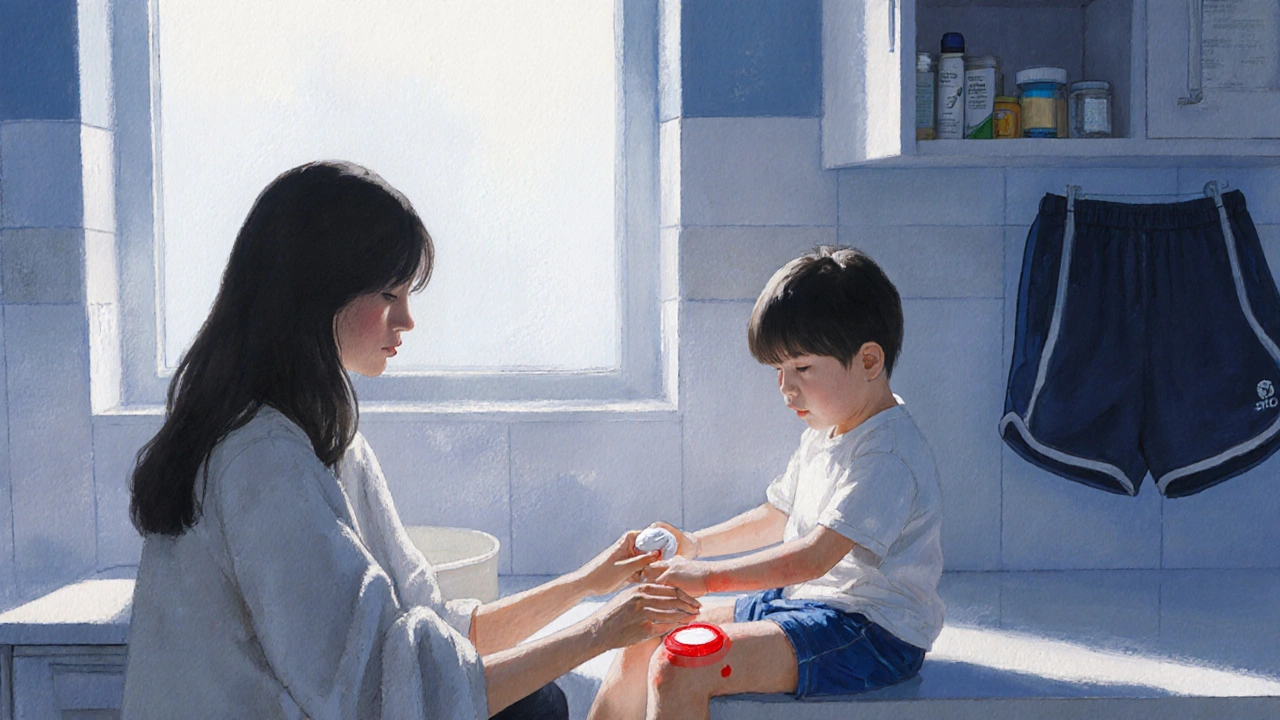
Jock itch in children is a common fungal infection causing red, itchy rashes in the groin area. Learn the causes, how to identify it, and effective over-the-counter treatments that work fast.
Read More >>