
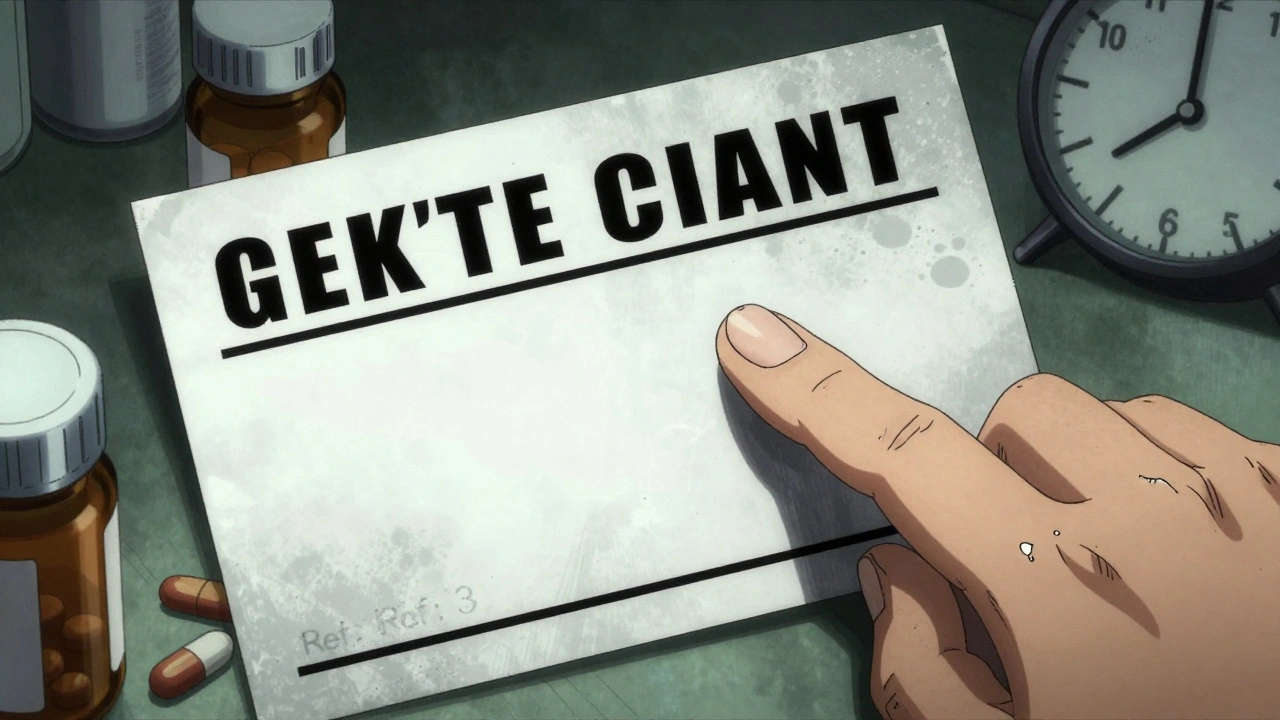
When you pick up your prescription, you probably glance at the name of your medicine, the dosage, and when to take it. But there’s another line on that label that could save you a trip to the doctor-or prevent a dangerous gap in your treatment. It’s the refill information. You might see it written as Ref: 3 or Refills: 0. It’s small, often tucked at the bottom, and easy to miss. But if you don’t understand what it means, you could run out of medicine without realizing it.
What Does ‘Ref: 3’ Actually Mean?
That little ‘Ref: 3’ isn’t telling you how many pills are left in the bottle. It’s telling you how many times you can walk back to the pharmacy and get another full supply without needing a new prescription from your doctor. So if you have Ref: 3, you can refill the prescription three more times after this one. Each time you refill, that number goes down by one. After the third refill, you’ll need to call your doctor for a new prescription, even if you still have pills left.
Some labels say ‘Refills: 0’ instead. That doesn’t mean you’re out of pills. It means you’ve used up all your authorized refills. You still have the current supply-you just can’t get another bottle without a new prescription. Many patients mix this up. A 2022 survey of 500 pharmacists found that 15-20% of calls to pharmacies were from people who thought ‘Ref: 0’ meant they had zero pills left. That’s not true. It means zero refills left.
Where to Find It on the Label
Pharmacies follow general standards for where to put refill info, but it’s not always in the same spot. The U.S. Pharmacopeial Convention recommends placing it away from the most important parts-like dosage instructions-so you don’t accidentally skip those while scanning for refills.
At CVS, you’ll usually find it near the prescription number and fill date, often in the middle section of the label. Walgreens and independent pharmacies often put it at the bottom, right after the expiration date. Some labels use bold text or a slightly larger font. Others? Not so much. That’s why it’s easy to miss.
One patient, Maria Rodriguez, shared on a diabetes forum that she nearly ran out of insulin because the ‘Ref: 0’ was printed in tiny text at the very bottom of the label. She didn’t notice until her bottle was empty. That’s not rare. In fact, 68% of medication errors linked to label confusion involve misreading refill or dosage info, according to USP data.
Why It Matters for Your Health
Missing doses because you didn’t know you needed a refill is one of the biggest reasons people with chronic conditions like high blood pressure, diabetes, or asthma end up in the hospital. A 2022 study tracking over 12,000 patients across 15 states found that those who understood their refill information were 37% less likely to have a gap in their medication. That’s huge.
Clear refill info doesn’t just help you avoid running out-it helps your doctor keep your condition stable. Dr. Sarah Thompson from the American Pharmacists Association says clear refill labels reduce medication abandonment rates by 23%. That means more people stick with their treatment. More people stay healthy. More people avoid costly emergencies.
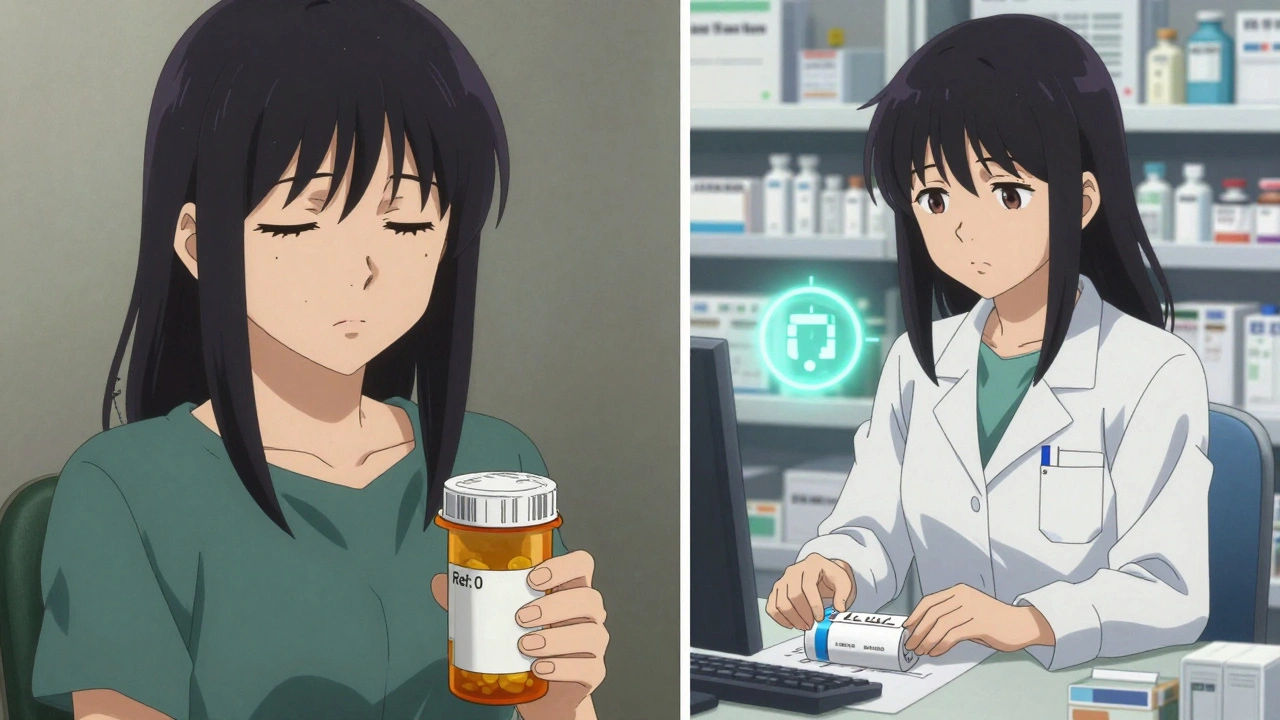
How Insurance Changes the Rules
Even if you have refills left, your insurance might not let you refill right away. Most plans have rules about how soon you can get a new supply. For example:
- Medicare Part D: You can refill a 30-day supply after 23 days (so 7 days early).
- UnitedHealthcare and other commercial plans: Usually allow refill at 80% of the supply period. So for a 30-day prescription, you can refill after 24 days.
- Some plans require you to wait until you’ve used 90% of your pills.
That means even if your label says ‘Ref: 2’, your pharmacy might say, ‘Sorry, you can’t refill yet.’ Always check your plan’s rules-or call them directly. Don’t assume the label tells you everything.
What to Do When You’re Out of Refills
If your label says ‘Refills: 0’, don’t panic. But don’t wait until you’re out of pills, either. Call your doctor’s office as soon as you notice it. Many offices have online portals where you can request a refill renewal. Some even let you send a message through their patient app.
For controlled substances like opioids or certain ADHD meds, refills require extra steps. Some states require a new written prescription. Others allow electronic renewals but with a 72-hour processing time. That’s why pharmacists recommend calling 3-5 days before you run out. If you wait until the last day, you might be stuck without your medicine.
How Pharmacies Are Making It Easier
Pharmacies know this is a problem. Since 2020, 68% of U.S. pharmacies have redesigned their labels to make refill info stand out more. CVS spent $12.7 million on label improvements, including bigger fonts and color-coded sections. Some now use icons-a small circular symbol with a number inside-to show refills left.
CVS’s Spoken Rx feature lets you scan your bottle with your phone and hear your medication name, dosage, and refill info read aloud in English or Spanish. Over 1.7 million people use it. Patients say it’s helped them avoid mistakes. Independent pharmacies are also improving. A 2023 survey showed patients rated them higher for refill clarity than big chains.
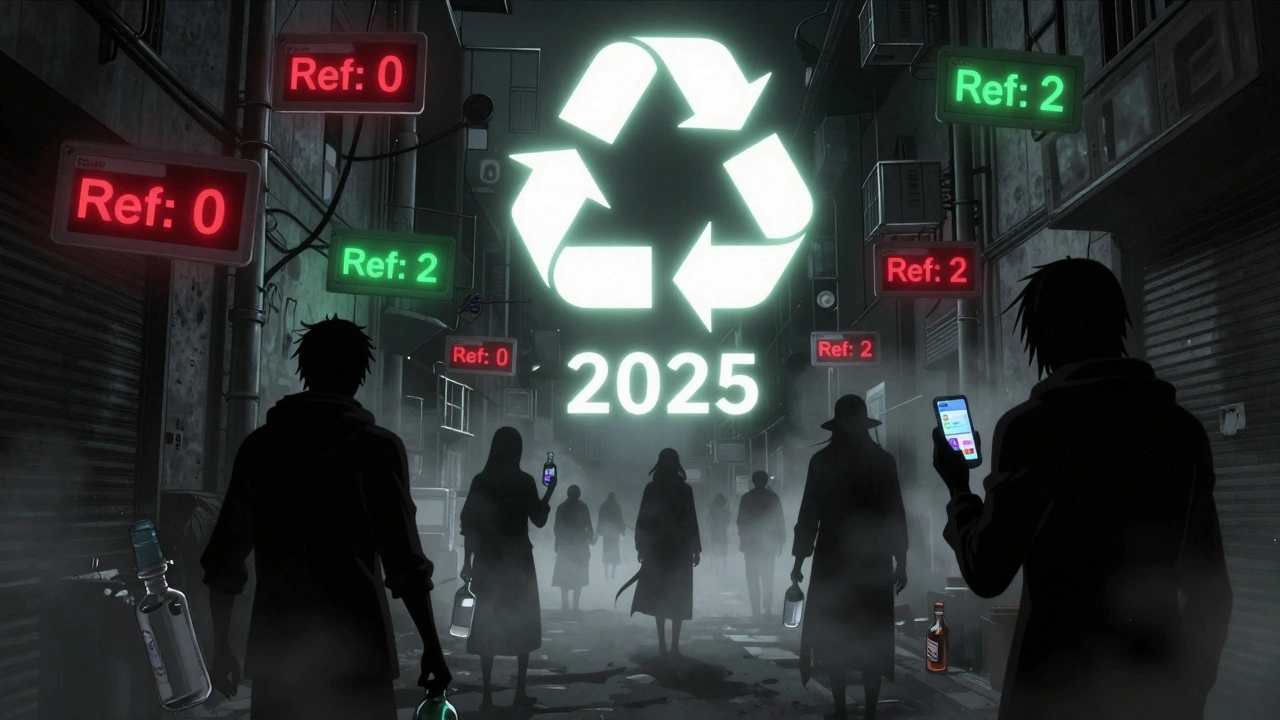
By 2025, 85% of pharmacies will likely use digital reminders-texts or app alerts-when your refill is ready or when you’re due for one. The American Pharmacists Association is testing a universal refill icon system. Early results show a 41% drop in refill-related errors in pilot clinics.
What You Can Do Today
You don’t need to wait for better labels or apps. You can take control right now:
- When you get a new prescription, pause for 10 seconds and read the refill line. Write it down in your phone or calendar.
- Check your refill status once a week-especially if you take daily meds.
- Set a reminder on your phone: ‘Check refills for metformin’ every Friday.
- If you’re unsure what ‘Ref: 2’ means, call the pharmacy. They’re used to the question.
- Ask your pharmacist to explain your refill info when you pick up your prescription. Don’t assume they’ll do it unless you ask.
It’s not complicated. But it’s easy to ignore. And that’s exactly why so many people end up without their medicine.
What If You Run Out?
If you accidentally run out of medicine and your refills are gone:
- Don’t skip doses. If it’s something like blood pressure or insulin, skipping can be dangerous.
- Call your pharmacy first. Sometimes they can give you a partial emergency supply.
- Then call your doctor. Many offices can fax a new prescription the same day.
- For non-urgent meds, wait until the next business day. But never wait if it’s life-sustaining.
Pharmacists say the most common mistake isn’t misunderstanding the label-it’s not checking it at all. People assume the refill info doesn’t matter until it’s too late.
It’s not just a label. It’s your safety net.
What does ‘Ref: 0’ mean on my prescription label?
‘Ref: 0’ means you’ve used up all the refills your doctor authorized. It does NOT mean you’re out of pills. You still have the current supply, but you can’t get another bottle without a new prescription from your doctor.
Can I refill my prescription early if I’m running out?
It depends on your insurance. Medicare allows refills 7 days early for a 30-day supply. Most private insurers allow refills after you’ve used 80% of your pills-so around 24 days for a 30-day prescription. Always check your plan’s rules or call your insurer to confirm.
Why do some pharmacies put refill info in different places?
While the U.S. Pharmacopeial Convention recommends placing refill info away from dosing instructions to avoid confusion, individual pharmacies and state regulations can vary. CVS, Walgreens, and independent pharmacies may format labels differently based on their systems and local rules. The content is the same, but the location can change.
Should I call the pharmacy before I run out of pills?
Yes. Call 3-5 days before you expect to run out. Some medications, especially controlled substances, require 72 hours to process a refill. Waiting until the last day can leave you without medicine. It’s better to be proactive.
What if my refill info isn’t on the label at all?
That’s unusual but possible, especially with older labels or from small pharmacies. Always ask the pharmacist when you pick up your prescription. They’re required to tell you how many refills are left. If you’re unsure, call the pharmacy back and ask for clarification.
Can I get a refill if my prescription expired?
Prescriptions for most medications expire one year after the date they were written. Even if you have refills left, you can’t fill them after the expiration date. You’ll need a new prescription from your doctor. Controlled substances often expire in 6 months.
Zoe Bray
December 3, 2025 AT 16:04The refill designation on pharmaceutical labels constitutes a critical component of medication adherence protocols, as it directly influences therapeutic continuity. The current nomenclature-‘Ref: X’-is insufficiently standardized across dispensing entities, leading to cognitive dissonance among patients who conflate refill quantity with pill inventory. This ambiguity precipitates non-adherence, which correlates with a 37% increase in hospitalization rates for chronic conditions, per the 2022 multi-state cohort study. Pharmacists must be mandated to verbally reinforce this distinction during dispensing, and EHR-integrated label templates should employ ISO 16128-compliant visual encoding, such as color-coded icons or dynamic digital indicators, to mitigate interpretive error.
Girish Padia
December 5, 2025 AT 12:45John Webber
December 6, 2025 AT 01:08Shubham Pandey
December 6, 2025 AT 09:13Elizabeth Farrell
December 7, 2025 AT 09:21I want to say how much I appreciate this post-it’s so easy to overlook the little details on a prescription label, especially when you’re juggling multiple medications, doctor visits, and life in general. I’ve been there-running out of insulin because I didn’t realize ‘Ref: 0’ meant no more refills, not no pills. I didn’t panic, but I did feel embarrassed. That’s why I now set a weekly reminder on my phone: ‘Check refills.’ It takes 10 seconds. I also write the refill count on a sticky note and stick it to my pill organizer. And if I’m unsure? I call the pharmacy. They never mind. In fact, they’re usually relieved someone’s paying attention. You’re not being a bother-you’re being responsible. And that’s something to be proud of. Small habits save lives. Keep going.
Saurabh Tiwari
December 8, 2025 AT 11:24Michael Campbell
December 9, 2025 AT 19:53