
When a child gets the wrong dose of medicine, it’s not just a mistake—it’s a pediatric dosing error, an incorrect amount of medication given to a child due to miscalculation, miscommunication, or poor labeling. These errors happen more often than you think, and they’re one of the top reasons kids end up in the ER after taking medicine meant to help them. Unlike adults, kids don’t just need smaller pills—they need doses calculated by weight, age, and sometimes kidney or liver function. A tiny miscalculation can turn a safe treatment into a dangerous one.
These errors aren’t always the parent’s fault. They often come from pediatric pharmacy, the specialized field of preparing and dispensing medicines for children, which requires extra care in measurement and labeling. A doctor might write a prescription in milligrams per kilogram, but the pharmacy misreads it. A nurse might grab the wrong concentration of liquid antibiotic. Even a parent might use a kitchen spoon instead of a dosing syringe because they didn’t realize how critical precision is. child medication safety, the practice of ensuring children receive the correct drug, dose, and route of administration without harm depends on every step being clear, checked, and confirmed.
Some of the most common mistakes involve liquid medicines—like giving 5 mL when it should be 0.5 mL, or confusing milligrams with milliliters. Others happen when a child is switched from one brand to another, or when a parent uses an old prescription because "it worked before." Even something as simple as forgetting to update a child’s weight can lead to a dangerous overdose. dosing mistakes, errors in the amount or frequency of medication given to a patient, especially common in pediatric populations due to complex calculations are avoidable, but only if everyone involved knows what to look for.
That’s why the posts here focus on real-world fixes: how to read a prescription label correctly, why using one pharmacy helps prevent dangerous overlaps, what to do when a child’s weight changes, and how to spot red flags in medication instructions. You’ll find advice on how to ask the right questions at the pharmacy, how to store medicines safely so they don’t get mixed up, and what to do if you think your child got the wrong dose. These aren’t theory pieces—they’re tools from parents, nurses, and pharmacists who’ve seen what happens when things go wrong.
If you’re a parent, caregiver, or healthcare worker, you’re not alone in worrying about this. Thousands of families face the same fear every day. The good news? Most of these errors can be stopped with simple checks, better communication, and a little extra caution. What follows are real stories, practical tips, and proven strategies to help you keep kids safe—one correct dose at a time.
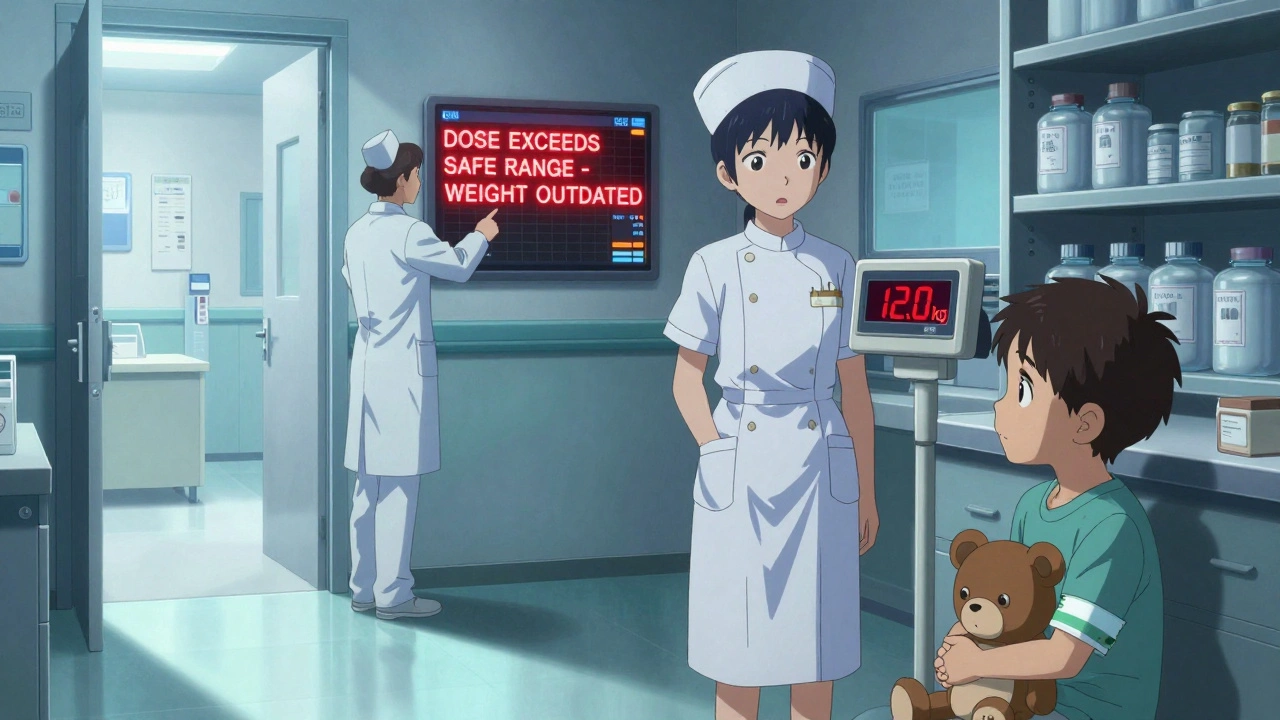
Pediatric medication errors often stem from incorrect weight-based dosing. Learn how weight verification systems, standardized protocols, and staff training can prevent deadly mistakes in hospitals and pharmacies.
Read More >>