
When you stand up too fast and feel dizzy, lightheaded, or even faint, you might be experiencing postural hypotension, a sudden drop in blood pressure upon standing that reduces blood flow to the brain. Also known as orthostatic hypotension, it’s not just an annoyance—it’s a signal that something in your body’s blood pressure control system is out of sync. This isn’t normal aging. It’s often caused by medications, dehydration, or nerve damage—and it’s more common than most people realize.
Medication side effects, including drugs for high blood pressure, heart conditions, depression, and Parkinson’s, are one of the top reasons people develop postural hypotension. Think about it: if you’re taking a pill to lower your blood pressure, it’s possible that same pill drops it too much when you stand. The same goes for diuretics, alpha-blockers, and even some over-the-counter cold meds. Older adults are especially vulnerable because their bodies don’t adjust as quickly, and they’re more likely to be on multiple drugs. A 2023 study in the Journal of the American Geriatrics Society found that nearly 30% of adults over 70 on three or more medications had measurable episodes of postural hypotension—many without even knowing it.
Elderly blood pressure regulation changes naturally with age. Blood vessels stiffen, heart rate control slows, and the nervous system doesn’t react fast enough to keep blood flowing to the brain when standing. Add in dehydration from not drinking enough water, or conditions like diabetes that damage nerves, and the risk climbs even higher. But here’s the thing: it’s not always unavoidable. Simple habits—like standing up slowly, drinking water before getting out of bed, wearing compression socks, or adjusting medication timing—can make a real difference. And if you’re on blood pressure meds, your doctor might not realize this is happening unless you tell them about the dizziness.
You’ll find posts here that dig into how common drugs like warfarin, statins, and antihypertensives can quietly contribute to this issue. There are also guides on checking your medicine cabinet for risky combinations, understanding prescription labels that warn about dizziness, and why using one pharmacy helps catch dangerous interactions before they happen. These aren’t theoretical concerns—they’re real, daily risks for millions. If you or someone you care about has stood up and felt the room spin, this collection gives you the facts to act on.
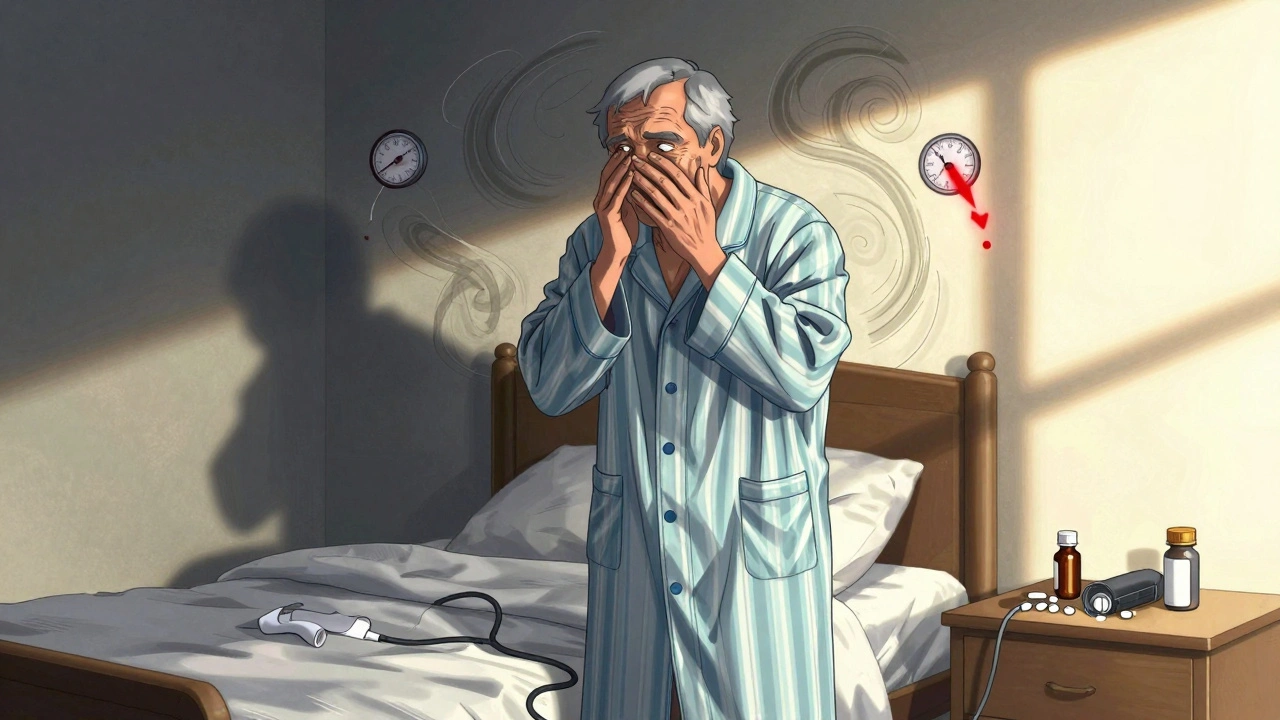
Dizziness when standing up may be caused by medications like antipsychotics, diuretics, or alpha-blockers. Learn how drug-induced orthostatic hypotension works, which meds are most risky, and how to fix it safely.
Read More >>