
What You Can and Can’t Bring Across Borders With Your Medications
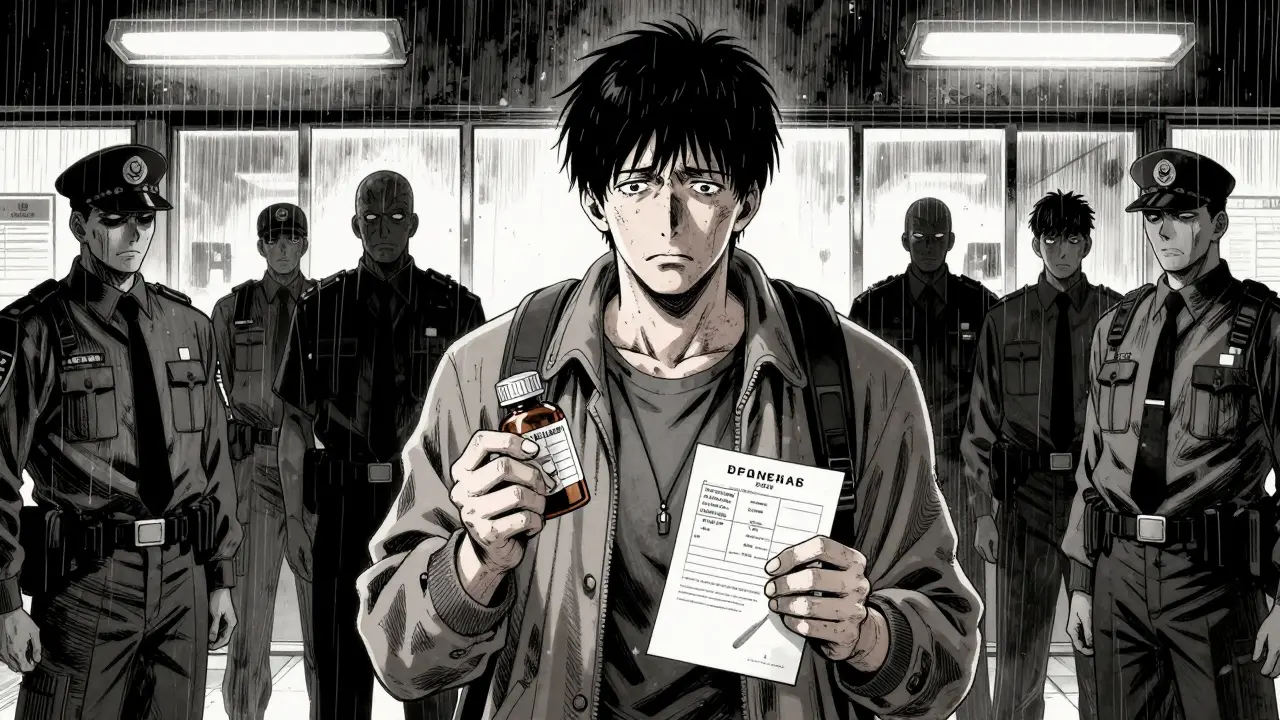
If you’ve ever had your pills taken at customs, you know how stressful it is. You’re not breaking the law-you’re just following your doctor’s orders. But every country has its own rules, and many don’t care if you have a prescription from home. In 2026, bringing medications internationally is more complicated than ever. A new rule in the U.S. suspended the $800 duty-free limit for all medication shipments, and countries like Thailand, Japan, and Singapore now treat even common anxiety meds like Xanax as illegal narcotics. This isn’t about being paranoid. It’s about avoiding arrest, fines, or having your meds thrown away.
How Much Can You Actually Bring?
There’s no universal rule. The U.S. allows you to bring in a 90-day supply of prescription drugs for personal use, as long as they’re FDA-approved. Canada lets you bring up to 180 days. The European Union generally sticks to 90 days, but Germany, France, and Spain each enforce it differently. The key? Don’t guess. Bring only what you need for the length of your trip, plus a little extra in case of delays. If you’re carrying a six-month supply of insulin or thyroid meds, customs will question it-even if it’s all legal in your home country.
Controlled Substances Are a Different World
Medications like Adderall, Xanax, oxycodone, and even some cough syrups with codeine are treated like illegal drugs in many countries. In Japan, even a single pill of diazepam without a special permit can land you in jail. In the UAE, benzodiazepines are banned outright. The International Narcotics Control Board lists 147 commonly restricted medications, and 87% of countries include at least one of them on their banned list. If your prescription includes any of these, you need more than a bottle and a doctor’s note. You need official approval from the destination country’s health ministry-sometimes months in advance. The DEA approved 78% of personal import requests for controlled substances in 2024, but that doesn’t mean your country will accept your U.S. prescription. Always check with the embassy of your destination.
Documentation: The Only Thing That Saves You
Original prescription bottles with the pharmacy label are non-negotiable. That label must show your name, the drug name, dosage, and your doctor’s info. If you’ve transferred pills to a pill organizer, bring a clear photo or printed copy of the original label. But that’s not enough. Most countries require a letter from your doctor on official letterhead. It should list each medication by its generic name, your diagnosis, and why you need it. For example: “Patient requires 10mg of amoxicillin daily for recurrent sinusitis.” Avoid brand names-they’re not recognized everywhere. If you’re traveling to a non-English-speaking country, get the letter translated. In 41 countries, it’s legally required. You can get this done at the embassy or through a certified translation service. Don’t rely on Google Translate.
TSA and Air Travel: What Security Actually Allows
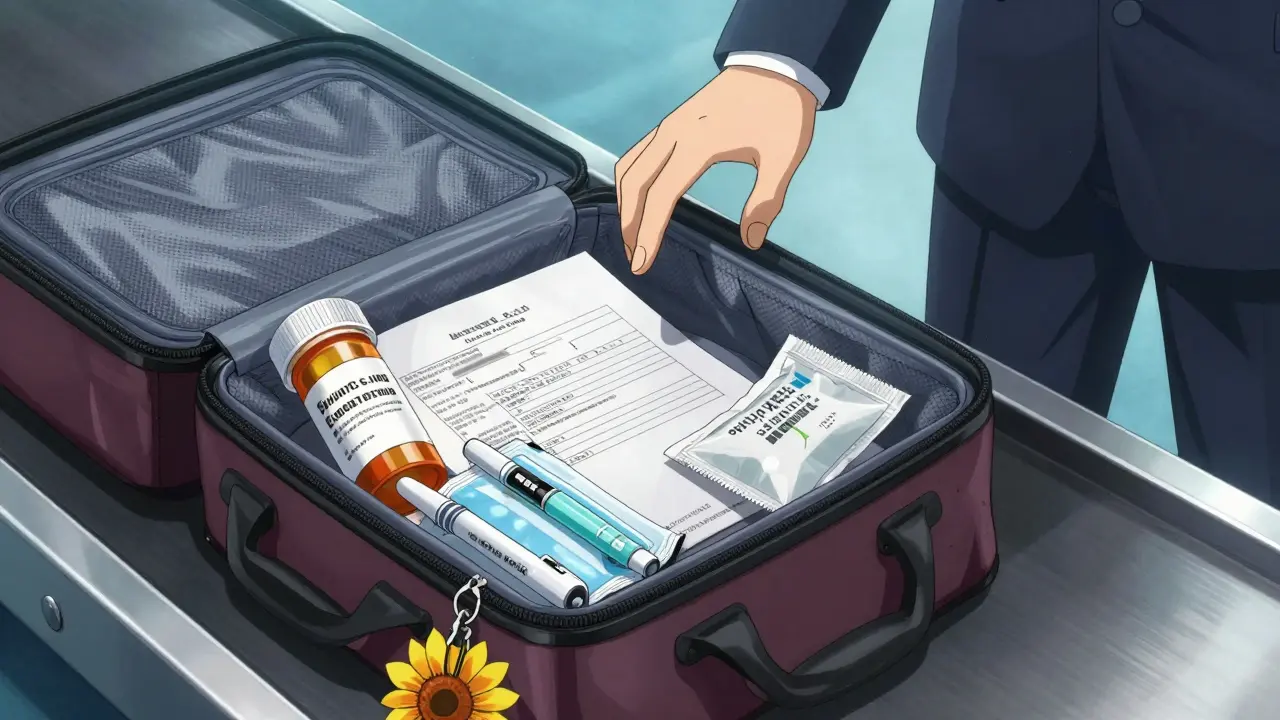
The TSA lets you bring all FDA-approved medications in any form-pills, liquids, creams, injections-without quantity limits. Liquids over 3.4 ounces don’t need to go in your quart-sized bag, but they will be screened separately. If you use an insulin pump, CGM, or nebulizer, call TSA Cares at 1-855-787-2227 at least 72 hours before your flight. They’ll assign you a specialist to help you through security. At 148 major U.S. airports, you can wear a sunflower lanyard to signal you have a medical condition without saying a word. It’s discreet, effective, and free. Just ask for one at the airline counter or download a printable version from the TSA website.
What Happens When Things Go Wrong
Most travelers who lose their meds report the same thing: they didn’t check the rules for their destination. In 2024, the CDC logged 1,847 cases of travelers detained or fined over medication issues. 58% involved controlled substances. 32% involved insulin or diabetes supplies. 42% of Adderall users had problems in Asia. A Reddit user got Xanax confiscated in Thailand despite having a valid U.S. prescription. Another had her insulin seized in Dubai because the label wasn’t in Arabic. The fix? Contact the embassy of your destination country 30 to 60 days before you leave. Ask: “What are the rules for bringing [medication name] into your country?” Get their answer in writing. If they say “no,” ask if there’s a permit process. Some countries, like Japan and Singapore, have online portals for this. Don’t wait until you’re at the airport.
Shipping Medications? It’s Riskier Than Ever
Since August 29, 2025, all international medication shipments-even small ones-are subject to customs duties and inspections. The old $800 de minimis rule is gone. Packages now take an average of 5.7 business days to clear, up from 2.1 days. Many are delayed because they’re missing the country-of-origin label, which pharmacies are now required to include. If you’re sending meds to a friend overseas or ordering refills from an international pharmacy, you’re playing with fire. The FDA and DEA don’t approve most foreign online pharmacies. Even if the site looks legit, your pills might be fake. The WHO estimates 1 in 10 medications in developing countries are counterfeit. Stick to carrying your meds with you.
Special Cases: Insulin, Mental Health, and Medical Devices
Insulin and other temperature-sensitive drugs need special care. Never check them in luggage. Keep them in your carry-on with a cooling pack. Some airlines let you pre-arrange refrigerated storage on board-ask when you check in. For mental health medications, the situation is worsening. In 2024, 47% of all medication-related traveler issues involved antidepressants, anti-anxiety meds, or ADHD drugs. Countries like Saudi Arabia, China, and Russia treat these as controlled substances, even if they’re OTC in the U.S. If you’re traveling for mental health reasons, bring extra documentation: a letter from your psychiatrist, a recent lab report, or a diagnosis code. For medical devices like insulin pumps, wear your device visibly and carry a doctor’s note explaining its function. TSA has trained officers for this, but you still need to notify them ahead of time.
Pro Tips: What Actually Works
- Start planning 6-8 weeks before you leave. Some permits take 30 days.
- Always carry meds in original bottles with pharmacy labels.
- Get a doctor’s letter on letterhead with generic drug names.
- Use the INCB’s online database to check your destination’s rules-it’s updated monthly.
- Never pack meds in checked luggage.
- Carry a printed copy of your prescription and doctor’s letter in your wallet, not just your bag.
- If you’re flying through multiple countries, check rules for each transit point.
- Use the ISTM’s free medication letter template-it’s used by doctors worldwide.
What’s Changing in 2026
The European Union plans to cap personal medication imports at 60 days starting in mid-2026. The U.S. will enforce full traceability for all imported prescription drugs by January 1, 2026, meaning every pill must have a digital code. More countries are cracking down on fentanyl analogues and synthetic drugs disguised as painkillers. By 2027, 45% of nations are expected to tighten rules further. The good news? Travel medicine experts are pushing for global standardization. The bad news? It’s still years away. For now, your best tool is preparation-and never assuming your home country’s rules apply anywhere else.
Frequently Asked Questions
Can I bring my prescription meds in a pill organizer?
Yes, but only if you also carry the original prescription bottle or a clear photo/printout of the pharmacy label showing your name, drug name, dosage, and prescribing doctor. Customs officers may not recognize a pill organizer as legitimate medical equipment. Original packaging is always the safest option.
Do I need a prescription for over-the-counter drugs abroad?
Sometimes. Even common meds like pseudoephedrine (in cold pills) or melatonin are restricted in countries like Japan, Australia, and the UAE. Always check the destination country’s rules-even for drugs you can buy without a prescription at home. What’s OTC in the U.S. may be controlled elsewhere.
What if my medication is banned in my destination country?
You cannot legally bring it in. Some countries allow you to apply for a special permit ahead of time-usually through their health ministry or embassy. If they won’t approve it, talk to your doctor about switching to an alternative medication that’s allowed. Never try to hide it. The risk of arrest or deportation isn’t worth it.
Can I bring insulin without a prescription?
Insulin is generally allowed worldwide, but you still need documentation. Carry your prescription, a doctor’s letter, and your original vials or pens with labels. Some countries require insulin to be declared at customs. Never check it in your luggage-keep it in your carry-on with a cooling pack. TSA and most international airports have procedures for medical insulin supplies.
Are there apps or websites to check medication rules by country?
Yes. The International Narcotics Control Board (INCB) has an official database with up-to-date rules for 193 countries. The International Society of Travel Medicine (ISTM) also offers a free, downloadable medication letter template and country-specific guides. Always verify with your destination’s embassy, as online sources can be outdated.
Next Steps: What to Do Today
Open your travel calendar. Look at your trip dates. Now, make a list of every medication you’re bringing. Check the INCB database for each one. Contact your embassy if any are controlled. Print your doctor’s letter. Pack your original bottles. Call TSA Cares if you use a medical device. Do this now-not the night before you leave. One small step can save you from a global nightmare.
Ashlee Montgomery
January 10, 2026 AT 22:34Paul Bear
January 11, 2026 AT 23:24lisa Bajram
January 12, 2026 AT 01:06Jaqueline santos bau
January 13, 2026 AT 09:35chandra tan
January 15, 2026 AT 04:18Dwayne Dickson
January 16, 2026 AT 09:37Ted Conerly
January 17, 2026 AT 02:58Faith Edwards
January 17, 2026 AT 05:57Lisa Cozad
January 18, 2026 AT 09:18Saumya Roy Chaudhuri
January 19, 2026 AT 06:09Ian Cheung
January 20, 2026 AT 14:58